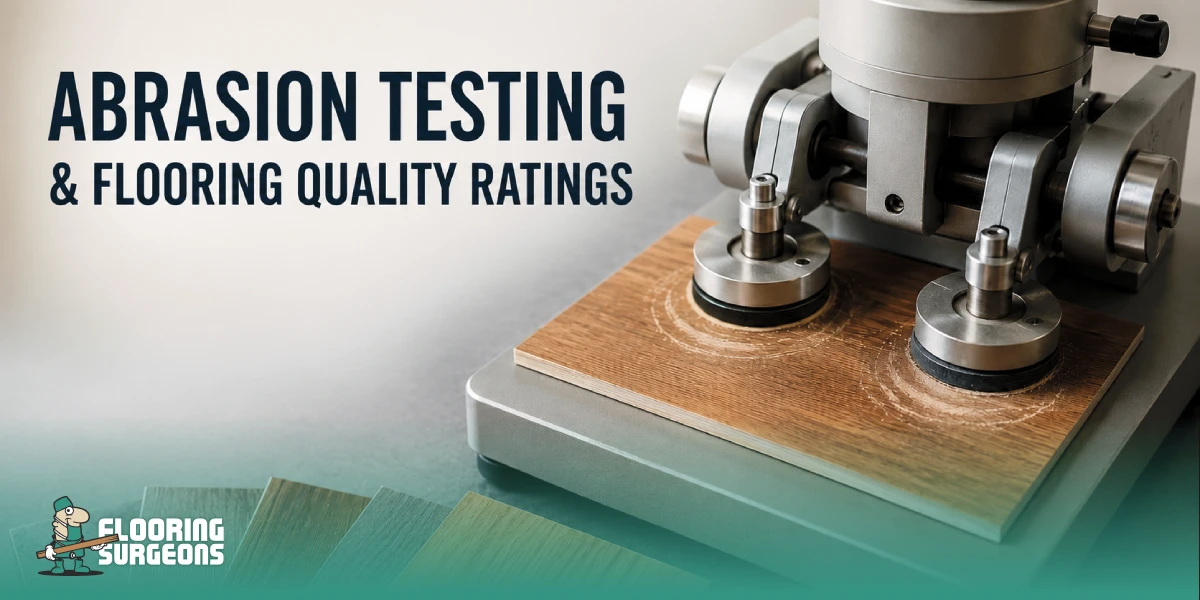
Flooring quality isn’t determined solely by colour, thickness or style. Resistance to daily wear is one of the biggest factors that determines long-term performance. Abrasion testing for flooring helps manufacturers measure how flooring withstands repeated friction, foot traffic, dirt, shoes, and daily wear and tear. These tests help manufacturers better understand flooring quality ratings as well as flooring durability ratings.
Abrasion tests indicate whether a product will hold up under light residential use, heavy-traffic areas like family rooms, hallways, kitchens, and offices, or commercial use. Abrasion tests also allow for an “apples-to-apples” comparison of flooring wear resistance between laminate flooring, vinyl flooring, SPC, tile, and wood flooring products. Abrasion resistance is just one factor in a flooring product’s overall durability. AC ratings, wear layers, scratch resistance, moisture resistance, and understanding the actual conditions of the room where the floor will be installed are also important factors when selecting flooring.
Table of contents
What Is Abrasion Testing for Flooring?
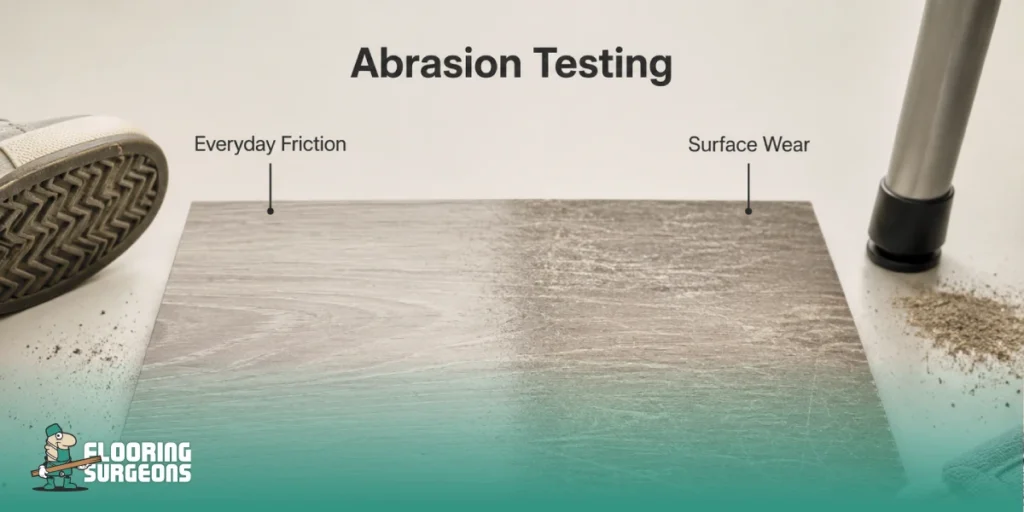
Abrasion testing for flooring evaluates a floor surface’s resistance to gradual material loss from repetitive rubbing. Some of the friction sources encountered in daily wear include shoes, dust and dirt, sliding furniture, pets, mops, and normal foot traffic.
The purpose of the test is to measure the flooring’s abrasion resistance and to indicate how long a floor surface will retain its original colour, texture, pattern, and protective finish before wear becomes noticeable. Abrasive wear is significant because most flooring failures occur gradually over time in high-traffic areas such as hallways, kitchens, offices and retail spaces.
A valid flooring wear test establishes a link between lab performance and real-world conditions. Abrasion tests measure surface durability of flooring but won’t predict moisture damage, deep dents, poor installation or subfloor issues. Therefore, it should be only one factor in determining a floor covering’s overall quality rating.
How the Taber Abrasion Test Flooring Method Works
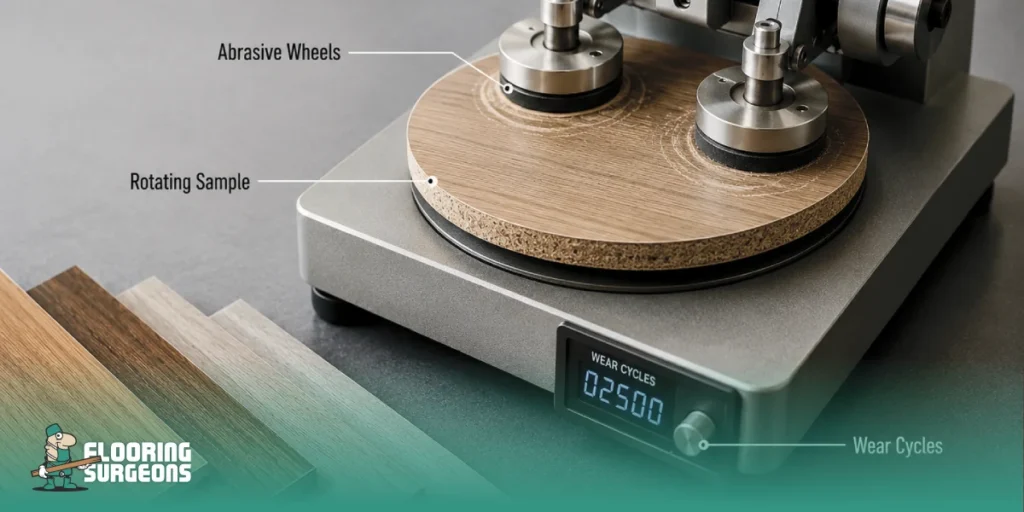
The Taber abrasion test flooring is one of several methods of testing a floor for its resistance to abrasion under controlled conditions. A floor sample is mounted on a turntable, and abrasive wheels are rubbed against it under defined pressure.
Rotation of the sample causes repeated abrasion as the wheels pass over it, simulating foot traffic, shoes, dust, and dirt particles rubbing against a floor. At set cycles, the floor is examined for visible wear, shine loss, pattern loss or showing through of the layer beneath.
The outcome of this flooring wear test can indicate how durable the flooring surface is under daily use. Laminate flooring results are commonly associated with AC ratings, so consumers can better interpret whether a flooring option is intended for residential light or heavy traffic or for commercial use.
The outcome of this flooring wear test can indicate how durable the flooring surface is under daily use. Laminate flooring results are commonly associated with AC ratings, so consumers can better interpret whether a flooring option is intended for residential light or heavy traffic or for commercial use.
Because this test is closely linked to laminate performance, it is useful to understand AC ratings in laminate flooring before comparing products based solely on durability claims.
How Abrasion Testing Affects Flooring Quality Ratings
Abrasion testing makes surface wear translate into objective flooring quality ratings. Rather than depending solely on looks, thickness, or sales hype, abrasion tests reveal how the top layer will hold up under friction, foot traffic and normal wear and tear.
For example, abrasion results can help determine:
- how soon visually perceptible wear begins to occur on the surface;
- if the finish pattern or protective layer remains intact;
- what level of traffic the floor will tolerate;
- If a product is more appropriate for residential or commercial applications.
Abrasion testing is why you’ll see flooring durability ratings so frequently when shopping for laminate, vinyl, SPC and commercial floors. The higher a product scores in flooring wear resistance, the better it typically is for high-traffic areas, since it will hold up its surface longer.
When it comes to laminate, these ratings are often associated with AC ratings. The higher the AC rating, the more traffic you can place on your floor; however, it still needs to fit the room’s purpose. For heavy-traffic homes, open-plan living spaces, and everyday traffic areas, AC4 Laminate Flooring can be ideal, as it hits a sweet spot for surface durability.
Common Flooring Durability Ratings Explained
Flooring durability ratings don’t all test the same factors. Some test surface wear. Others test dent resistance, moisture performance or commercial suitability. This is why it’s important to know which rating each flooring type has before making comparisons.
| Rating / Factor | Mainly Used For | What It Measures | Why It Matters |
| AC rating flooring | Laminate flooring | Surface wear and abrasion resistance | Helps match laminate to light, medium, or heavy traffic areas |
| Wear layer flooring | Vinyl, LVT, SPC | Thickness of the protective top layer | Supports better vinyl flooring quality rating and long-term surface protection |
| PEI rating | Ceramic and porcelain tiles | Surface wear under foot traffic | Useful when choosing tiles for residential or commercial spaces |
| Janka rating | Solid wood and engineered wood | Dent resistance | Helps compare wood hardness, but it is not the same as abrasion resistance |
| Commercial use class | Vinyl, laminate, and contract flooring | Overall suitability for heavier use | Helps assess commercial flooring durability |
The laminate flooring AC rating is one of the best measures for laminate flooring because it relates surface wear capability to expected traffic levels. With vinyl and SPC, the wear layer is even more critical as it guards the printed décor and finish from daily wear.
Rooms that need water-exposure durability, in addition to wear concerns, can benefit from a thicker Waterproof Luxury Vinyl flooring, as vinyl flooring quality rating is based on surface protection AND moisture performance.
Scratch Resistance vs Abrasion Resistance
Scratch resistance and abrasion resistance are frequently paired, but they do not test the same type of damage. Learn the difference between scratch resistance and abrasion resistance so buyers can better evaluate flooring quality beyond just one durability claim.
Scratch Resistance
Scratch resistance indicates how resistant flooring materials are to superficial damage caused by sharp or point-blank contact. Furniture being dragged across the floor, pet claws scratching on flooring materials, and small pebbles being lodged into shoes are all common causes of scratching.
Abrasion Resistance
Abrasion resistance is the resistance of a surface to slow wear caused by repetitive friction over time. This type of wear typically develops in high-traffic areas, such as sidewalks, hallways, kitchens, and other frequently used spaces. High abrasion resistance allows flooring to maintain its finish, colour, and pattern for longer periods of time.
Even high-abrasion-resistant floors can be scratched by dragging sharp objects across them. Surface-durable flooring should be considered in several respects if you have pets, children, heavy furniture, or high foot traffic in your home.
Choosing Flooring Based on Abrasion Ratings and Traffic Level
Abrasion ratings are only useful if you pair them with the actual traffic level of your space. Bedrooms, hallways, kitchens, offices, and retail spaces all demand different levels of durability from your floor surface, depending on daily use.
Recommend abrasive performance as follows:
- Low traffic: bedrooms, guest rooms, light traffic areas;
- Medium traffic: living rooms, dining rooms, home offices;
- High traffic: hallways, kitchens, high family traffic areas;
- Commercial traffic: offices, reception areas, shops, public areas.
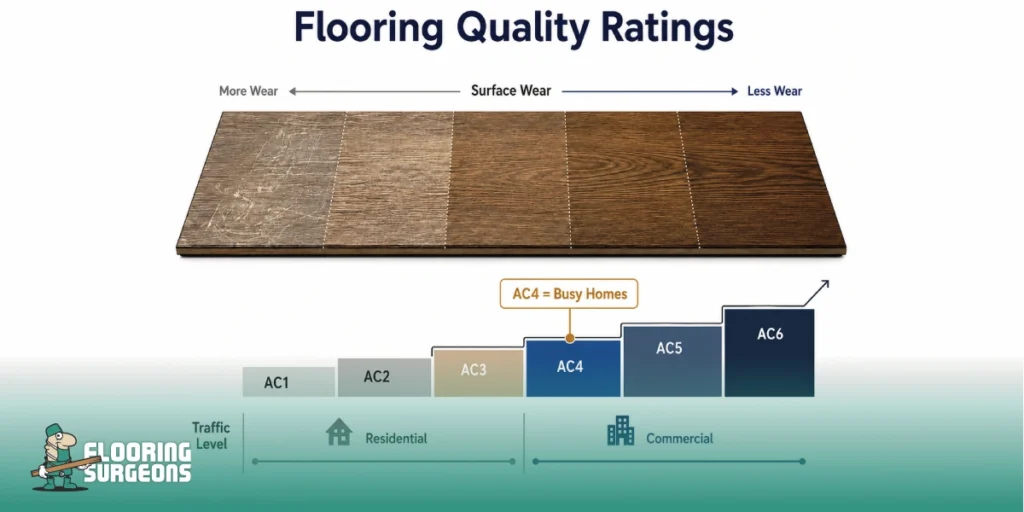
If you anticipate heavier daily traffic, you’ll start to care more about stronger flooring wear resistance and higher flooring durability ratings. In offices, high-traffic areas, retail spaces, or extremely busy households, AC5 Laminate Flooring is often a better fit due to its enhanced abrasion resistance.
Why Abrasion Testing Does Not Tell the Whole Story
Abrasion testing has its uses, but should not be the sole criterion for determining flooring quality. Flooring may exhibit excellent flooring abrasion resistance yet fail miserably if it is subjected to improper installation techniques, or used in the wrong room or area of a facility.
The following may also impact the real-world performance:
- Moisture due to sink or appliance overflows in kitchens, bathrooms or utility rooms;
- Dropped objects, such as furniture; poor subfloor preparation; improper installation;
- Damage to the surface from abrasive cleaners.
- Weak or faulty joints, edges or locking systems.
That’s why you should always take flooring durability ratings into account when reviewing the complete product specification sheet. Wear layer flooring matters more for vinyl/SPC, whereas AC ratings are more important for laminate. Ultimately, good surface durability flooring isn’t about performing well on a lab test. It’s about selecting the right product for the room based on traffic levels, moisture concerns and maintenance habits.
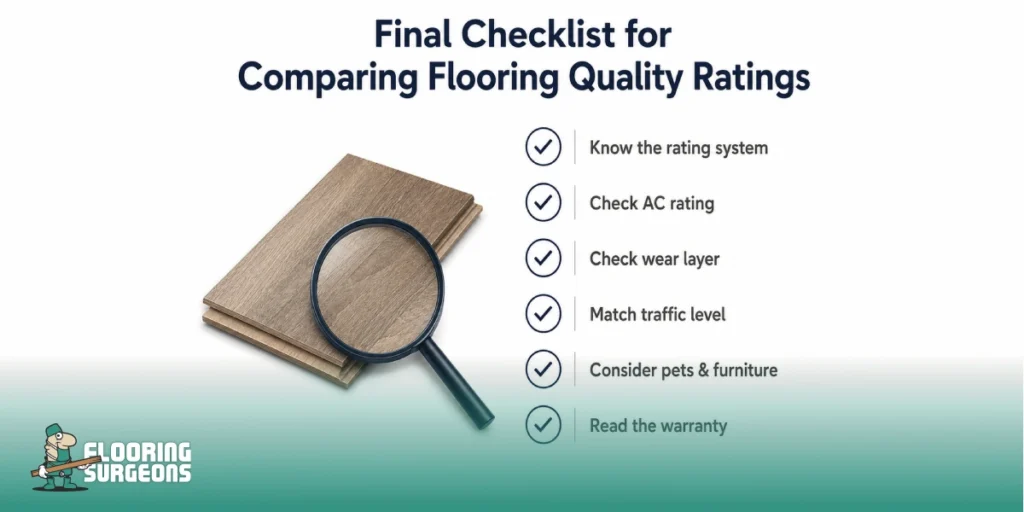
Final Checklist for Comparing Flooring Quality Ratings
Never pick a floor based solely on one rating. Follow this quick reference guide to rate products against each other more effectively:
- Look up what rating system the floor is governed by.
- Check the AC rating and travel suitability if it’s laminate.
- Check the wear layer and moisture immunity if it’s vinyl or SPC.
- Assess the space against the product’s suitable traffic level.
- Account for pets, footwear type, moving furniture and frequency of cleaning.
- Read the warranty details rather than focusing on advertised durability.
If your main concern is heavy daily use, our guide to the best Laminate flooring for high-traffic areas can help you compare abrasion resistance with real-life performance.
Conclusion
Abrasion testing is just one factor in determining how resilient a floor will be to everyday activity, foot traffic, and years of surface abuse. Never compare flooring options based on one single factor. AC Ratings, wear layer, scratch resistance, moisture ratings, intended room and care needs all factor into whether the product is right for you.
Our aim at Flooring Surgeons is to guide customers past colour and design, selecting floors based on how they will perform in real life. This ranges from high-traffic areas such as hallways and kitchens to commercial environments and family homes. Flooring with the appropriate durability rating will not only maintain its appearance longer, but also perform better under everyday stresses.

Ana.Soltanpoor
I’m an SEO Specialist with a strong background in content management and organic search. I build data-driven content strategies by aligning user intent, search behavior, and SEO best practices to ensure every piece of content delivers clarity, relevance, and measurable organic performance.