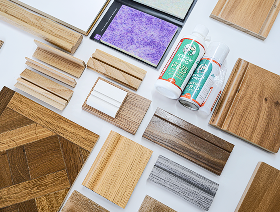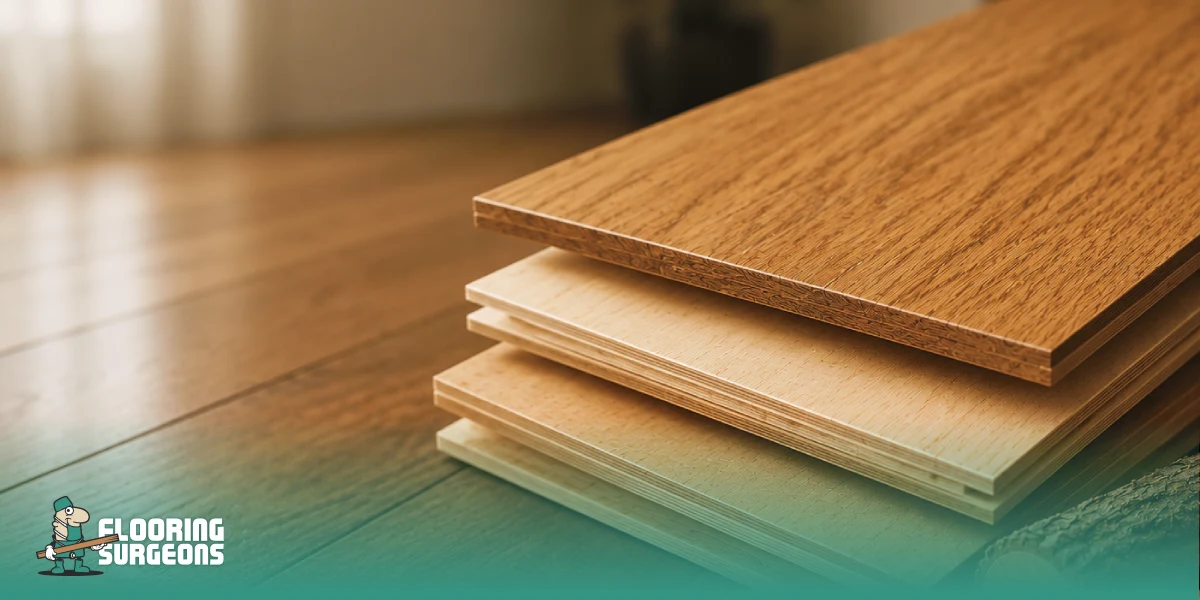
Engineered wood flooring is becoming increasingly popular with homeowners who want the perfect blend of durable flooring and natural beauty. Engineered wood flooring contains both an engineered flooring wear layer made of oak and a core layer which expands and contracts with the seasons, making it stronger and less susceptible to daily wear than traditional hardwood flooring.
Knowing how engineered wood flooring is made can help you choose the best-quality flooring and ensure you get a long, good life from your floors. It also gives you the knowledge you need to select the perfect 14mm engineered flooring for your home. Let us walk you through the process step by step.
Table of contents
Materials Used in Engineered Wood Flooring
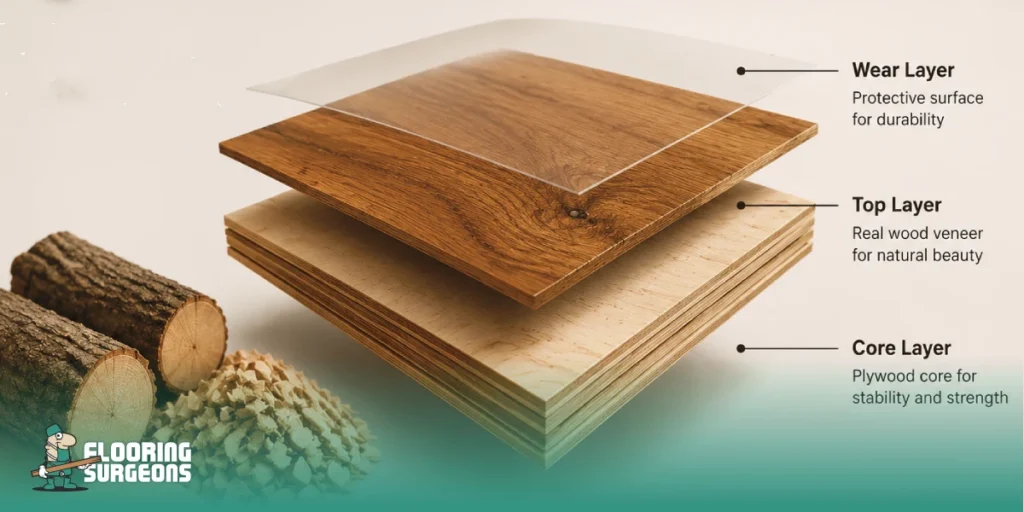
Engineered wood flooring depends heavily on the material it is made from. Starting from the top, we have the wear layer. The oak engineered flooring wear layer coats the entire floor, making it appear natural and protecting it from everyday scuffs and scratches. Next is the core layer. This layer helps stabilise the wood and make it more warp-resistant.
This is typically made from high-quality plywood or HDF. It’s important you know which wear layer and core go together to make a long-lasting, durable floor. Knowledge of these is the first step in our seven-step manufacturing process, which ensures that every plank meets standards. For readers interested in understanding the differences between materials, see what’s the Difference Between Solid Wood and Engineered Flooring? for a detailed comparison.
Manufacturing Process of Engineered Wood Flooring
Understanding the manufacturing steps of engineered wood flooring provides insight into why this flooring is so durable and visually appealing. From selecting the best timber to applying the final finish, each step is carefully designed to ensure the floor maintains its stability, appearance, and long-term performance.
Learning how engineered wood flooring is manufactured will give you an idea of why this type of flooring is so strong and attractive. Each step, from choosing optimal timber to the finishing touches, is done with care to produce flooring that stays stable, looks beautiful, and performs well for years.
1. Timber Selection & Preparation
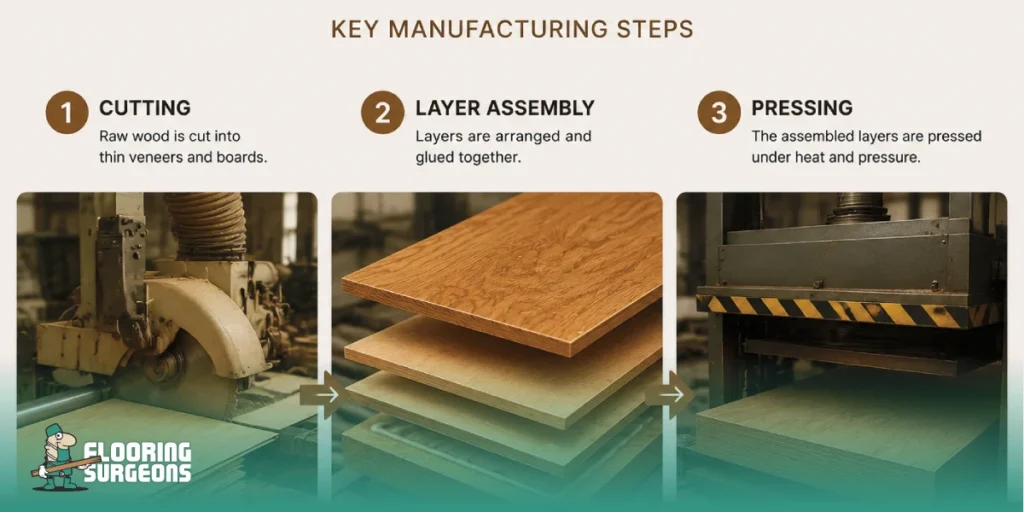
Stage one is selecting quality logs to work with. The selection of the timber used for your oak engineered flooring wear layer will determine grain consistency, colour, and durability of your floor. Logs are then graded, trimmed and prepped to eliminate defects prior to entering the drying phase.
2. Veneer Cutting & Drying
Logs chosen for processing are cut into thin sheets of wood. These thin sheets make up the top wear layer. The veneer is then dried in kilns to carefully reduce its moisture content. If the wood is properly dried, it will help prevent warping or shrinking. Correctly dried wood will ensure that the core and wear layers adhere together in later processes.
3. Layer Assembly & Adhesive Application
After that, the veneers are bonded to the core layer, which is typically plywood or HDF. Superior moisture-resistant glue holds all layers together. This process ensures your finished engineered wood flooring will not move with shifts in temperature and humidity.
4. Pressing & Bonding
These planks are then pressed with exact amounts of pressure and heat. When pressure is applied, it enhances the bond between the wear layer and the core layer. The result is a sturdy floor that will last you years. During the press stage, the 14mm thickness is what makes engineered flooring ideal for homes.
5. Cutting, Profiling & Sanding
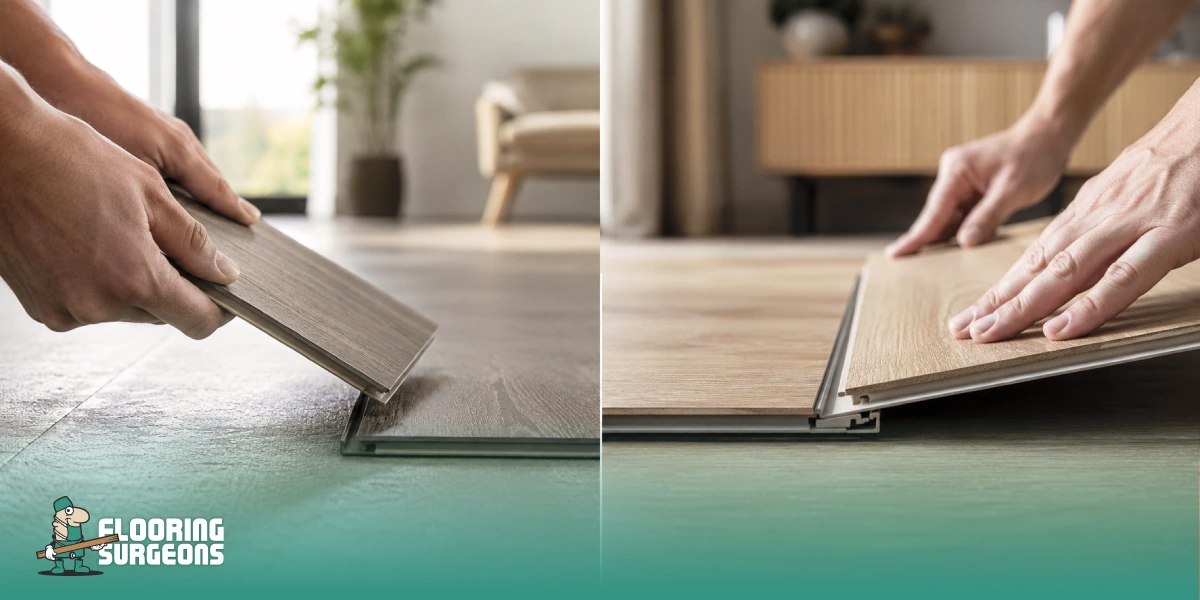
After pressing, the planks are milled to specific lengths. The planks are profiled to create tongue-and-grooved edges. Finally, the planks are sanded down, creating a smooth surface. With correct sanding and profiling, the oak engineered flooring is ready for finish and installation. Proper profiling allows for easier installation without affecting the stability of the core layer.
6. Surface Finishing
UV-cured lacquer or oil is applied to the top-most wear layer. Finishing properly will increase durability, prevent scratches and make it easier to clean. Correctly finished engineered flooring can stand up to daily wear and tear in high-traffic areas like kitchens and living rooms while still performing beautifully over the long run.
7. Quality Control & Inspection
They then go through a quality inspection process where each plank is checked for:
- Correct dimensions (i.e., thickness, 14mm for engineered flooring)
- Uniform glue pattern between the wear layer and the core layer
- Uniform finish/appearance
This process ensures that only top-quality products reach the customer, ensuring years of durability.
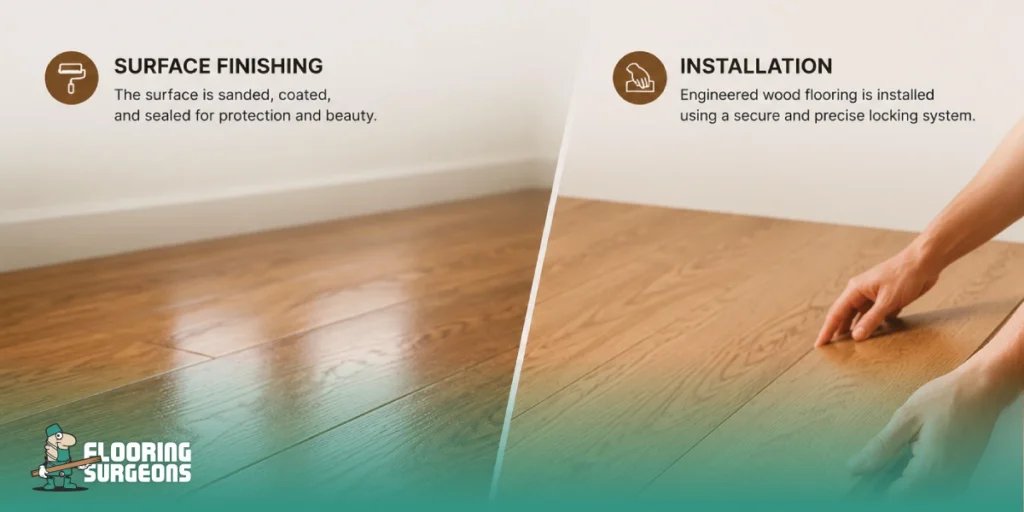
Table: Standard Engineered Flooring Specifications
| Layer | Material | Thickness | Notes |
| Wear Layer | Oak Veneer | 2–4mm | Top surface, visible |
| Core Layer | Plywood / HDF | 10–14mm | Provides stability |
| Backing | Softwood | 1–2mm | Reduces warping |
| Adhesive | Moisture-resistant | – | Bonds layers firmly |
Benefits of Engineered Wood Flooring
Engineered wood floors combine practicality, durability, and beauty. They’re becoming one of the most sought-after flooring options. Knowing the advantages will help you pick your perfect oak engineered flooring. Enjoy many years of a stunning floor that stands up to high-traffic areas and fits in any room.
- Durability: Engineered flooring won’t warp due to humidity changes or temperature fluctuations. Engineered flooring can last for years, making it a worthwhile investment.
- Appearance: Engineered wood offers a warm, inviting natural grain and colour. Oak engineered flooring can add warmth and sophistication to any room.
- Installation: Engineered flooring works with underlay flooring systems. This allows you to easily install engineered flooring throughout your kitchen, living room or any room you desire. For detailed guidance, check Do You Need Underlay for Engineered Wood Flooring?
- Longevity: The material is made to withstand more scratches and dings than normal wood flooring.
Choosing the Right Engineered Wood Flooring for Your Home
Finding the perfect engineered wood floor for you might seem difficult with all the choices you have. We have narrowed it down to help you pick the right type of wood flooring based on traffic patterns and finish. Let’s talk about your room destinations and what engineered wood flooring will work best for you.
- Kitchens & Living Rooms: Opt for thicker (14mm engineered flooring) as these areas experience more stress
- Bedrooms & Hallways: Choose a medium oak engineered flooring wear layer, great for everyday stability and natural aesthetics
- Core: Look for the grade of the core layers. Poor core boards will warp over time.
Final Thoughts on Engineered Wood Flooring
Engineered wood flooring is an attractive and durable option for flooring in your home. There are many things to consider when looking at engineered wood flooring, such as the smooth finish of oak engineered flooring or 14mm engineered flooring, and how they are constructed. Flooring Surgeons are here to ensure you understand what you are buying and that your floors stay beautiful.

Ana.Soltanpoor
I’m an SEO Specialist with a strong background in content management and organic search. I build data-driven content strategies by aligning user intent, search behavior, and SEO best practices to ensure every piece of content delivers clarity, relevance, and measurable organic performance.