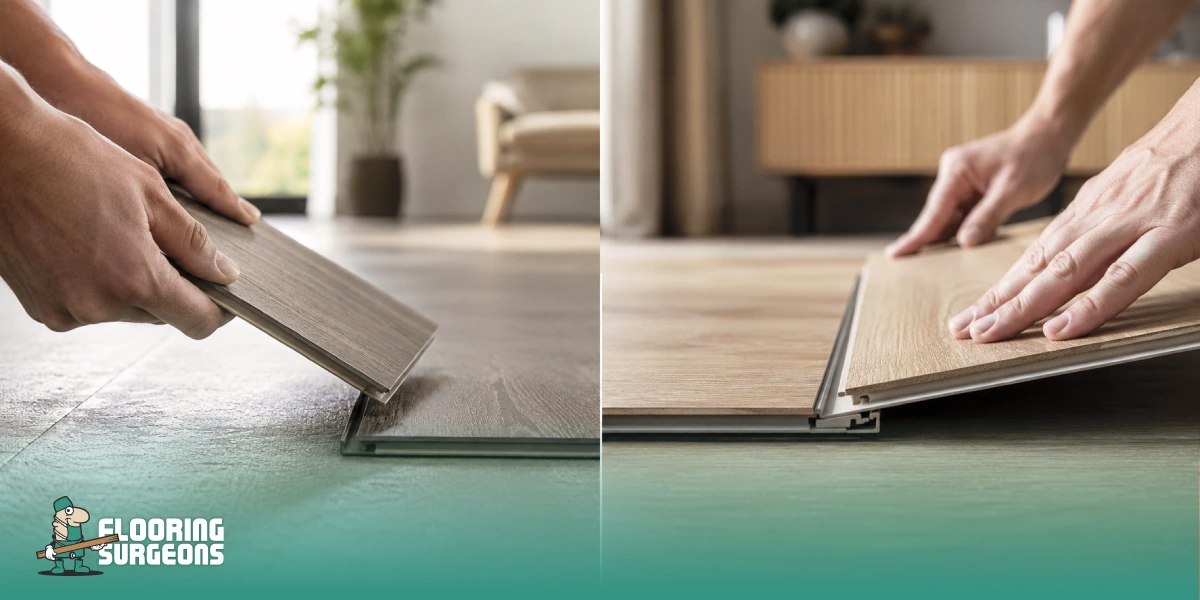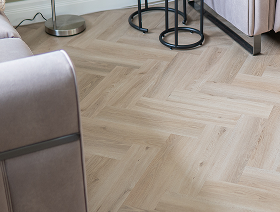
Installing vinyl click flooring correctly is essential for long-term durability, floor stability, and proper click-joint performance.
Incorrect installation may cause:
✔ Gaps between planks
✔ Broken click joints
✔ Lifting edges
✔ Floor movement
✔ Uneven surfaces
Modern vinyl click flooring is popular because it combines:
✔ Water resistance
✔ Durable construction
✔ Realistic wood aesthetics
✔ Faster installation without glue or nails
Although click flooring uses a floating floor system, proper preparation remains critical before installation begins.
✔ Prepare a flat and stable subfloor
✔ Control moisture levels
✔ Allow proper acclimatisation
✔ Use suitable underlay materials
✔ Maintain correct expansion gaps
✔ Plan the plank layout carefully
This installation guide covers:
✔ Straight plank vinyl click installation
✔ Herringbone vinyl click installation
✔ Subfloor preparation
✔ Underlay installation
✔ Layout planning
✔ Finishing details
✔ Common installation mistakes
✔ Vinyl click flooring installation costs
Following the correct installation process helps achieve a durable, stable, and professional-quality floor finish.
Want to learn how to install vinyl click flooring quickly and correctly? Watch the complete step-by-step video below before continuing with the detailed written guide. It visually explains the key preparation, fitting and finishing stages, making the installation process easier to understand and helping you avoid common mistakes while achieving a stable, professional-quality finish.
Table of contents
Understanding Vinyl Click Flooring Before Installation
Vinyl click flooring uses a floating floor system. The planks connect using engineered click joints rather than glue or nails. Because the floor floats as one connected surface, slight expansion and contraction are normal with temperature and humidity changes.
✔ Maintain correct expansion gaps
✔ Prepare a flat and stable subfloor
✔ Follow proper installation methods
✔ Allow for natural floor movement
Modern luxury vinyl click flooring uses advanced locking systems and rigid core construction to improve:
✔ Floor stability
✔ Moisture resistance
✔ Installation accuracy
✔ Long-term durability
Even high-quality flooring may fail if the subfloor is uneven or the installation is completed incorrectly.
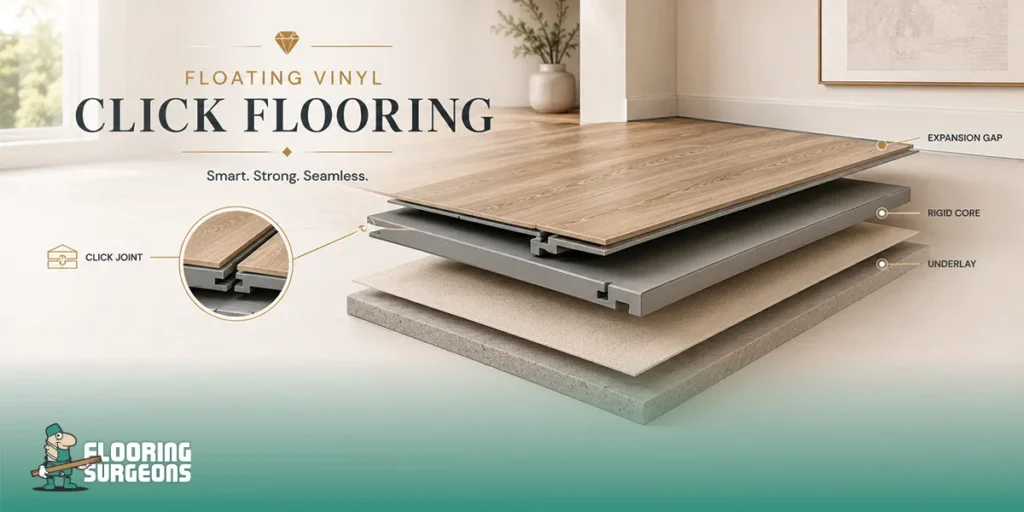
Main Vinyl Click Installation Styles
| Installation Type | Appearance | Installation Difficulty |
| Straight plank | Traditional linear layout | Easier |
| Herringbone | Decorative zig-zag pattern | More advanced |
Straight plank installation is usually faster and more suitable for experienced DIY fitting. Herringbone layouts require more planning, accurate centre lines, and continuous alignment checks during installation.
Tools and Materials Needed for Vinyl Click Flooring Installation
Using the correct tools helps improve installation accuracy and protects the click-lock system during fitting.
Incorrect tools may cause:
✔ Damaged click joints
✔ Inaccurate cuts
✔ Poor plank locking
✔ Wasted flooring material
| Tool | Purpose |
| Tape measure | Measuring room dimensions and cuts |
| Pencil and square | Marking accurate cut lines |
| Utility knife | Straight scoring cuts |
| Jigsaw | Curved and detailed cuts |
| Rubber mallet | Helping joints close gently |
| Tapping block | Protecting click edges |
| Pull bar | Installing final rows |
| Spacers | Maintaining expansion gaps |
| Spirit level | Checking floor flatness |
| Straight edge | Identifying uneven areas |
| Laser level | Herringbone alignment |
| Moisture meter | Moisture testing |
| Safety glasses | Eye protection during cutting |
| Knee pads | Comfort during installation |
Additional Materials Required
| Material | Purpose |
| Vinyl click flooring | Main flooring material |
| Approved underlay | Acoustic support and comfort |
| Damp proof membrane | Moisture protection |
| Self-levelling compound | Levelling uneven floors |
| Plywood overlay | Stabilising timber subfloors |
| Scotia or skirting | Covering expansion gaps |
| Transition strips | Joining rooms and floor types |
| Pipe collars | Covering pipe cuts |
Some vinyl click flooring products include built-in underlay. Always follow the manufacturer’s recommendations because incorrect underlay selection may damage the click joints or affect the flooring warranty.
Preparing the Room Before Vinyl Click Flooring Installation
The room must be fully prepared before opening any flooring packs or beginning installation.
Unstable room conditions may cause:
✔ Floor movement
✔ Click joint stress
✔ Expansion problems
✔ Uneven fitting results
Before installation begins, the room should be:
✔ Dry and weather-tight
✔ Fully decorated
✔ Free from wet trades
✔ Heated consistently
✔ Clean and ready for fitting
Painting, plastering, screeding, and other moisture-heavy work should always be completed before flooring installation starts. Furniture should also be removed completely to provide a clear installation area.
Doors may require trimming if the new flooring height affects clearance.
Following proper vinyl click flooring installation instructions helps create a more stable and accurate installation, while reducing the risk of movement, expansion issues and click joint failure after fitting.
Recommended Room Conditions
| Condition | Recommended Level |
| Room temperature | 18–27°C |
| Relative humidity | 35–65% |
| Heating | Stable and operational |
| Room condition | Dry and clean |
Avoid installing vinyl click flooring in damp environments or rooms with unstable temperatures unless the product is specifically designed for those conditions.
Correct Acclimatisation Process
Acclimatisation allows vinyl click flooring to adjust to the room environment before installation begins.
Installing flooring immediately after delivery may cause:
✔ Gaps between planks
✔ Lifting edges
✔ Expansion stress
✔ Floor movement
✔ Click joint failure
Both straight plank and herringbone vinyl click flooring require proper acclimatisation before fitting.
Step 1: Bring Flooring Into the Installation Room
Place all flooring packs inside the exact room where the flooring will be installed.
✔ Store flooring inside the installation room
✔ Keep packs away from damp conditions
✔ Avoid extreme temperature changes
✔ Protect planks from direct heat exposure
Do not store flooring packs in garages, sheds, cold rooms, or near radiators.
Step 2: Store Packs Flat
Keep all flooring packs flat on a dry and level surface during acclimatisation.
✔ Store packs on a level surface
✔ Prevent plank bending or warping
✔ Protect the click-lock system
✔ Keep flooring away from moisture
Do not lean flooring packs against walls because this may damage the planks or locking joints.
Step 3: Maintain Stable Conditions
Keep room temperature and humidity stable throughout the acclimatisation period.
✔ Maintain consistent room temperature
✔ Keep humidity levels stable
✔ Ensure heating is operational
✔ Avoid sudden environmental changes
Stable conditions help reduce unwanted flooring movement after installation.
Step 4: Leave Flooring for 24–48 Hours
Most vinyl click flooring products require acclimatisation for at least 24–48 hours before installation.
✔ Allow flooring to stabilise fully
✔ Follow manufacturer recommendations
✔ Consider room conditions and plank thickness
✔ Avoid rushing installation preparation
Some flooring products may require longer acclimatisation periods depending on environmental conditions.
Step 5: Inspect the Flooring
Inspect all flooring packs and planks carefully before installation begins.
✔ Check for damaged locking joints
✔ Inspect bent or warped planks
✔ Review colour variation between packs
✔ Look for visible defects or transport damage
Do not install damaged flooring planks.
Subfloor Preparation for Vinyl Click Flooring Installation
Subfloor preparation is one of the most important stages of the entire installation process.
An uneven or unstable subfloor may cause:
✔ Click joint failure
✔ Floor movement
✔ Uneven flooring surfaces
✔ Excessive plank stress
✔ Long-term installation problems
Before installation begins, the subfloor must be:
✔ Flat
✔ Dry
✔ Structurally stable
✔ Clean
✔ Free from movement
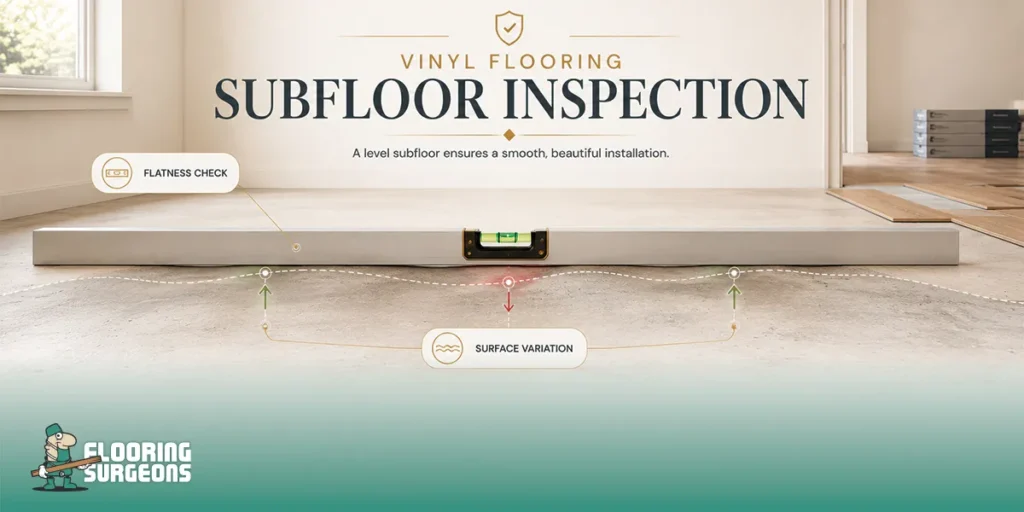
Recommended Flatness Standards
| Requirement | Recommended Standard |
| Surface variation | Maximum 3mm over 2m |
| Structural movement | None |
| Cleanliness | Dust-free |
| Moisture | Within manufacturer limits |
Use a long straight edge or spirit level to inspect the entire floor carefully before installation begins.
Concrete Subfloor Preparation
Concrete subfloors require careful cleaning, moisture testing, and levelling before installation begins.
Concrete may still contain hidden moisture even when the surface appears dry.
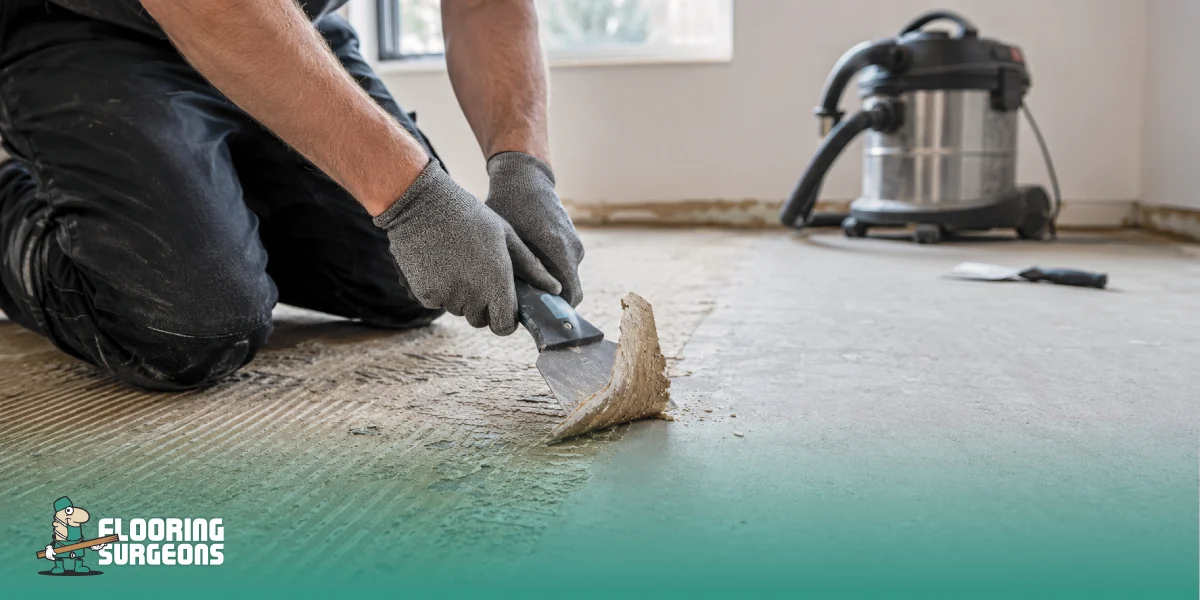
Clean the Surface
Remove all surface contamination before installation.
✔ Dust and debris
✔ Adhesive residue
✔ Paint and plaster
✔ Oil contamination
✔ Loose surface material
A clean surface helps improve floor stability and underlay performance.
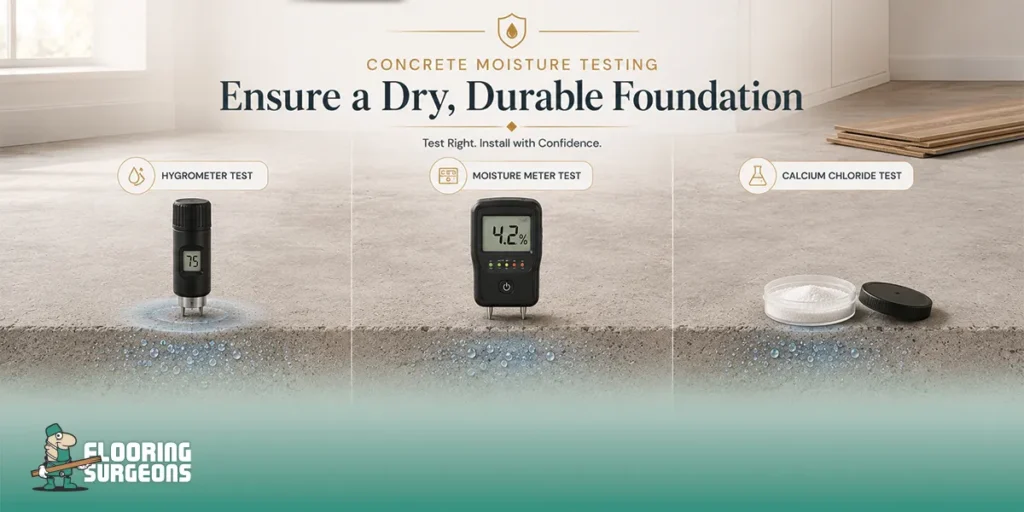
Test Moisture Levels
Moisture testing is essential before installing vinyl click flooring over concrete subfloors.
✔ Check moisture before installation
✔ Follow manufacturer moisture limits
✔ Test the entire floor area
✔ Prevent long-term moisture problems
New concrete subfloors may require an extended drying time before installation begins.
Common Moisture Tests
| Test Method | Purpose |
| Hygrometer test | Professional moisture reading |
| Moisture meter | Quick surface testing |
| Calcium chloride test | Advanced testing |
Proper moisture testing helps reduce the risk of flooring movement and long-term installation failure.
Install Damp Proof Membrane if Required
A damp-proof membrane helps protect the flooring from moisture transfer beneath the subfloor.
✔ Install moisture protection where required
✔ Overlap membrane joints correctly
✔ Seal all membrane edges securely
✔ Follow manufacturer installation guidelines
Correct membrane installation helps reduce long-term moisture problems beneath floating floors.
Level Uneven Concrete
Uneven concrete should be corrected before flooring installation begins.
✔ Use self-levelling compound where required
✔ Fill low areas and surface variations
✔ Allow the compound to dry fully
✔ Maintain proper room ventilation during application
A level subfloor helps reduce plank stress and improves click-joint performance after installation.
Wooden Subfloor Preparation
Timber subfloors must remain stable before vinyl click flooring installation begins.
Unstable timber flooring may cause:
✔ Floor movement
✔ Click joint stress
✔ Uneven flooring surfaces
✔ Noise and squeaking
Professional installers often use plywood overlays to improve floor stability and reduce movement beneath floating floors.
Common Timber Floor Problems
| Problem | Solution |
| Loose boards | Screw boards securely |
| Squeaking | Reinforce unstable areas |
| Uneven boards | Sand or overlay |
| Rot or damp | Replace damaged sections |
Correct timber floor preparation helps improve long-term flooring stability and installation performance.
Underlay Installation for Vinyl Click Flooring
Some vinyl click flooring products include built-in underlay. Adding additional underlay beneath these products may damage the click-lock system.
When a separate underlay is required, it must be approved specifically for vinyl click flooring.
An Incorrect underlay may cause:
✔ Excessive floor movement
✔ Weak click joints
✔ Uneven flooring performance
✔ Reduced floor stability
Correct underlay helps improve:
✔ Comfort underfoot
✔ Acoustic performance
✔ Thermal insulation
✔ Floor stability
Underlay should never be used to hide major subfloor problems.
Correct Underlay Installation Steps
Step 1: Clean the Subfloor
Vacuum the subfloor thoroughly before installing the underlay.
✔ Remove dust and debris
✔ Clean the full installation area
✔ Prevent surface imperfections
✔ Prepare a smooth foundation
Debris trapped beneath the underlay may become visible after installation.
Step 2: Roll Out the Underlay
Lay the underlay flat across the subfloor without stretching or forcing the material.
✔ Keep the underlay flat and smooth
✔ Avoid wrinkles and folds
✔ Prevent trapped air beneath the surface
✔ Follow the room layout carefully
Wrinkles or uneven sections may transfer through the finished flooring surface later.
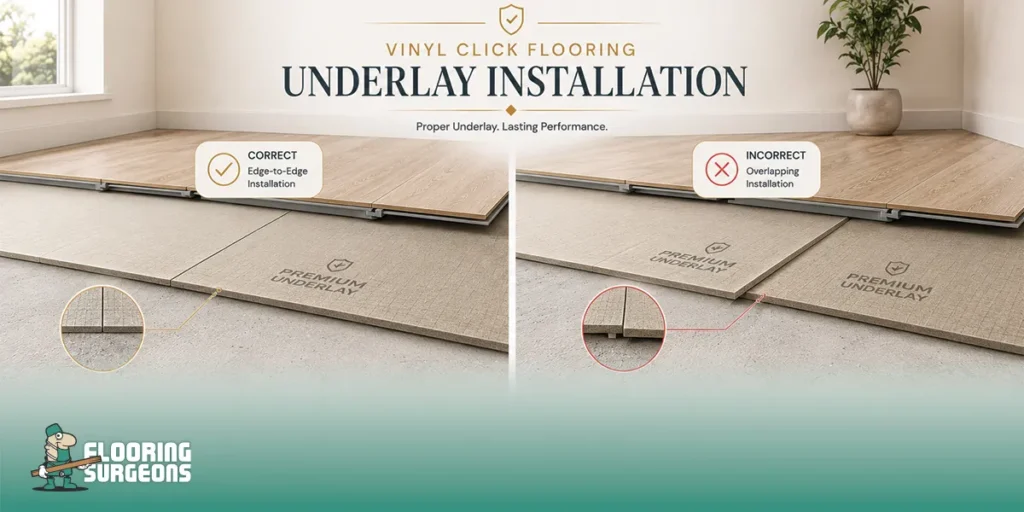
Step 3: Install Edge-to-Edge
Most underlays should be installed edge-to-edge rather than overlapped.
✔ Keep joints aligned evenly
✔ Avoid raised underlay sections
✔ Maintain a level flooring surface
✔ Prevent pressure points beneath planks
Overlapping underlay may create visible ridges beneath the flooring.
Step 4: Tape the Joints
Secure all underlay joints using suitable underlay tape before flooring installation begins.
✔ Prevent underlay movement
✔ Keep joints stable during fitting
✔ Maintain a smooth installation surface
✔ Reduce shifting beneath the floor
Proper joint taping helps improve underlay stability during installation.
Step 5: Inspect the Surface
Inspect the entire underlay surface carefully before laying the flooring.
✔ Check for wrinkles or folds
✔ Inspect raised seams carefully
✔ Remove trapped debris
✔ Confirm the surface remains smooth and stable
A smooth underlay surface helps improve final flooring appearance and click-joint performance.
Planning the Vinyl Click Flooring Layout
Good layout planning improves the final appearance and helps reduce installation problems during fitting.
Before installation begins:
✔ Measure the room carefully
✔ Calculate first and final row widths
✔ Avoid narrow perimeter cuts
✔ Plan plank direction correctly
Proper planning helps create a more balanced and professional-looking floor installation.
Recommended Plank Directions
| Room Type | Recommended Direction |
| Hallways | Lengthwise |
| Small rooms | Towards natural light |
| Open-plan spaces | Along longest visual line |
| Rectangular rooms | Parallel with longest wall |
For herringbone layouts, centre-line alignment is more important than wall direction. Many installers also dry lay several planks before installation begins to visualise the layout and reduce awkward perimeter cuts.
Expansion Gaps During Installation
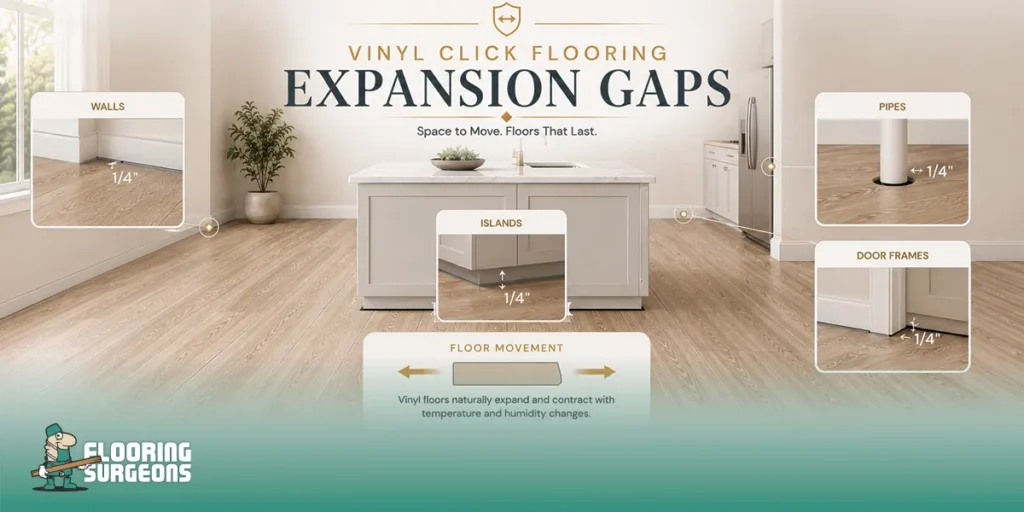
Expansion gaps allow floating floors to move naturally with temperature and humidity changes.
Without proper expansion gaps, the floor may:
✔ Buckle
✔ Lift
✔ Separate
✔ Push against fixed objects
Areas Requiring Expansion Gaps
✔ Walls
✔ Pipes
✔ Kitchen islands
✔ Fireplaces
✔ Door frames
✔ Fitted furniture
✔ Thresholds
✔ Stair edges
Recommended Expansion Gaps
| Area | Gap Size |
| Walls | 5–10mm |
| Pipes | 5–10mm |
| Door frames | 5–10mm |
| Fixed objects | 5–10mm |
Floating floors should never become trapped beneath fixed cabinets unless approved by the flooring manufacturer.
How to Install Vinyl Click Flooring – Straight Plank Installation
Straight plank installation is the most common vinyl click flooring fitting method. Although installation is faster than herringbone fitting, correct alignment and click-joint locking remain essential throughout the process.
Step 1: Plan the First Row
Choose the straightest wall as the starting point before installation begins.
✔ Use spacers to maintain expansion gaps
✔ Mark a straight reference line if required
✔ Check wall straightness carefully
✔ Plan the first row alignment accurately
The first row controls the alignment of the entire floor installation.
Step 2: Install the First Plank
Place the first plank carefully and check that it remains flat against the subfloor.
✔ Position the tongue side correctly
✔ Keep the plank tight against spacers
✔ Inspect click edges before installation
✔ Check for plank bowing or damage
Correct installation of the first plank improves overall floor alignment.
Step 3: Complete the First Row
Connect the planks end-to-end carefully without forcing the click joints.
✔ Keep joints aligned tightly
✔ Avoid forcing the locking system
✔ Inspect click edges during fitting
✔ Measure the final plank carefully
If locking becomes difficult, check for debris, damaged edges, or incorrect plank angles before continuing.
Step 4: Start the Next Row Correctly
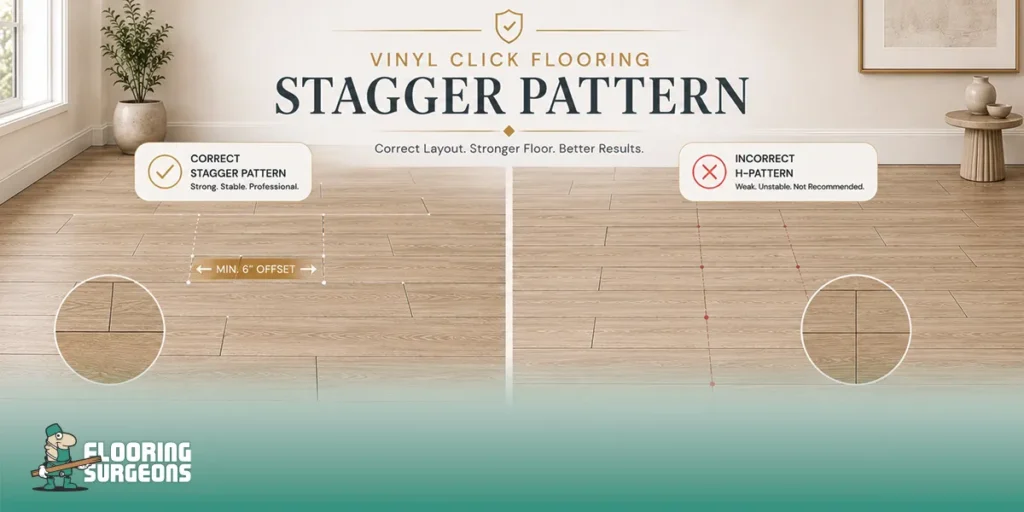
Use the offcut from the previous row if it is long enough to maintain the stagger pattern.
✔ Maintain consistent plank staggering
✔ Avoid visible H-patterns
✔ Use suitable offcuts where possible
✔ Improve floor stability and appearance
Recommended Joint Offsets
| Plank Type | Minimum Offset |
| Standard plank | 20–30cm |
Mix planks from multiple boxes during installation to improve colour variation naturally.
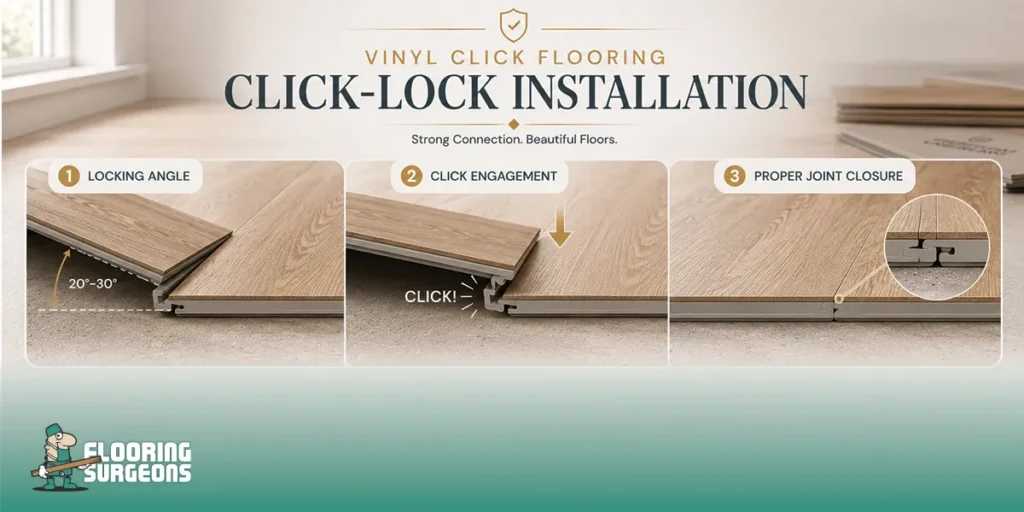
Step 5: Lock the Long Edges
Angle the plank into the previous row and lower it slowly until the click joint locks securely.
✔ Apply gentle pressure only
✔ Lower the plank carefully
✔ Use tapping tools carefully if required
✔ Avoid striking click edges directly
Inspect each plank carefully for micro gaps after locking.
Step 6: Continue Across the Room
Continue installation row-by-row while checking alignment regularly.
✔ Maintain stagger consistency
✔ Check expansion gaps continuously
✔ Inspect click joints for debris
✔ Monitor plank alignment carefully
✔ Check for micro gaps between planks
Correct installation problems immediately before continuing.
Step 7: Cut Around Obstacles
Most rooms include fixed obstacles that require careful plank cutting during installation.
✔ Measure cuts carefully before cutting
✔ Maintain expansion gaps around objects
✔ Use suitable cutting tools
✔ Wear safety glasses during cutting
Use a jigsaw for detailed cuts around pipes, corners, kitchen units, and door frames.
Step 8: Install Around Pipes
Mark all pipe positions carefully before cutting the planks.
✔ Measure pipe locations accurately
✔ Drill holes slightly larger than the pipe diameter
✔ Maintain expansion space around pipes
✔ Install pipe collars after fitting
Correct pipe cutting helps allow natural floor movement and improves the final finish.
Step 9: Undercut Door Frames
Professional installers usually undercut door frames instead of cutting around them.
✔ Allow flooring to slide beneath the frame
✔ Hide expansion gaps neatly
✔ Create a cleaner installation finish
✔ Measure cutting height accurately
Use an offcut plank and underlay to determine the correct undercut height before cutting.
Step 10: Install the Final Row
Measure the remaining gap carefully because walls are rarely perfectly straight.
✔ Measure multiple points carefully
✔ Maintain expansion gaps consistently
✔ Cut the final row accurately
✔ Use a pull bar carefully during fitting
Accurate final-row fitting helps create a cleaner perimeter finish.
Step 11: Inspect the Straight Plank Installation
Inspect the floor carefully before fitting trims or allowing normal use.
✔ Check for visible gaps
✔ Inspect damaged planks
✔ Look for uneven joints
✔ Confirm expansion gaps remain clear
✔ Check floor alignment carefully
Fix all installation problems before continuing with finishing details.
Herringbone Vinyl Click Installation
Herringbone vinyl click flooring creates a premium and decorative floor layout. Because the pattern relies on perfect alignment and consistent angles, installation requires significantly more precision than straight plank fitting.
Incorrect installation may cause:
✔ Pattern drift
✔ Open joints
✔ Uneven perimeter cuts
✔ Broken click joints
✔ Layout imbalance
Herringbone layouts also create more material waste because of the angled perimeter cuts. In many cases, waste levels may increase by 10–15% compared to straight plank installations.
Step 1: Plan the Herringbone Layout
Plan the visual layout carefully before installation begins.
✔ Align the pattern with the main doorway
✔ Use the focal point as a reference
✔ Follow the longest visual line
✔ Balance perimeter cuts carefully
Poor layout planning may create uneven edges and visually unbalanced flooring.
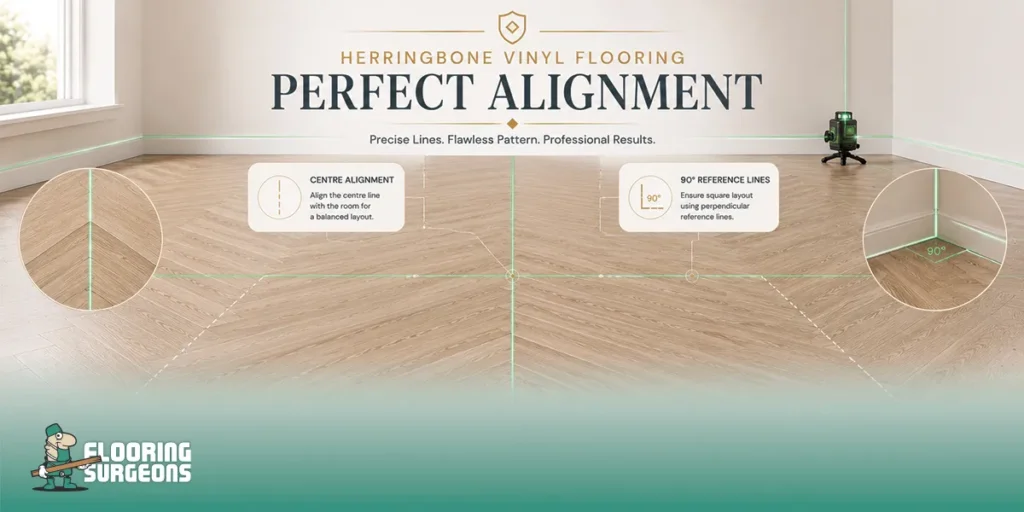
Step 2: Mark Accurate Centre Lines
Use laser levels or chalk lines to create accurate centre reference lines before fitting begins.
✔ Mark a perfectly straight centre line
✔ Create accurate 90-degree reference lines
✔ Avoid relying on uneven walls
✔ Recheck alignment before installation
Maintaining accurate alignment helps prevent long-term pattern drift.
Step 3: Dry Lay the Starter Area
Dry lay several rows before locking the flooring permanently.
✔ Check pattern symmetry
✔ Confirm doorway positioning
✔ Inspect edge cuts carefully
✔ Verify centre alignment
✔ Review overall visual balance
Many installers use a double-triangle starter layout to improve alignment accuracy.
Step 4: Organise Left and Right Planks
Many herringbone click systems use separate left and right planks.
✔ Separate plank types before installation
✔ Keep plank orientation consistent
✔ Prevent incorrect locking
✔ Improve installation speed and accuracy
Incorrect plank positioning may disrupt the herringbone pattern and prevent proper locking.
Step 5: Build the Starter Rows Carefully
The starter rows control the alignment of the entire herringbone installation.
✔ Maintain accurate plank angles
✔ Check centre alignment regularly
✔ Keep row spacing consistent
✔ Build the zig-zag pattern carefully
Small alignment mistakes become more visible as the pattern expands across the room.
Step 6: Lock Herringbone Planks Correctly
Insert each plank at the correct locking angle before lowering it carefully into position.
✔ Lock planks gently into place
✔ Check every joint carefully
✔ Avoid forcing the click system
✔ Prevent visible click-joint damage
Damaged click joints are highly visible in herringbone layouts.
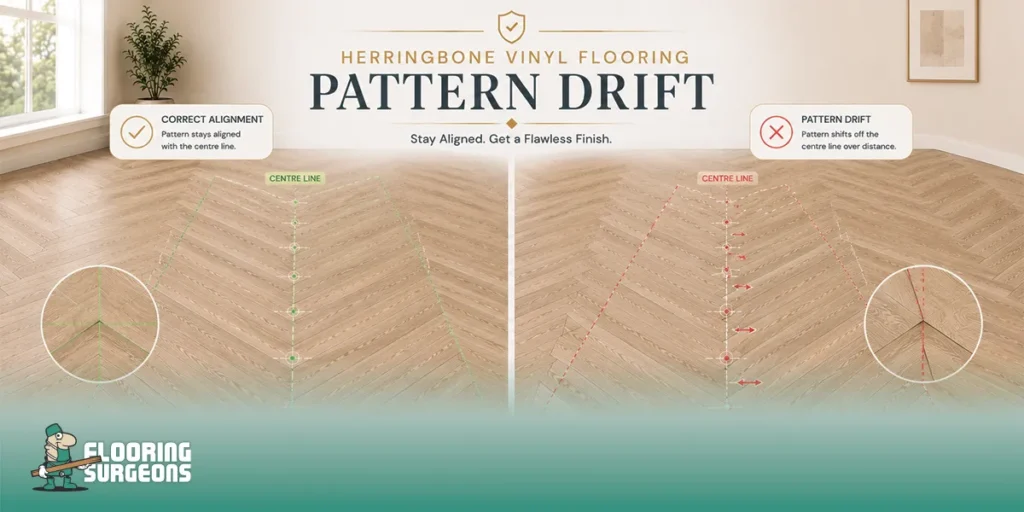
Step 7: Prevent Pattern Drift
Pattern drift occurs when the herringbone layout gradually moves out of alignment during installation.
✔ Check alignment every few rows
✔ Use reference lines continuously
✔ Monitor pattern consistency carefully
✔ Correct alignment shifts immediately
Many installers recheck cumulative alignment every 3–4 rows to maintain a square layout across the room.
Common Herringbone Problems
| Problem | Cause | Prevention |
| Pattern drift | Incorrect centre line | Use laser guides |
| Open joints | Incorrect locking angle | Refit carefully |
| Uneven edges | Poor planning | Dry lay first |
| Broken joints | Forced installation | Use correct locking technique |
Professional installers often recheck cumulative alignment every 3–4 rows to ensure the pattern remains square throughout the room.
Step 8: Cut Perimeter Pieces
Perimeter cuts in herringbone layouts require careful measuring and angled cutting.
✔ Measure each cut individually
✔ Maintain expansion gaps consistently
✔ Check angled cuts carefully
✔ Preserve layout symmetry around the room
Mirror-image cuts are often required on opposite sides of the room to maintain visual balance.
Step 9: Complete the Final Sections
The final sections usually require the most detailed cutting and alignment work.
✔ Check pattern symmetry continuously
✔ Maintain consistent plank angles
✔ Verify expansion gaps carefully
✔ Inspect edge alignment before finishing
Rushing the final rows may create highly visible installation problems.
Step 10: Inspect the Herringbone Installation
Inspect the entire floor carefully before installing trims or completing the finishing details.
✔ Check for pattern drift
✔ Inspect open click joints
✔ Look for damaged plank edges
✔ Verify spacing consistency
✔ Check perimeter alignment carefully
✔ Confirm expansion gaps remain clear
Correct all installation problems before finishing the floor.
A careful final inspection is an important part of herringbone click vinyl flooring installation, as small alignment or spacing problems can become highly visible across the finished pattern. Understanding how to lay click vinyl correctly also helps reduce the risk of joint separation, pattern drift and uneven perimeter spacing.
Finishing the Vinyl Click Flooring Installation
Correct finishing protects the floor edges and improves the overall appearance of the installation.
Installing Scotia and Skirting
Scotia and skirting trims help conceal expansion gaps around the room perimeter.
✔ Cover perimeter expansion gaps
✔ Improve edge appearance
✔ Protect wall edges from damage
✔ Create a cleaner final finish
Trims should always be fixed to the wall rather than the floor. Fixing trims through the flooring may restrict natural floor movement and cause buckling.
Installing Transition Strips
Transition strips help create smooth flooring transitions between adjoining spaces.
✔ Connect separate rooms
✔ Improve doorway transitions
✔ Join different flooring types
✔ Protect exposed flooring edges
Large open-plan installations may also require additional expansion breaks.
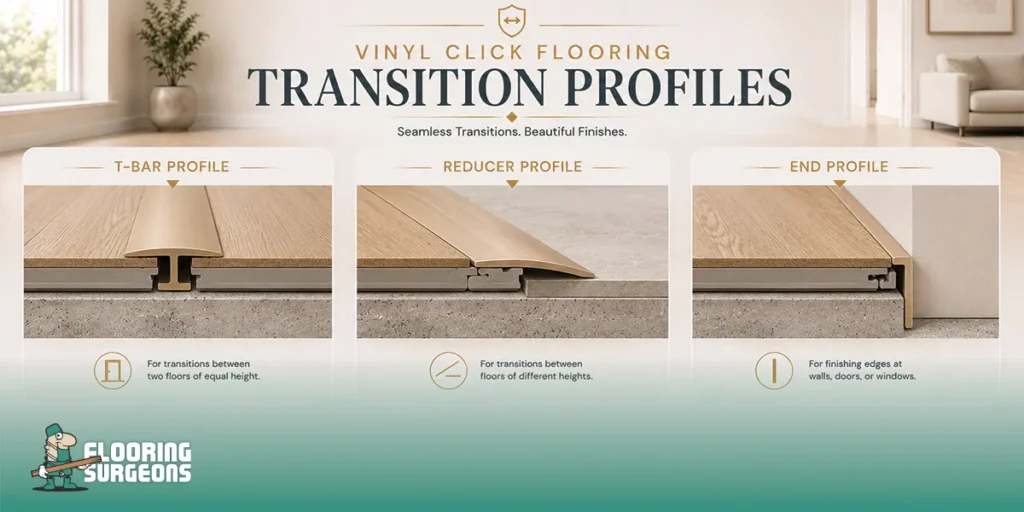
Common Transition Profiles
| Profile Type | Purpose |
| T-bar | Floors of equal height |
| Reducer | Floors of different heights |
| End profile | Exposed floor edges |
Correct transition profiles help improve both floor protection and visual continuity.
Cleaning After Installation
Clean the flooring carefully after installation to remove dust and installation debris.
✔ Vacuum the floor carefully
✔ Remove dust and loose debris
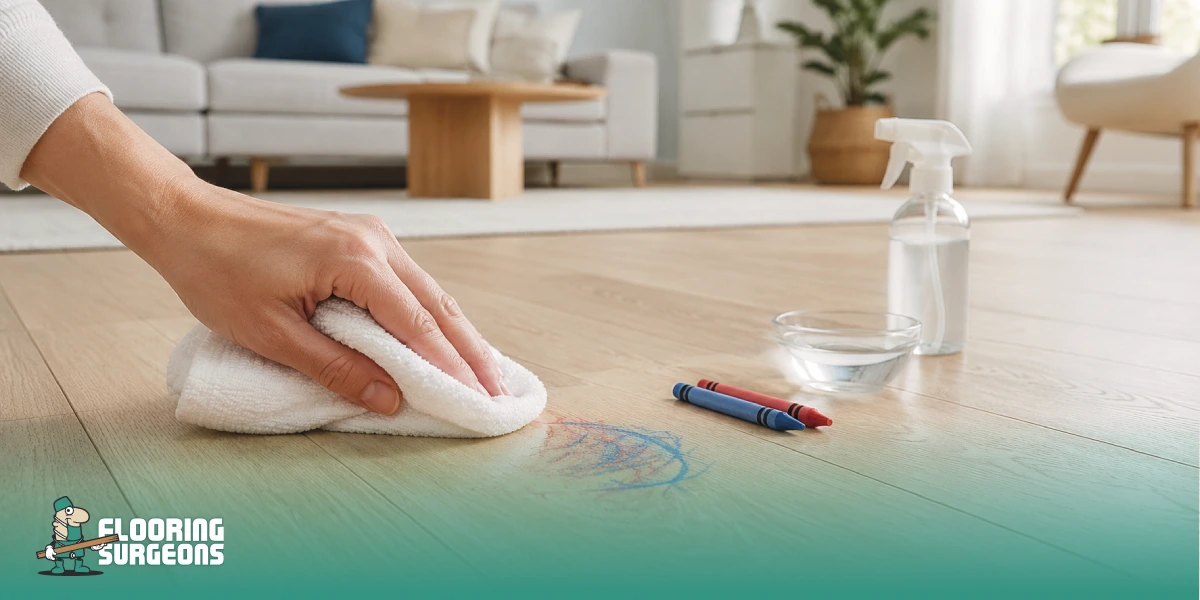
✔ Use a damp microfibre mop if required
✔ Follow vinyl-safe cleaning methods
Avoid Using
✘ Excessive water
✘ Steam cleaners
✘ Abrasive pads
✘ Harsh chemicals
Move heavy furniture carefully after installation and always use felt pads beneath furniture legs to help prevent scratching.
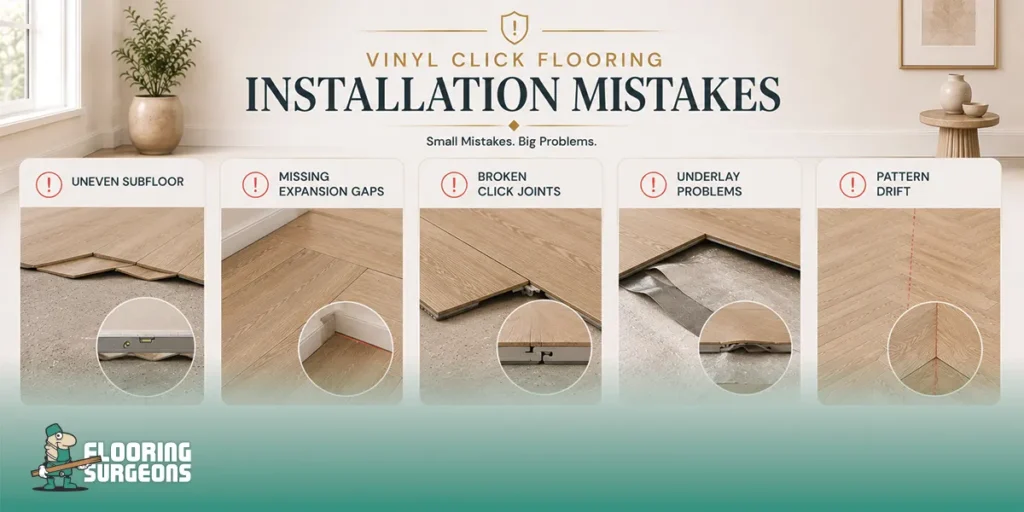
Common Vinyl Click Installation Mistakes
Most vinyl click flooring failures happen because the preparation or installation stages are rushed.
Common Installation Mistakes
| Mistake | Problem Caused | Prevention |
| Uneven subfloor | Joint stress | Level the floor properly |
| Skipping acclimatisation | Expansion problems | Acclimatise for 24–48 hours |
| Wrong underlay | Excess movement | Use approved underlay |
| No expansion gaps | Buckling | Use spacers correctly |
| Forced locking | Broken joints | Refit planks carefully |
| Poor first row alignment | Crooked installation | Use reference lines |
| Ignoring moisture | Floor movement | Test moisture levels |
| Rushed herringbone layout | Pattern drift | Use centre lines |
Most long-term flooring problems are caused by poor preparation, moisture issues, incorrect underlay selection, or missing expansion gaps rather than the flooring product itself.
Taking extra time during subfloor preparation and layout planning helps improve long-term flooring durability.
Vinyl Click Flooring Installation Cost
The total vinyl click flooring installation cost depends on several project and preparation factors.
✔ Room size
✔ Installation complexity
✔ Subfloor condition
✔ Flooring type
✔ Preparation work required
Straight plank installation generally costs less because fitting is faster and requires fewer detailed cuts.
Herringbone installation costs more because it requires:
✔ More labour
✔ Greater fitting accuracy
✔ Additional layout planning
✔ More perimeter cutting
✔ Higher material waste
Typical UK Labour Installation Costs
| Installation Type | Approximate UK Cost |
| Straight plank installation | £15–£25 per m² |
| Herringbone installation | £25–£45 per m² |
| Subfloor levelling | Additional cost |
| Damp proof membrane | Additional cost |
Prices may vary depending on region, installer experience, room complexity, floor preparation requirements, and flooring type.
If the subfloor requires levelling, moisture treatment, overlays, or repairs, total installation costs may increase significantly.
Many homeowners choose experienced installers such as Flooring Surgeons for herringbone installations because of the higher fitting precision required.
Final Thoughts
A successful vinyl click flooring installation depends on preparation, precision, and proper installation methods.
✔ Install over a flat subfloor
✔ Maintain a dry and stable surface
✔ Prepare the room correctly before fitting
✔ Follow proper expansion-gap requirements
✔ Use suitable installation techniques throughout
Straight plank installation provides a faster and more beginner-friendly fitting method, while herringbone layouts create a more decorative finish that requires greater technical accuracy.
By following correct vinyl click flooring installation methods and understanding every installation stage carefully, it is possible to achieve a durable, stable, and professional-quality floor for many years.
If you are also considering a fully bonded fitting method, you can learn more about glue-down vinyl plank flooring installation and the differences between glue-down and click installation systems in our detailed installation guide.

Mina Asgari
I’m an SEO Specialist and Content Strategist focused on sustainable business growth. I design data-driven content strategies by deeply analyzing user intent, search behavior, and SEO best practices, ensuring every piece of content serves a clear purpose for both users and search engines.