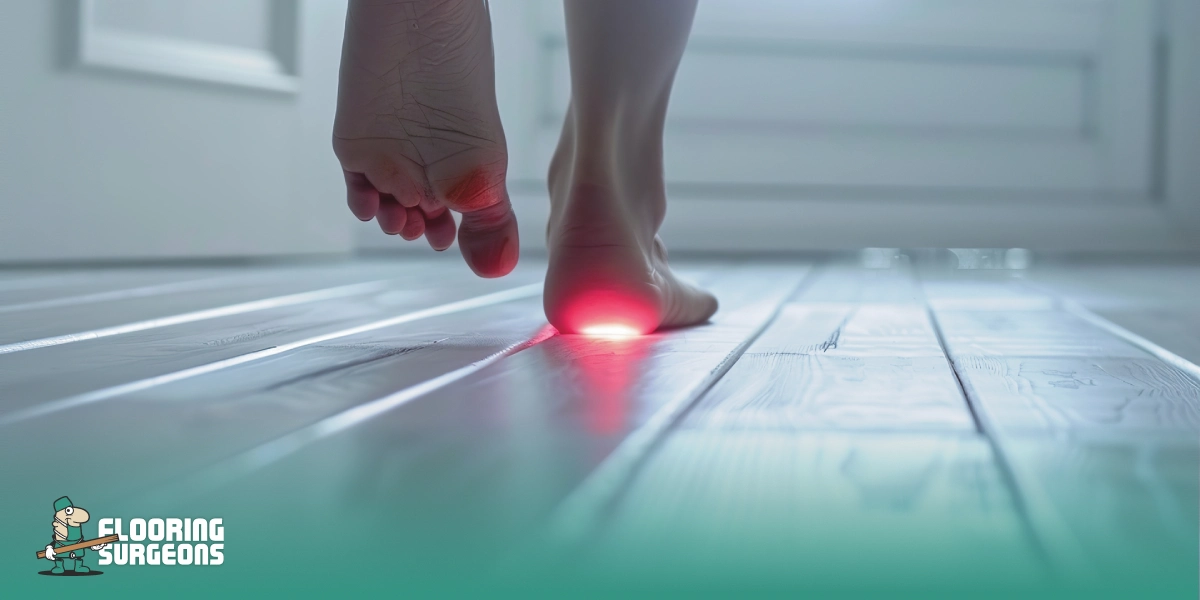
Imagine stepping into a room and watching the floor transition from icy white to warm amber, not because someone pressed a button but because it knew how you were feeling. These floors use biometric data to detect your mood and respond in real time. It’s a futuristic concept, but the tech is being developed right now.
They sense subtle shifts in your physical cues, temperature, pressure patterns, and heart rate, then translate those into colourful pixels. Blue shows you’re relaxed, red signals stress, and green means focus. With research revealing that flooring impacts our physical and mental well-being, designers and engineers are rethinking the role of floors. We explore how mood-sensing floors work, current technology, and their impact on future homes.
Table of contents
How Do Mood-Sensing Floors Actually Work?
Emotion-responsive flooring blends sensors, data processing, and colour-changing materials into an inviting experience. The floor gently reads your body’s signals, interprets them with care, and softly shifts colour to meet your mood.
The Technology Behind Emotion Detection
Three main systems make this possible:
- Biometric sensors invite you to connect with the floor, detecting body temperature and heart rate.
- Pressure-sensitive panels tune in to your unique walking patterns, your pace, weight distribution, and movement subtly mirror your emotions.
- Thermal imaging detects stress-related changes in skin temperature.
From Sensor to Colour: The Process
The floor thoughtfully sends data to a processing unit that gently matches your biometric profile with a colour psychology framework. Within seconds, soft LED panels or electroluminescent materials beneath the surface warmly shift to the corresponding colour. No buttons. No manual control. Just a real-time, welcoming response.

The Science of Colour and Emotion
Colour isn’t just visual, it’s physiological. Certain wavelengths of light trigger real responses in the brain, affecting cortisol levels, heart rate, and even muscle tension. This is why colour psychology sits at the core of mood-sensing floor design.
Why Colours Affect Our Mood
The brain processes colour before conscious thought kicks in. Cool tones like blue and green activate the parasympathetic nervous system, slowing the heart rate and reducing anxiety. Warm tones like red and orange do the opposite, they raise alertness and energy. Designers and therapists have used this for decades. Emotion-responsive flooring just automates it.
Colour Mapping for Different Emotions
| Emotion | Floor Colour | Effect |
| Calm / Relaxed | Soft Blue | Lowers heart rate, reduces tension |
| Stressed / Anxious | Deep Purple | Signals the system to shift toward calming tones |
| Focused / Productive | Cool Green | Enhances concentration |
| Energized / Happy | Warm Amber | Boosts mood and alertness |
| Fatigued | Pale Yellow | Gentle stimulation without overstimulation |
To explore how floor tone affects our experience of a room, The Psychology of Dark flooring vs Light flooring offers insight into the emotional impact of colour choices.
Where Mood-Sensing Floors Are Already Being Used
Mood-sensing floors aren’t just a concept for tech labs. The applications span from personal wellness spaces to professional therapeutic environments.
Home Wellness Spaces
Interactive floor systems are being installed in meditation spaces, home offices, and bedrooms. Our vision is to create spaces that adapt to you, instead of you adapting to them. Imagine a floor that shifts to a calming blue as you relax for sleep, or glows with energising amber when focus is needed for work. This isn’t just about novelty; it’s about thoughtful design that actively supports mental health.
Some use Waterproof Luxury Vinyl as the underlayment for these systems. It manages moisture, remains durable, and provides a suitable surface for embedding sensors. Practicality is prioritised before futuristic design.
Therapeutic Environments
Likely, your Mental Health Facility and Autism-Friendly Spaces will reap the greatest rewards. The colour-changing floor could be used as a communication tool for non-verbal people. Imagine the colours shifting with emotions they are unable to convey through words. Study after study has proven there’s much more to The Importance of Flooring in Health than just looks. There’s strong evidence that flooring can impact stress levels, behaviour, and even recovery.
Commercial Spaces
Retail stores and hotels are testing floors that sense mood. Imagine entering a store: as crowds grow, the entryway shifts to calming, warm colours. In a hotel lobby, the lighting and hue of the floor adjust based on crowd size and time. These features use psychology to shape how guests feel in the space.
The hotel industry views mood-sensing technology as an advanced form of customer service. For instance, if the flooring detects elevated stress in a waiting area, staff can respond promptly. When a calm atmosphere is sensed, the environment helps reinforce that feeling among guests.

What Mood-Sensing Floors Cost Today
True emotion-sensing floors aren’t on the market yet, but interactive floor technology is already hereو it just hasn’t reached full biometric integration.
Interactive Flooring Solutions:
- LED tile systems light up in response to pressure and movement. You’ll find them in nightclubs and retail spaces. They respond to physical input, not emotions, but the concept is similar.
- Smart vinyl flooring tracks foot traffic and adjusts lighting. Some connect to smart home systems and change colour based on time or temperature. The infrastructure exists — biometric integration is the missing piece.
- Programmable floor panels let you control colour through an app. You set the mood manually, but it’s a step toward automation.
Stepping Stones to the Future
- Pressure-sensitive tiles in research labs measure gait and weight distribution, both linked to emotional state. Add AI processing, and you’re close to real emotion detection.
- Colour-changing laminate uses thermochromic materials that respond to body heat. If stress raises your temperature, the floor shifts colour. It’s basic, but functional.
- Smart home integration is the next phase. Floors that sync with wearables and voice assistants. Your smartwatch detects an elevated heart rate, and the floor responds with calming tones. The technology isn’t standalone, it’s part of a connected system.
Options like Laminate Flooring offer the durability needed for future upgrades. As sensors become affordable, retrofitting will be easier than starting from scratch.

Installing Emotion-Responsive Flooring
Mood-sensing floors are impressive on paper, but the real questions are cost, upkeep, and compatibility with your existing setup.
Cost Factors
Basic LED tile systems start around 50–50–50–150 per square foot installed. Full biometric systems with sensor integration push that number significantly higher. For most homeowners, the entry point right now is programmable or pressure-sensitive tiles that are more affordable, still interactive.
Maintenance Requirements
The more technology is embedded in a floor, the more maintenance is required. LED panels need occasional replacement. Sensor calibration drifts over time and requires professional adjustment. Waterproofing the electronic components is critical — moisture is the biggest threat to any smart flooring system.
Integration with Smart Home Systems
Most interactive floors use Wi-Fi or Bluetooth to connect with smart home hubs. Compatibility with platforms like Google Home, Amazon Alexa, and Apple HomeKit varies by manufacturer. Before installing, confirm the system works with what you already have.

Conclusion
Mood-sensing floors aren’t science fiction anymore. The technology is being built, tested, and refined right now — in research labs, therapeutic spaces, and forward-thinking homes. Biometric sensors, colour psychology, and smart home integration are converging into something that could fundamentally change how we design living spaces.
The floor beneath your feet has always shaped how a room feels. Emotion-responsive flooring just makes that relationship explicit.
Ready to experience the future of flooring? Visit Flooring Surgeons to find your perfect solution and take the first step toward tomorrow’s upgrade today.

Ana.Soltanpoor
I’m an SEO Specialist with a strong background in content management and organic search. I build data-driven content strategies by aligning user intent, search behavior, and SEO best practices to ensure every piece of content delivers clarity, relevance, and measurable organic performance.