Ink stains on laminate flooring can be scary, particularly when you go to wipe them up and just spread the stain further. The best method is to work quickly and protect the floor’s finish coat, since aggressive scrubbing or an improper cleaning product can create dull areas, bubbling or permanent discolouration.
Contemporary laminate flooring can take a beating from daily traffic, but that does not mean all cleaning solutions are harmless. To effectively remove ink from a laminate wood floor, apply low pressure, use as little moisture as possible, and use the correct technique right away to lift the stain without damaging the finish.
Table of contents
Quick Guide: Safe Ink Removal Methods at a Glance
Depending on how much trouble you’re causing your floor, some ink types need more caution than others. Check out this table to learn the safest method for your stain severity:
| Stain Type | Recommended Method | Safety Level |
| Fresh Pen Ink | Dry microfiber cloth + gentle blotting | Very High |
| Dried Ballpoint Ink | Damp cloth with mild, pH-neutral cleaner | High |
| Permanent Marker | Isopropyl alcohol spot test + micro-dabbing | Medium (Requires caution) |
| Deep or Old Stains | Manufacturer consultation / plank replacement | Professional Care |
The Essential Steps: How to Get Ink Out of Laminate Wood Floor
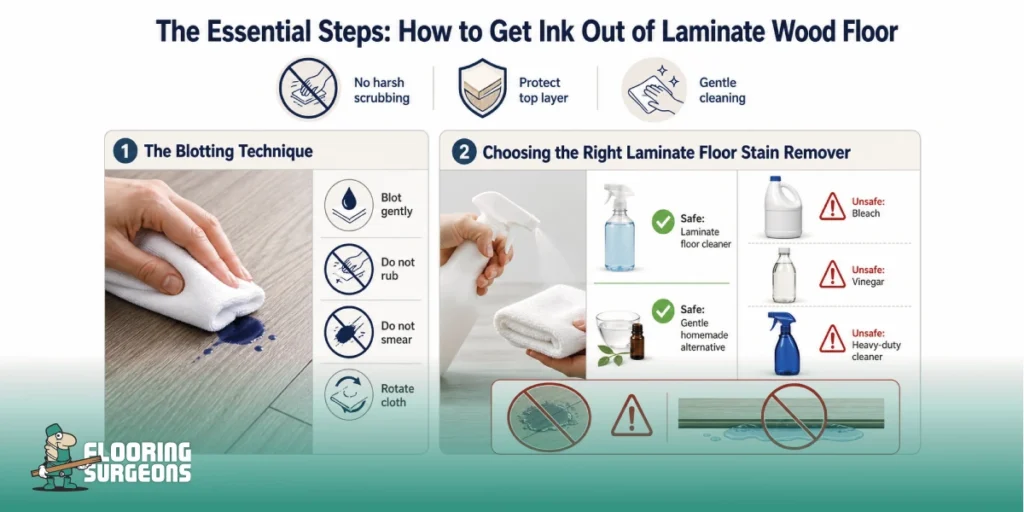
Removing ink from your floor does not require harsh scrubbing. In fact, aggressive scrubbing is the easiest way to ruin your floor’s protective top layer. Follow these step-by-step phases to address the problem systematically.
Step 1: The Blotting Technique
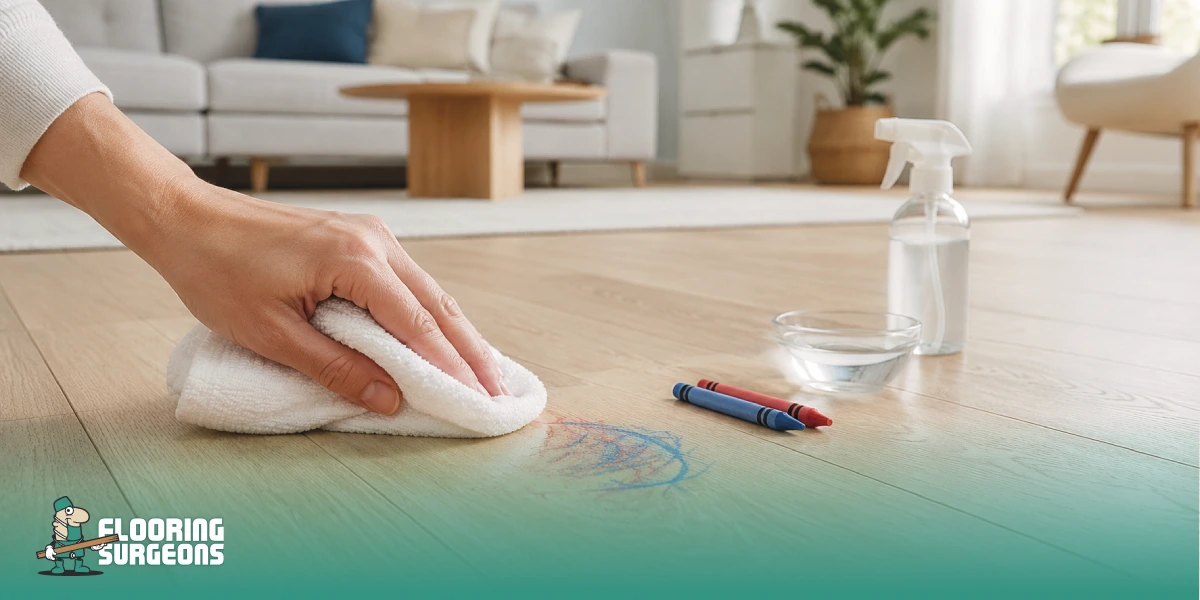
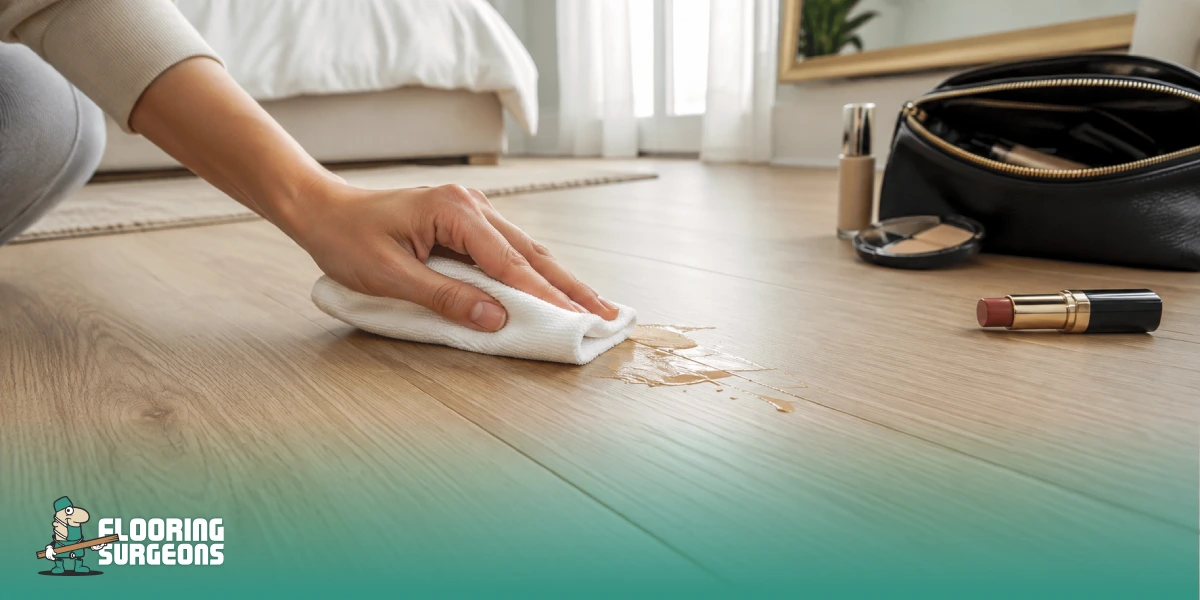
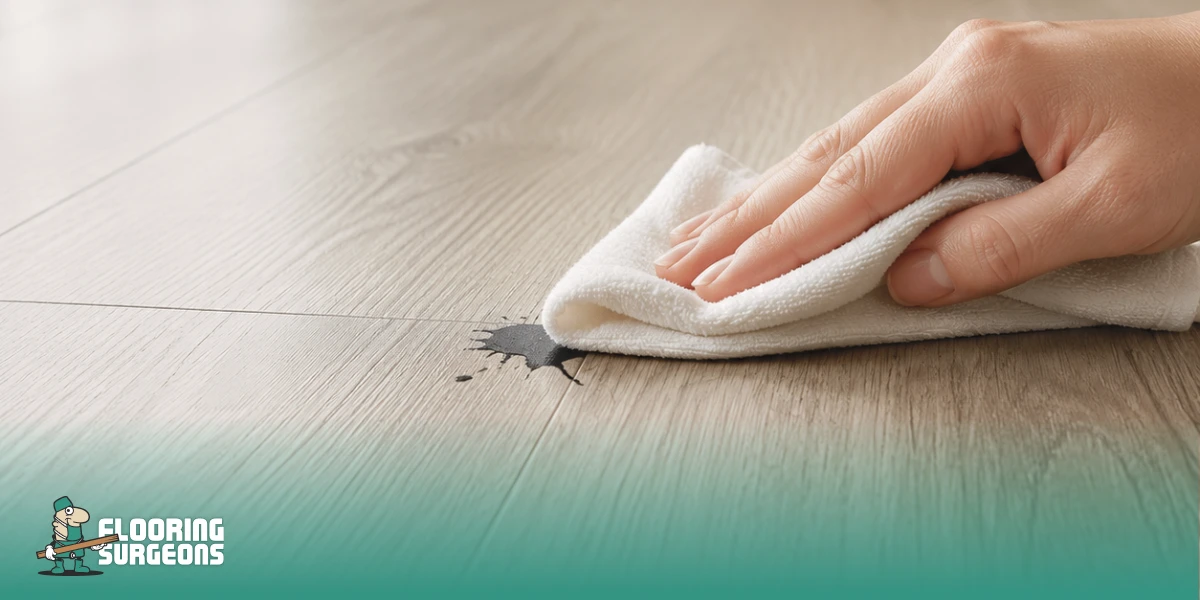
If the ink hasn’t had time to dry, the objective is to remove it before it penetrates into the pores of the wood grain. Take a clean, dry microfiber cloth and gently blot the puddle. Avoid rubbing, wiping, or smearing, as you’ll just spread the ink around and make a bigger stain.
Knowing how to clean stains on laminate flooring without damaging it always starts with this light blotting. Continue wiping with a clean area of the cloth after each tap so you aren’t re-depositing released ink onto the floor.
Step 2: Choosing the Right Laminate Floor Stain Remover
If the dry cloth doesn’t do the trick, you’ll need a liquid cleaner. Don’t reach for ordinary bottles of heavy-duty multipurpose household detergent, bleach, or vinegar solutions, as they are acidic or contain chemicals that will strip the laminate’s shine. Use a commercial laminate floor cleaner, or find safe alternatives you can make at home by checking out our Homemade Laminate Floor Cleaner article. When using any liquid cleaner, spray it onto your cloth, not directly into the seams of the flooring.
Removing Permanent Marker From Laminate Flooring: The Advanced Method
A permanent marker is difficult to clean because it adheres to the surface more tenaciously than standard pen ink. When blotting with isopropyl alcohol and a mild cleaner does not work, you can try gently applying a small amount of rubbing alcohol to a clean microfiber cloth. Ensure the cloth is dampened with the product, not soaked through. You should never pour any product directly onto the floor.
Always spot the test first. That little step lets you see whether the finish will react poorly before applying it to the noticeable stain. Depending on your home, you may have harder surfaces like AC5 Laminate Flooring, which has a heavier wear layer. However, even then, excessive friction or liquid will damage the top layer.
With Removing Permanent Markers From Laminate Flooring, less is more. Go slow. Dab gently and test the area after every stroke. Cease immediately if you see any dullness, discolouration, or water pooling at the edges of the planks.
Common Mistakes That Ruin Your Laminate Finish
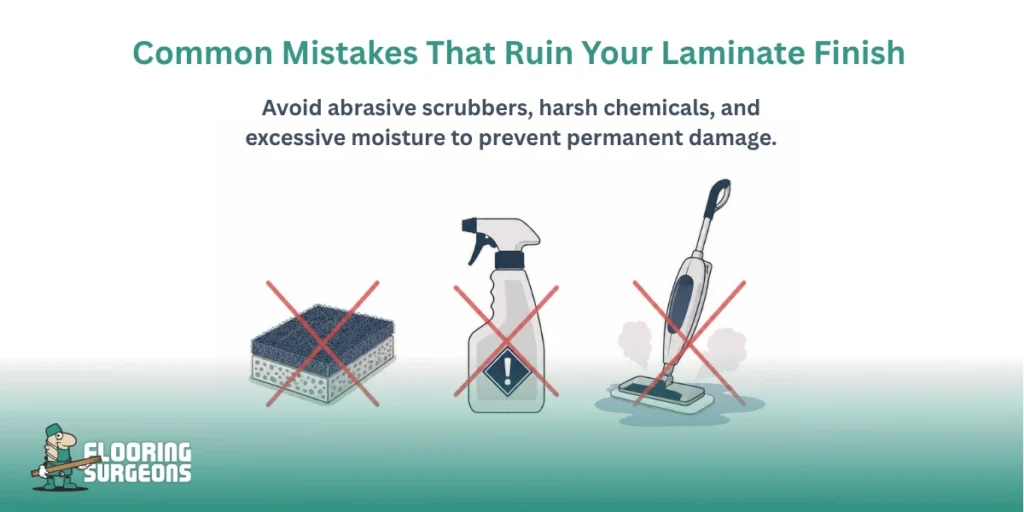
The majority of damage to laminate isn’t caused by the ink, but by hysteria and improper cleanup procedures. Abrasive pads, steel wool and scrubbing with a hard sponge can scratch away the clear coat, leaving a permanent cloudy spot.
Abrasive chemicals are another prevalent issue. Acetone, bleach, ammonia, paint thinner, etc., can take off some of the pigment. However, they will also take off the finish and damage/break down the material itself. Steam cleaners and too much water pose a risk as well. Water can eventually seep into the seams and cause swelling.
When learning how to clean stains on a laminate floor without damaging it, always start with the least aggressive approach, use as little moisture as possible, and dry the surface as soon as you are done.
How to Prevent Future Stains and Scratches
Regular maintenance can make ink stains easier to clean and help preserve the floor’s wear layer in the long run. Routine care will minimise soil accumulation, avoid surface damage, and decrease the likelihood of the stain penetrating into the floor texture. For detailed step-by-step cleaning instructions, see How to Clean Laminate Flooring.
Keeping pens, markers, and art supplies off the floor is also smart, particularly in home offices, study rooms, and children’s spaces. Chair mats, swift spill cleanup, and gentle tools will keep your finish looking new and minimise permanent damage.
Prevention is just as important as cleaning up after the stain. Speedy cleanup, soft brushes, and proper safe-on-floors products will preserve your laminate better than any harsh stain-removal technique. Follow our recommended maintenance plan, and your floor will look clean and smooth and last longer.
For optimum success, prevention is just as important as removal. While it’s good to know how to remove ink from laminate wood floor surfaces, taking steps to prevent the flooring from getting stained in the first place is the best way to keep your laminate floor looking clean, smooth and free of damage for years to come.
Final Thoughts
The key to removing ink from laminate floors is threefold: try the least abrasive method first, don’t use too much water, and avoid strong chemicals. With these tips in mind, you should be able to remove the stain quickly without creating permanent surface damage.
Equally importantly, regular day-to-day maintenance can help prevent tougher stains from setting in and prolong the appearance of your floor in the long term. Flooring Surgeons have extensive know-how in laminate maintenance, cleaning solutions, and product selection.

Ana.Soltanpoor
I’m an SEO Specialist with a strong background in content management and organic search. I build data-driven content strategies by aligning user intent, search behavior, and SEO best practices to ensure every piece of content delivers clarity, relevance, and measurable organic performance.