It can be baffling to find two floors that look identical on paper, same thickness, similar wear layer, same colour, even the same “waterproof” label, yet have one option priced significantly higher than the other. So why do some flooring brands cost more when the specs are so similar?
Simply put, a flooring spec sheet isn’t everything. The quality of the core, surface protection, locking system, design details, testing standards, warranty and even brand consistency all play a role in creating real flooring price differences. That’s why you see the same flooring specs at different prices from different retailers.
In this guide, we’ll break down everything that really sits behind the price tag. We’ll show you how to accurately compare cheap vs expensive flooring, and tell you when you should (or shouldn’t) pay more for a premium flooring brand.
Table of contents
Why Similar Flooring Specifications Do Not Always Mean Similar Quality
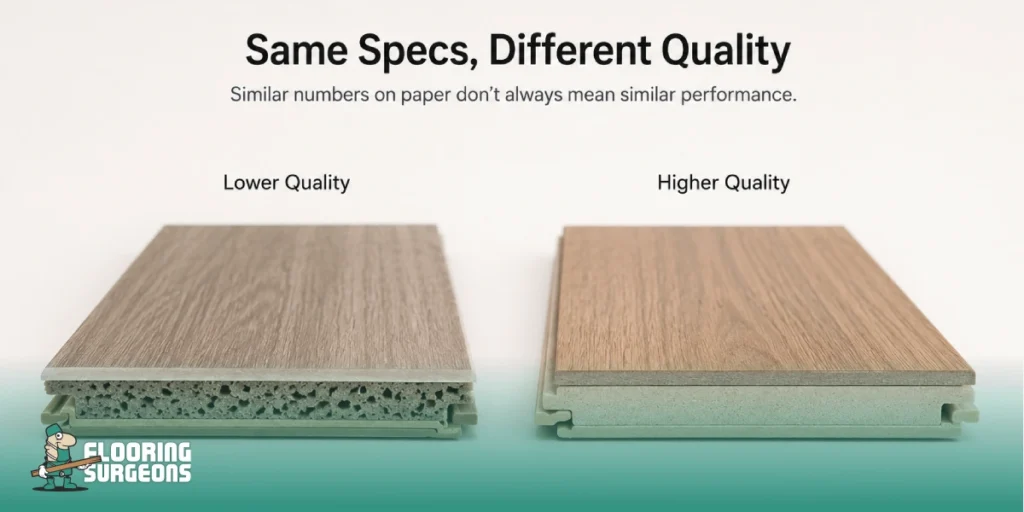
The specification sheet of a flooring product can tell you many things, but rarely the whole story. Two floors can both be advertised as 8mm thick, waterproof, scratch-resistant or ideal for busy families. However, that doesn’t mean they are both manufactured to the same high standard. Enter flooring quality vs specifications.
Sometimes the true variance lies underneath. One brand may have a denser core, stronger adhesive, superior surface seal, or a more dependable click system, while another simply rounds up to get the same sheet goods basic numbers. Same flooring specs and different price shouldn’t always be a warning sign; sometimes it is due to things you won’t see until after installation.
Here is another reason that illustrates the gap between flooring marketing and real-world use. You can put a fancy ring on this floor in marketing material, but everyday wear and tear is dictated by foot traffic, moisture, furniture abrasion, cleaning and long-term use.
What Actually Creates Flooring Price Differences?
The largest flooring price differences often involve subtle details that may not be visible. An inexpensive floor might mimic the colour, thickness, or surface texture of a luxury plank, while the manufacturing methods can differ drastically. Comparing cheap vs expensive flooring should go beyond reading the product description.
Use the table below to understand what can make premium flooring brands cost more, even when their listed specifications look similar.
| Factor | Why It Affects Price | What Buyers Should Check |
| Core construction | A stronger, denser core can improve stability and long-term durability | Core type, density, board structure and product weight |
| Wear layer quality | The same wear layer thickness may not offer the same protection | Coating quality, scratch resistance and stain resistance |
| Surface finish | More realistic textures and finishes often cost more to produce | Embossing, pattern repeat, edge detail and surface feel |
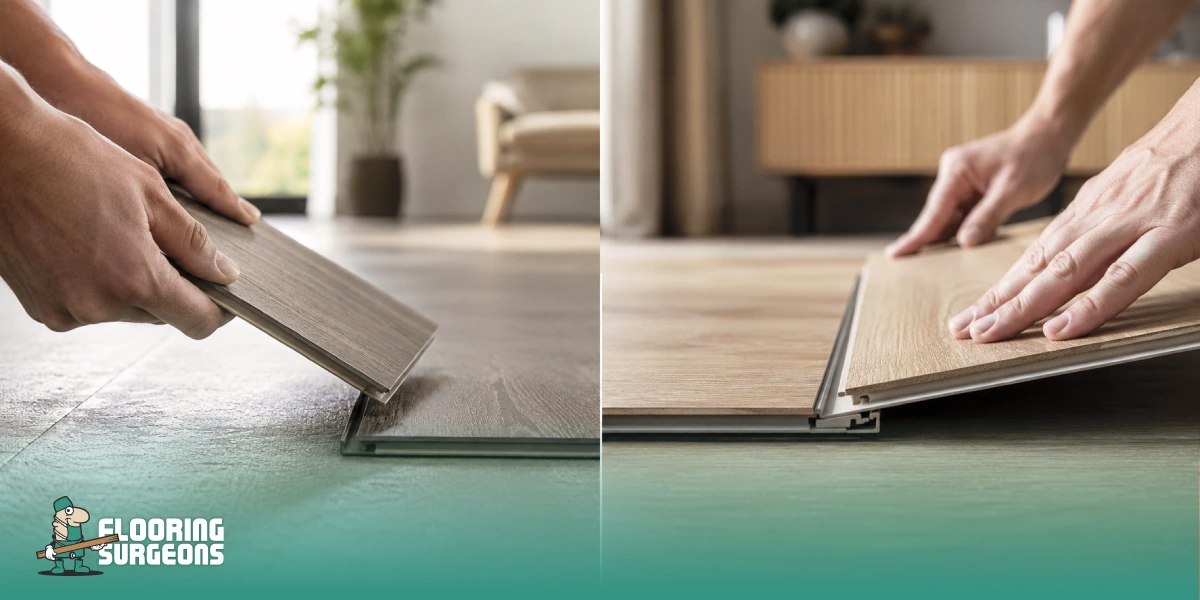
| Locking system | Better click systems can reduce gaps and installation problems | Joint strength, fitting method and installation requirements |
| Testing and warranty | Higher-quality brands may invest more in product testing and support | Warranty terms, exclusions and suitability for the room |
| Brand consistency | Reliable brands often offer better batch matching and stock continuity | Colour consistency, replacement availability and after-sales support |
Case in point… When two floors appear very similar, it doesn’t mean that the lower-priced one is bad and the higher-priced one is good. The price indicates which parts of the product are actually better vs marketing fluff.
Wear Layer, Finish and Real Durability
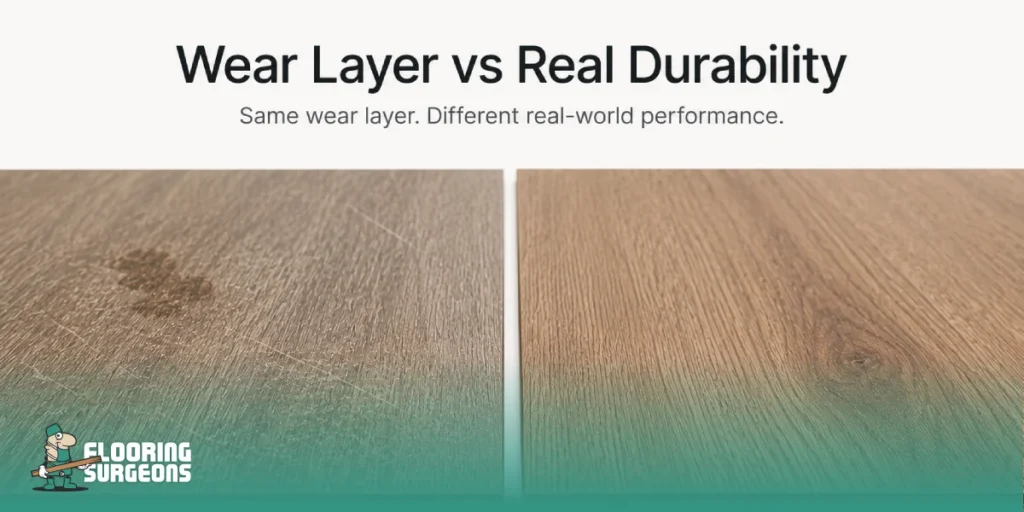
Buyers will often look at the wear layer first, particularly when comparing vinyl or laminate products. However, the number can be deceiving. Two floors may have the same thickness of wear layer, but perform drastically differently when it comes to scratches, stains and daily abuse.
That’s why flooring brands cost more even when surface specifications seem comparable. Their higher-end product may feature a more durable protective coating, advanced finishing technology, or a surface treatment. It matters in your everyday life because those differences determine how quickly your floor begins to show stains, faded spots, or wear.
Especially when you’re comparing Luxury Vinyl Flooring, two products can have the same wear layer on paper but differ widely in coating quality, surface protection, and durability.
When weighing up cheap vs expensive flooring options, don’t just ask how thick the wear layer is. Ask how well that surface has been manufactured, how it has been tested and if it can stand up to how much you’ll be using it at home. That is how you can start determining whether premium flooring is worth it for you.
Core Construction Often Explains Why Flooring Is So Expensive
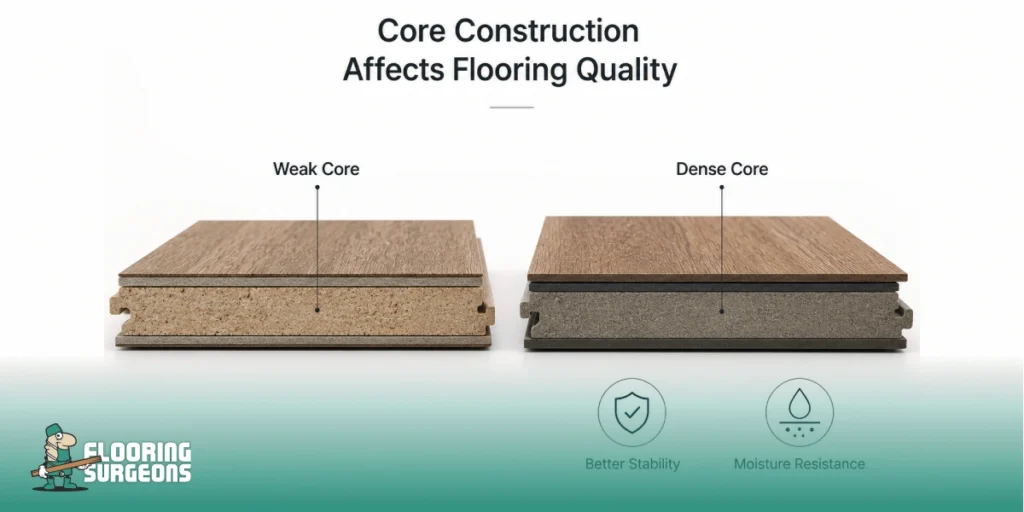
Have you ever looked at flooring and wondered why flooring is so expensive when two products look almost identical? The answer could lie in the core. The core is the inside of the floor you typically don’t see, and it can determine stability, strength, moisture resistance, and overall performance after installation.
Higher-quality flooring can often feel denser or more substantial when walking on it. It can lie flatter over time and respond less to changes in temperature/humidity. A lower quality floor may appear identical from a top view. However, it is more susceptible to shifting, buckling, bending or cracking if the core isn’t as strong. That’s why flooring quality vs specifications is so important when shopping around brands.
Engineered, Laminate and Vinyl Cores Are Not Built the Same
Flooring cores vary by flooring type. Laminate flooring has an HDF core, and the better the core, the better the flooring. Vinyl Flooring comes in a wide range of core densities, flexibilities, and click strengths. Engineered Flooring may have a similar-looking surface, but better core layers, stronger bonding, and a better top veneer can vary widely in price and affect long-term stability.
That is one reason why many premium flooring brands are more expensive. You are paying for more than just looks. You may also be paying for a thicker backing that holds up better after installation.
Design, Texture and Brand Consistency Also Add Value
Not all price differentials are accounted for by technical build. Sometimes it’s the subtleties of how natural the floor looks once laid, how consistent the patterns are and how well finished the product is. You may have 2 products that both say they are oak-effect, matt finish, or wood-look flooring, but when installed in an actual room, the look and feel can be very different.
Higher-quality brands spend more time and money on richer textures, more realistic grains and edges, and subtler pattern repetition. You can’t always tell from a spec sheet, but these things do translate to how upscale your floor looks and feels long-term.
Take Laminate flooring products, for instance. Two products can have the same thickness or AC rating, but what about the HDF core strength? What about surface texture and edge detail? Finish quality can also vary greatly from brand to brand.
That’s why flooring brand comparison should involve more than colour and thickness. If the floor will go in a main living space, hallway, or open-plan area, the finish, texture, and consistency can make it a worthwhile premium flooring choice for the home’s aesthetic.
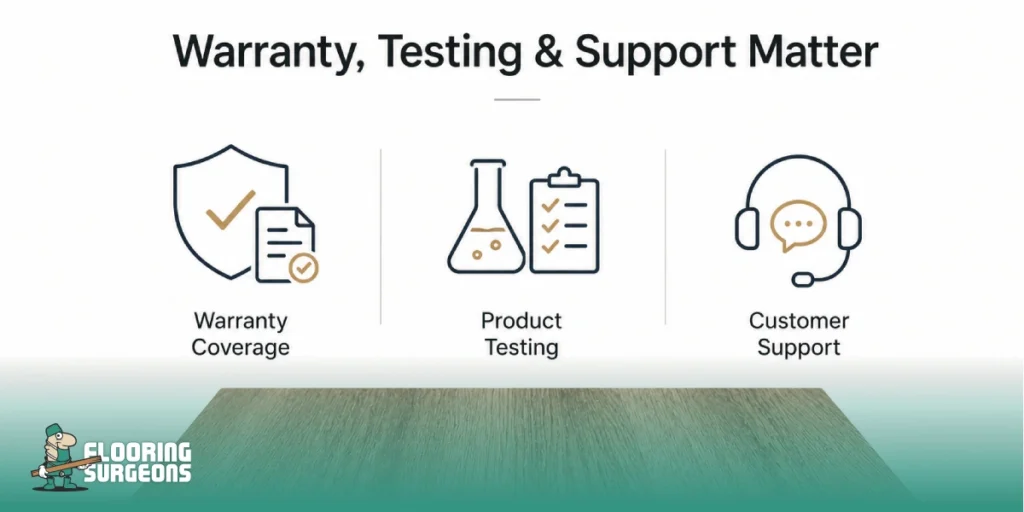
Warranty, Testing and Support Are Part of the Price
Warranty is another possible reason flooring brands cost more. But consumers should look past the years advertised on the product description page. Long warranties are only helpful if they are reasonable, clearly defined and supported by thorough product testing.
Certain premium flooring brands spend more on wear testing, water-resistance testing, surface testing, and customer service. They might also have better instructions for installation, upkeep, and aftercare. This information can help minimise risk when you have the floor installed in your hectic household.
Before assuming that a longer warranty automatically means better value, it is worth understanding flooring warranty coverage and what is actually included or excluded by the manufacturer. It also doesn’t mean all pricey floors have better warranties. Take warranty, testing and support into consideration when comparing flooring brands.
Is Premium Flooring Worth It or Are You Just Paying for the Brand?
So, is premium flooring worth it? Sometimes it is, sometimes not. Pricing up can be justified by better construction, improved surface protection, clearer warranty language, or simply proven durability over time. However, if all it comes down to is logo, colour name, or marketing speak, the lower-priced flooring might be the better value.
When Paying More Makes Sense
Splurging typically makes sense in high-traffic areas like kitchens, hallways and living rooms, where floors endure constant traffic, moving furniture, cleaning and the occasional spill. It can also make sense if installation costs are high; installing a low-quality floor yourself can end up costing you much more in the long run when you have to replace it.
When a Cheaper Flooring Brand May Be Enough
When decorating spaces that won’t have heavy foot traffic or rooms in short-term renovation projects, a less expensive brand may be sufficient. Rental homes or areas where aesthetics are more important than longevity can also go with lower-priced options. Picking the most expensive flooring option is not always the goal. Try to select a floor that suits the room, your budget and how much use it will get. That is the best way to compare cheap vs expensive flooring.
Conclusion: Why Do Some Flooring Brands Cost More?
Higher-priced flooring brands may offer better value, as some specification sheets do not tell the whole story. Core integrity, the wear layer’s ability to withstand punishment, surface treatment, the locking system, and warranty coverage and follow-through are just some of the factors that contribute to a floor’s long-term performance after installation. This doesn’t necessarily mean that you should always buy the most expensive floor, but understand that sometimes price variations are attributed to more than branding.
At Flooring Surgeons, buyers can compare different flooring options more confidently by looking beyond basic specifications and choosing a floor that matches their room, budget and long-term expectations.

Ana.Soltanpoor
I’m an SEO Specialist with a strong background in content management and organic search. I build data-driven content strategies by aligning user intent, search behavior, and SEO best practices to ensure every piece of content delivers clarity, relevance, and measurable organic performance.