You walk into a room and just know that it’s a quieter floor. Footsteps are softer. The room doesn’t sound as echo-y. You don’t hear that piercing click under your feet or the annoying hollow sound when you walk. However, that doesn’t necessarily mean the floor is soundproofed.
If you wonder why some floors feel quieter even without soundproofing, it mostly has to do with how they absorb impact, vibration, and echo within the room. Some floors just feel quieter. Not every quiet floor has been soundproofed between rooms. Sometimes it’s just a difference in how firm or soft it feels when you walk and how much noise your footsteps make. That’s how two floors with no additional soundproofing can feel worlds apart.
Table of contents
A Quieter Floor Is Not Always a Soundproof Floor
A quiet floor does not necessarily mean it is soundproof. This is a common misconception amongst individuals who try to distinguish between quiet flooring and soundproof flooring.
- Typically, a quieter floor means less noise resonates throughout the room. It could mean fewer footsteps, greater stability when walking on it, or reduced echoes. Most of the time, it pertains to the quality of flooring itself, backing board, underlayment, and even installation.
- Soundproofing, on the other hand, focuses more on preventing sound transfer between rooms, floors, and even neighbouring apartments or condos. Soundproofing floors takes both airborne and impact noise into consideration.
Airborne noise can be voices, TVs or music playing, etc. Impact noise is created by walking, dropping objects, etc. Just because your floor may feel quieter when you walk on it doesn’t mean that it is preventing sound from transferring to other rooms. It could simply be absorbing the impact of footsteps, reducing vibration and noise throughout the room.

5 Reasons Some Floors Feel Quieter Underfoot
A floor may seem quieter for a variety of reasons, and it does not necessarily mean more acoustic material was added to one flooring vs another. Flooring can react differently to footfalls, may produce different levels of vibrations and differ in how much sound reflects around a room. The flooring surface material, backing, core, underlay, and the condition of the subfloor can all affect how the flooring sounds and feels.
1. Softer surfaces absorb footfall impact
Softer floors tend to feel quieter since they dissipate more energy when you walk on them. Rather than creating a hard edge with each footstep, they cushion your foot when it hits the floor. Carpeted rooms typically feel quieter than tiled, stone, or hardwood floors. The first thing most people think of when trying to make a room quieter is adding carpet, but does carpet help soundproof? Or does it just minimise footsteps and echoes within the room?
That’s an important question to answer because footstep noise is one of the main contributors to a floor feeling loud when you walk. Simply having a softer floor can soften footsteps even if sound is still transmitting to another room.
2. Resilient floors create a less sharp, clicky sound
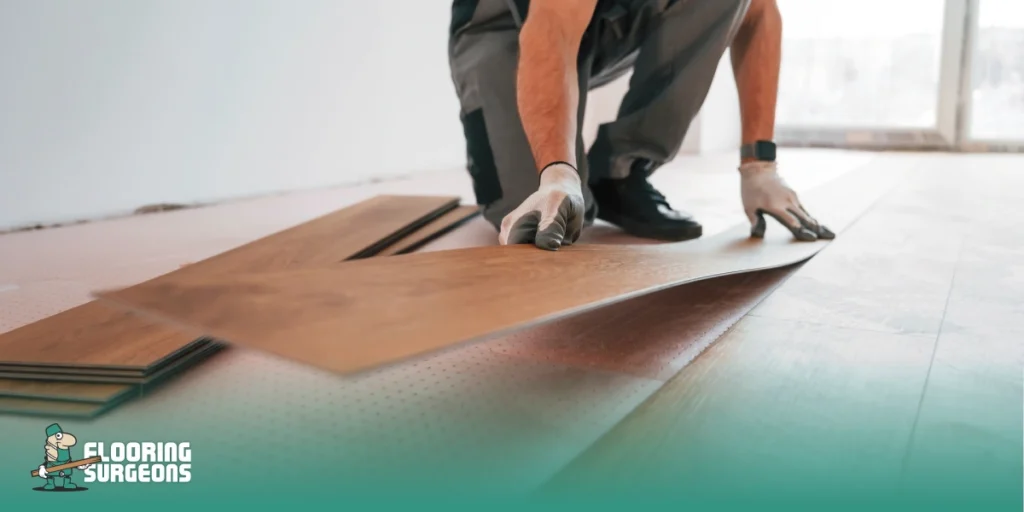
Some hard floors sound louder because they produce a sharper, clicky noise when footsteps, pet claws, or furniture legs strike them. This isn’t necessarily due to poor construction. Oftentimes, it just means the floor is harder. Hard floors that offer some give beneath your feet can often feel quieter than other options. While they aren’t going to absorb sound the way a rug would, less resilient floors tend to dull the sound of regular footsteps. That’s part of the reason why luxury vinyl flooring is seen as such a practical choice.
So does the backing. If your floor has acoustic or cushioned backing, it will feel softer underfoot, more stable when stepped on, and make less noise when walked across. Now, it’s not going to make your room silent. But your floor will feel quieter and softer underfoot.
3. Dense cores and stable planks reduce hollow sound
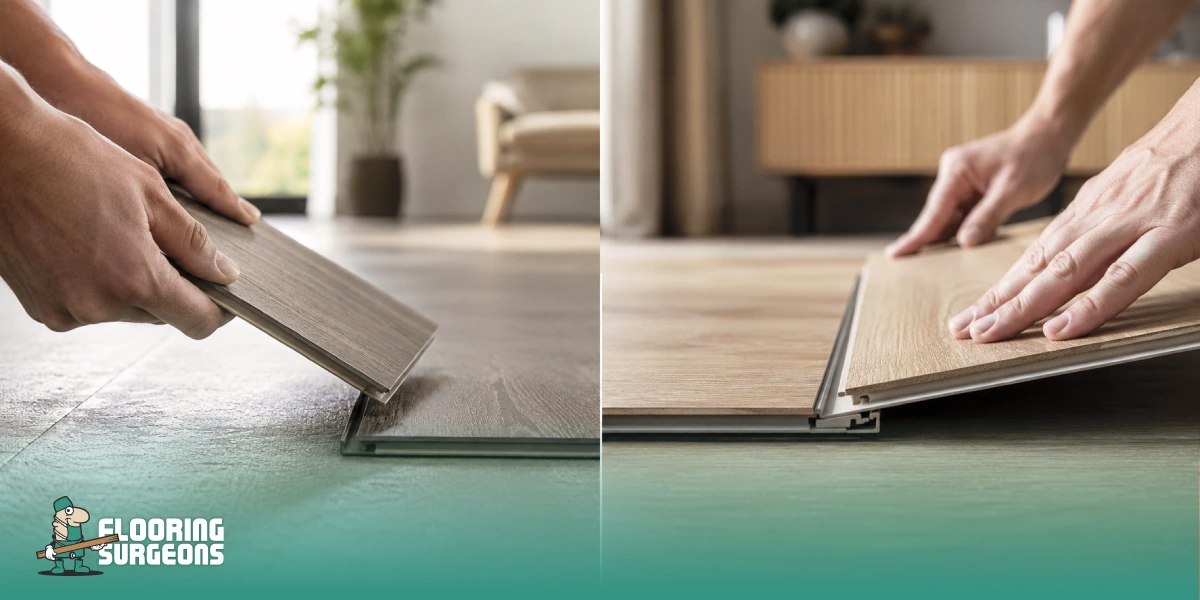
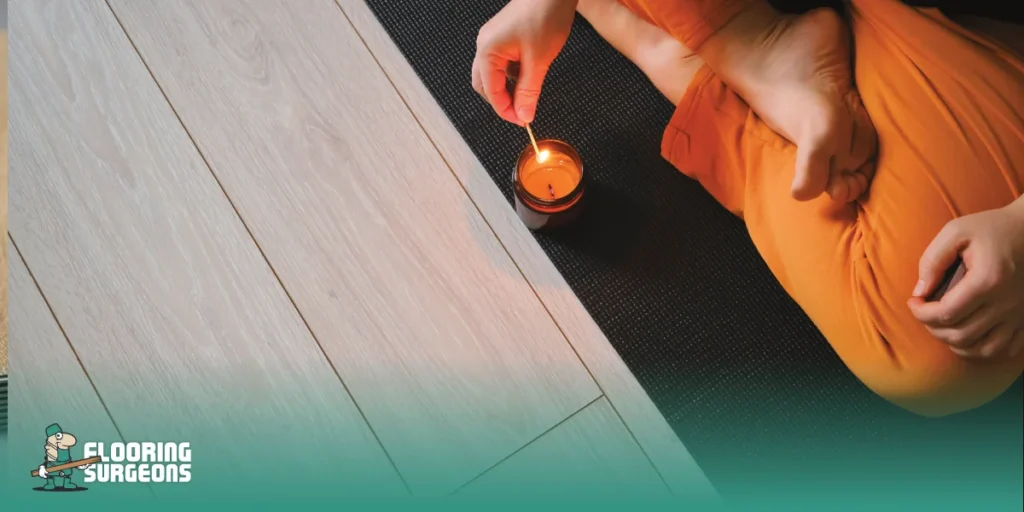
Floors often feel noisy when they don’t feel solid when you walk on them. If the core is lightweight, the planks can flex slightly, or there may be gaps between the floor and subfloor, resulting in each footstep producing a hollow sound or vibration.
Higher-density flooring tends to feel quieter underfoot because it produces less footfall noise. This movement characteristic is particularly important for floating floors, as they are not attached to the subfloor. Essentially, the quieter the floor feels when you walk on it, the less hollow sound you will hear beneath your feet. This is why floor construction is important.
4. Underlayment changes how floating floors sound
Underlayment plays a huge role in floating floors. It can stabilise walking feel, diminish micro-movements, and mute footstep sounds. This goes double with laminate flooring. Cheap underlay or an uneven subfloor will amplify sound harsher than you’d like. Flooring underlayment doesn’t offer complete soundproofing, but it can lessen clicking, vibrations, and that hollow sound many hear when walking. Underlying subfloor flatness also plays a role. If your base is uneven, even the best flooring can feel loud and/or bouncy/wiggly.
5. Room acoustics can make the floor seem louder or quieter
Occasionally, the floor may not be the only culprit in a noisy room. Flooring can sound vastly different in two rooms due to the acoustics within the space. An empty room with bare hard walls and minimal furniture or carpets will generally be more echoey. Each footstep bounces around the room, amplifying the floor’s apparent loudness.
However, if there are curtains, couches, carpets, or any kind of soft furniture in the room, they absorb some of the sound. This is why a floor can feel quieter in a furnished bedroom compared to a large open-plan kitchen, even if they have the same floor covering.
Which Flooring Types Usually Feel Quieter?
Floors can be quiet in different ways. Some absorb footfalls better than others. Some decrease sound reverberation within a room. Others sound less hollow or unstable due to their construction or the addition of an underlay.
| Flooring type | Why it may feel quieter | Best for |
| Carpet or soft flooring | Absorbs footsteps and reduces echo | Bedrooms and upstairs rooms |
| Luxury vinyl | Can feel softer and less clicky with good backing | Kitchens, bathrooms, and living rooms |
| Laminate | Can feel quieter with the right underlay and a flat subfloor | Bedrooms, hallways, and living spaces |
| Engineered wood | Feels stable when installed properly over a suitable base | Real-wood style with better stability |
Engineered flooring can be great if you want the aesthetics of solid wood without the quietness of traditional hardwood floors. It just needs to be combined with an appropriate underlay and installed over a level subfloor.
When a Quieter-Feeling Floor Is Not Enough
A feel-good, softer floor can be beneficial when your primary concern is the noise, echo, or excessively hard floor surface. However, if sound is transferring into another room or property – such as a flat below or next door – then extra measures may be required.
This is because deadening noise within a room can require different approaches to preventing sound from transferring between rooms. If you’re struggling with noise transferring between floors, it may be worth exploring larger acoustic flooring solutions rather than treating just the floor surface.
Particularly if you live in a flat or an upstairs bedroom in a shared building, impact sound can travel through the floor. In these instances, you should factor in the underlay, subfloor, ceiling and how your flooring is installed.
Quick Answer: Why Do Some Floors Feel Quieter?
Some floors may feel quieter underfoot because they can reduce the impact of footsteps, vibration, and echo within the room. The cause of this can be down to many factors such as flooring surface, backing, underlay, condition of subfloor or even the amount of furniture in the room.
However, a quiet floor does not necessarily mean that it is also soundproof. Whilst it may dull the sound of daily living beneath your feet, it may not always provide sufficient acoustic insulation to prevent sound from travelling through to the room or floor below. That is why it is important to choose depending on whether your issue is comfort, echo or actual sound transfer. At Flooring Surgeons, we can help homeowners choose between flooring types by seeing how they look, feel, and perform in actual homes rather than just product images.

Ana.Soltanpoor
I’m an SEO Specialist with a strong background in content management and organic search. I build data-driven content strategies by aligning user intent, search behavior, and SEO best practices to ensure every piece of content delivers clarity, relevance, and measurable organic performance.