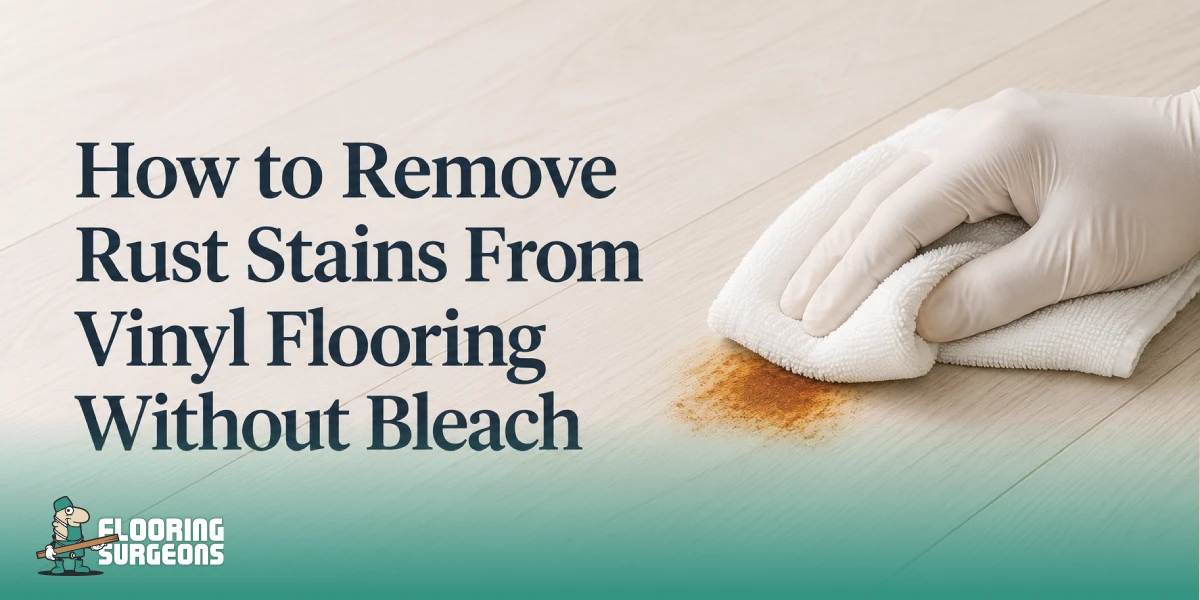
Rust marks often appear when damp metal furniture, appliance feet, plant pots or tools remain on a vinyl surface. Most surface marks can be treated without chlorine bleach. To remove rust stains from vinyl flooring, begin with the mildest method, test every cleaner in a hidden area and rinse the floor after treatment.
First, identify whether the floor is sheet vinyl, vinyl tile, LVT or Luxury Vinyl Flooring. Products can have different wear layers and care requirements, so the manufacturer’s instructions should always take priority.
Table of contents
How to Prepare Before Cleaning a Rust Stain
Confirm that the orange-brown mark is really rust. Rust usually forms beneath a metal object or where moisture has been trapped. Yellowing caused by rubber-backed mats, adhesive or moisture beneath the floor may look similar but may not respond to the same cleaning methods.
Remove loose grit with a vacuum or soft brush. Wash the area with a few drops of mild washing-up liquid in warm water, using a white microfibre cloth to prevent colour transfer.
Always patch-test the chosen method first. This is particularly important when you need to remove rust from luxury vinyl flooring, as repeated rubbing or harsh chemicals may dull the protective wear layer.
How to Get Rust Off Vinyl Flooring Without Damage
Removing rust from vinyl flooring requires a gentle approach to avoid scratching or dulling the surface. Start with mild cleaning solutions and gradually move to stronger but vinyl-safe methods if needed.
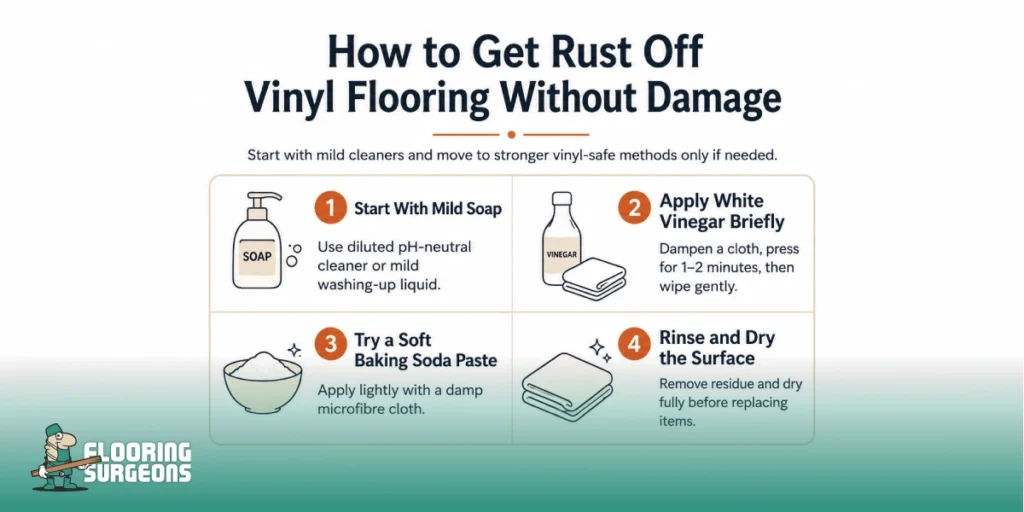
1. Start With Mild Soap
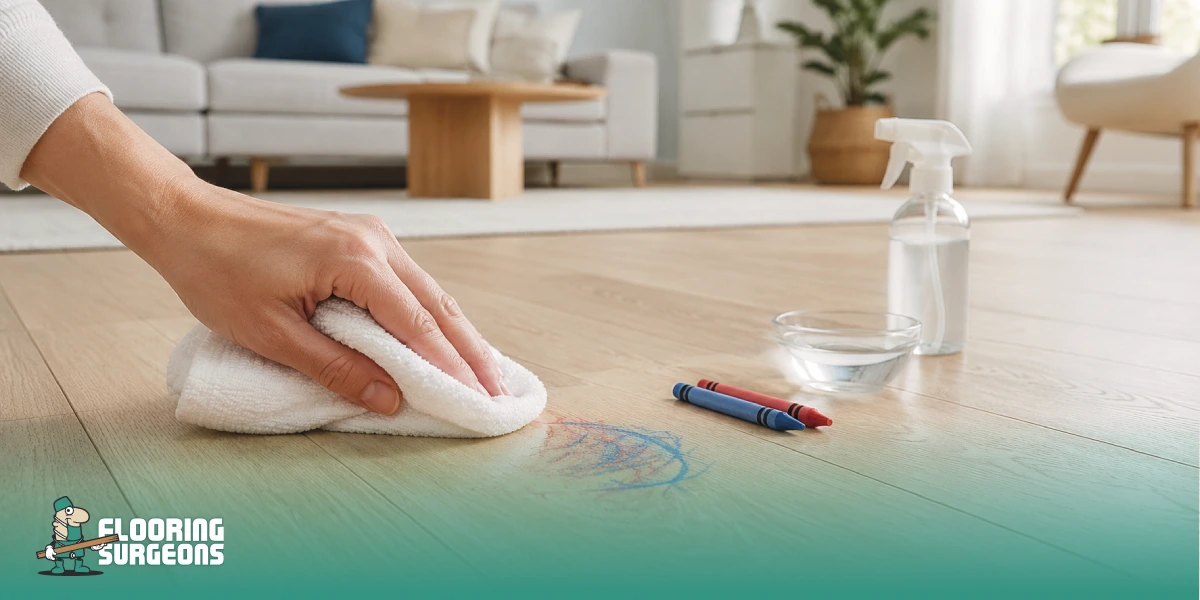
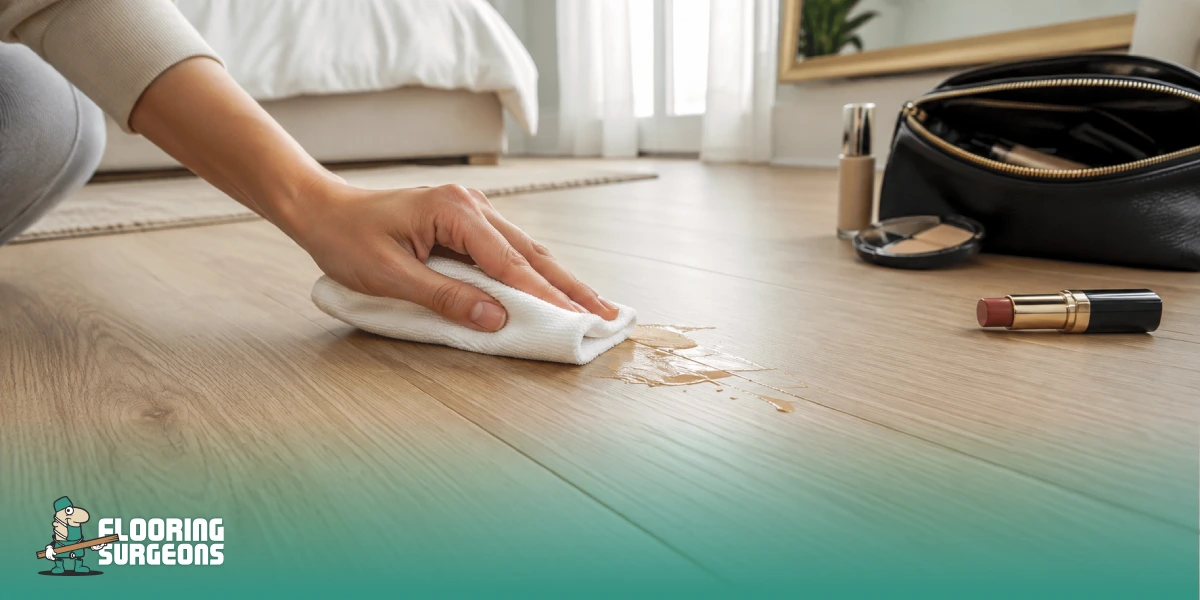
Wipe the stain with diluted pH-neutral cleaner or mild washing-up liquid. This removes grease and grit that could scratch the surface during stain treatment.
Rinse with a clean damp cloth and dry the area. For routine maintenance beyond spot treatment, see how to clean luxury vinyl flooring for a method that avoids sticky residue and unnecessary abrasion.
2. Apply White Vinegar Briefly
White vinegar can help loosen a fresh surface stain, but it should not be poured directly across the floor or left to soak.
- Dampen a white cloth with a small amount of vinegar.
- Press it against the mark for one or two minutes.
- Wipe gently from the edge of the stain towards the centre.
- Repeat once if the stain is visibly fading.
- Rinse with clean water and dry immediately.
This is a practical natural rust remover for vinyl flooring, but longer contact is not necessarily more effective. Leaving vinegar on the floor for too long may affect the appearance of some finishes.
3. Try a Soft Baking Soda Paste
If a light shadow remains, mix baking soda with a few drops of water to create a soft paste. Apply a thin layer briefly, then wipe it away with a damp microfibre cloth using very little pressure. Baking soda is mildly abrasive. Do not use it with a scourer, stiff brush or dry cloth. Vinegar and baking soda should also be used as separate stages rather than mixed as a supposed “power cleaner”.
4. Rinse and Dry the Surface
Remove all cleaning residue with a clean damp cloth. Dry the floor completely before replacing furniture, plant pots or appliances. Moisture left beneath a metal base may create another rust mark.
Best Treatment for Rust Stains on Vinyl Floor
| Stain condition | First treatment | Next step | Main precaution |
| Fresh, pale orange mark | Mild soap followed by brief vinegar contact | Repeat once only if the mark is fading | Do not leave vinegar standing |
| Small older surface mark | Vinegar followed by a soft baking soda paste | Use a compatible specialist product | Avoid hard scrubbing |
| Dark or established stain | Labelled rust stain remover for vinyl flooring | Follow the product instructions exactly | Confirm compatibility first |
| Embedded discolouration | Stop repeated cleaning | Ask a flooring professional for advice | Abrasion may worsen the damage |
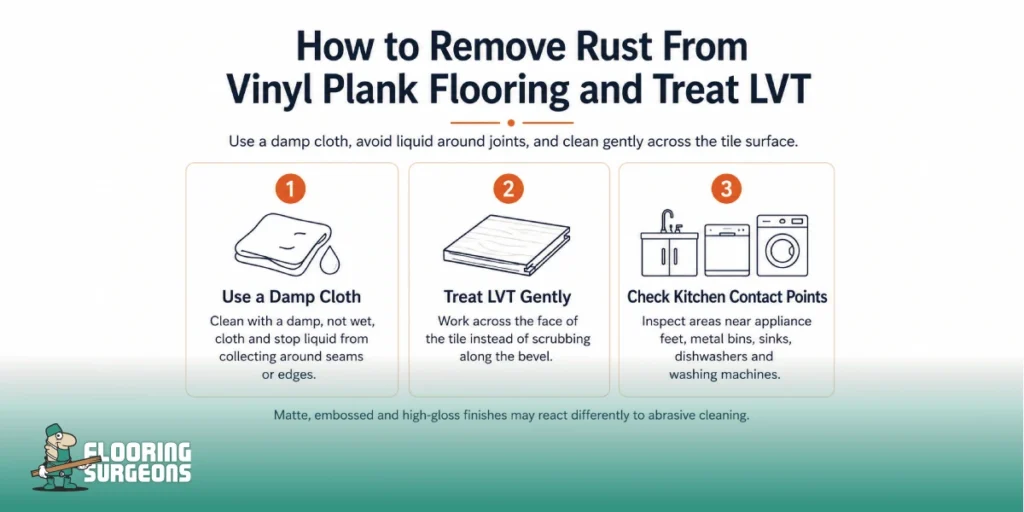
How to Remove Rust From Vinyl Plank Flooring and Treat LVT
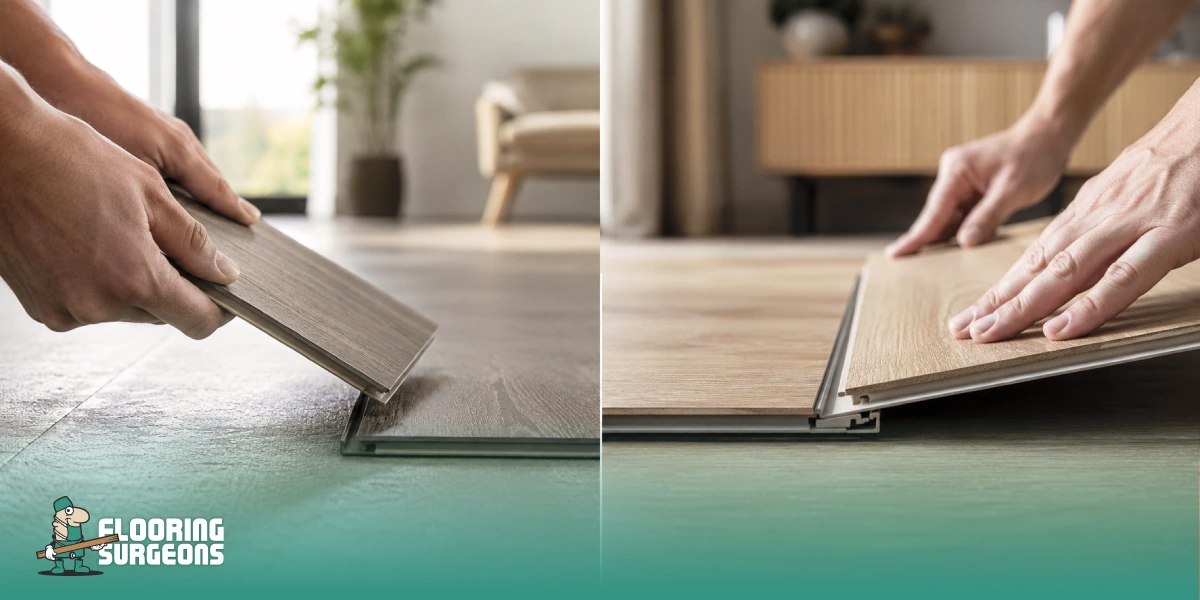
The basic cleaning method is similar for vinyl planks and tiles, but seams need additional care. Use a damp, not wet, cloth and prevent liquid from collecting around joints. Even on a water-resistant surface, cleaner should not remain around the edges.
To remove rust stains from LVT, work across the face of the tile instead of repeatedly scrubbing along a bevel. Matte, embossed and high-gloss finishes may react differently to abrasive cleaning.
Kitchen floors are particularly exposed to appliance feet, metal bins and occasional spills. Regularly inspect contact points on Luxury Vinyl Flooring for Kitchen, especially near sinks, dishwashers and washing machines.
Choosing a Vinyl-Safe Rust Remover
A compatible commercial product may be suitable when careful household treatment has not shifted an older mark. Only use it when the label clearly states that it is suitable for vinyl, PVC, LVT, LVP or resilient flooring. Follow the stated dilution and contact time. Wear gloves, ventilate the room and never mix the product with bleach, ammonia or another cleaner.
To clean rust stains from PVC flooring, do not assume that every general rust-removal product is suitable. Many formulas are designed for metal, ceramic, fabric or outdoor surfaces rather than flexible floor coverings. Stop after one correctly applied treatment if there is no improvement. The discolouration may sit beneath the wear layer or originate from adhesive, rubber backing or the subfloor.
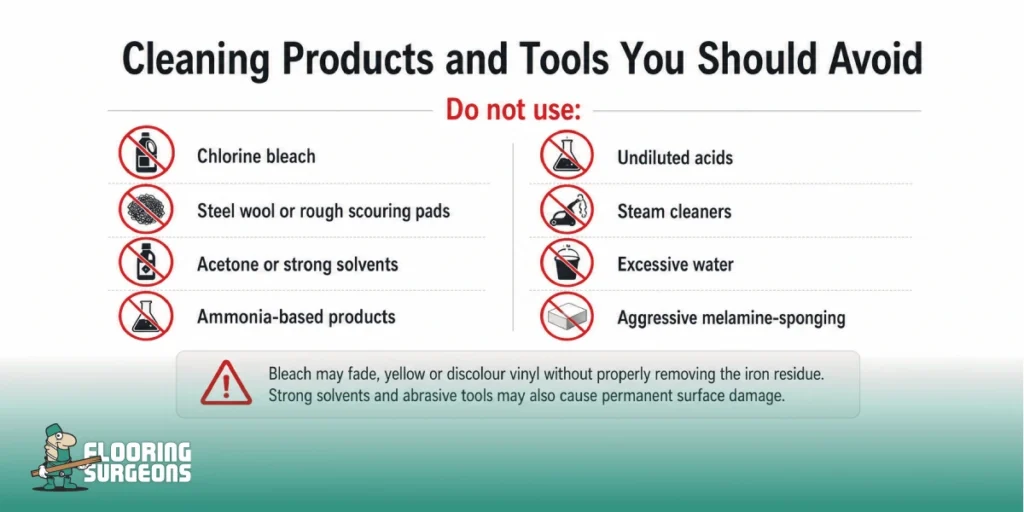
Cleaning Products and Tools You Should Avoid
Do not use:
- Chlorine bleach
- Steel wool or rough scouring pads
- Acetone or strong solvents
- Ammonia-based products
- Undiluted acids
- Steam cleaners
- Excessive water
- Aggressive melamine-sponging
Bleach may fade, yellow or discolour vinyl without properly removing the iron residue. Strong solvents and abrasive tools may also cause permanent surface damage.
For broader guidance about the chemicals used in household cleaning products, read Are Floor Cleaners Toxic? What You Should Know before combining products or using strong cleaners around children and pets.
Preventing Rust Marks From Returning
Preventing another stain mainly means separating metal objects from trapped moisture:
- Dry spills promptly, especially near appliances and entrances.
- Place non-staining protective pads beneath metal furniture and plant stands.
- Replace rusting appliance feet, bins or storage units.
- Lift mats occasionally and allow the floor underneath to dry.
- Check washing machines, sinks and dishwashers for slow leaks.
- Do not leave wet tools, tins or metal pet bowls directly on the floor.
In damp rooms, Waterproof Luxury Vinyl can make routine maintenance easier. However, waterproof construction cannot prevent a wet or corroded metal object from leaving a surface rust mark, so regular inspection is still necessary.
Conclusion
To remove rust from vinyl floor surfaces safely, begin with mild soap, move to a brief vinegar treatment and use baking soda only with light pressure. For older marks, select a cleaner clearly approved for vinyl, LVT or PVC and stop cleaning if the colour appears to be embedded beneath the surface.
Flooring Surgeons recommends testing every treatment first, avoiding harsh abrasion and correcting the source of moisture before metal furniture or appliances are placed back on the floor.

Ana.Soltanpoor
I’m an SEO Specialist with a strong background in content management and organic search. I build data-driven content strategies by aligning user intent, search behavior, and SEO best practices to ensure every piece of content delivers clarity, relevance, and measurable organic performance.