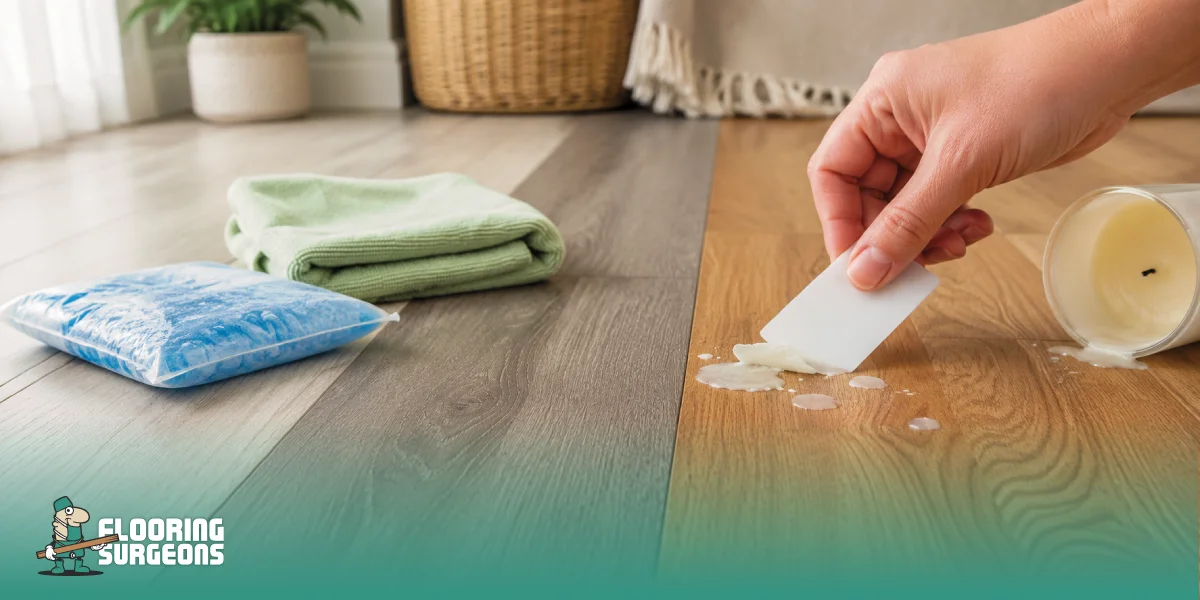
Candle wax is usually easy to remove, but the wrong tool can leave scratches, dull patches or damaged joints. The safest method is to let the wax harden, lift it with a plastic tool and clean the remaining film with a product approved for the floor.
The exact steps vary between laminate, vinyl, LVT, engineered wood and hardwood. This guide covers fresh spills, hardened wax, greasy residue and coloured candle stains without turning a small accident into permanent damage.
Table of contents
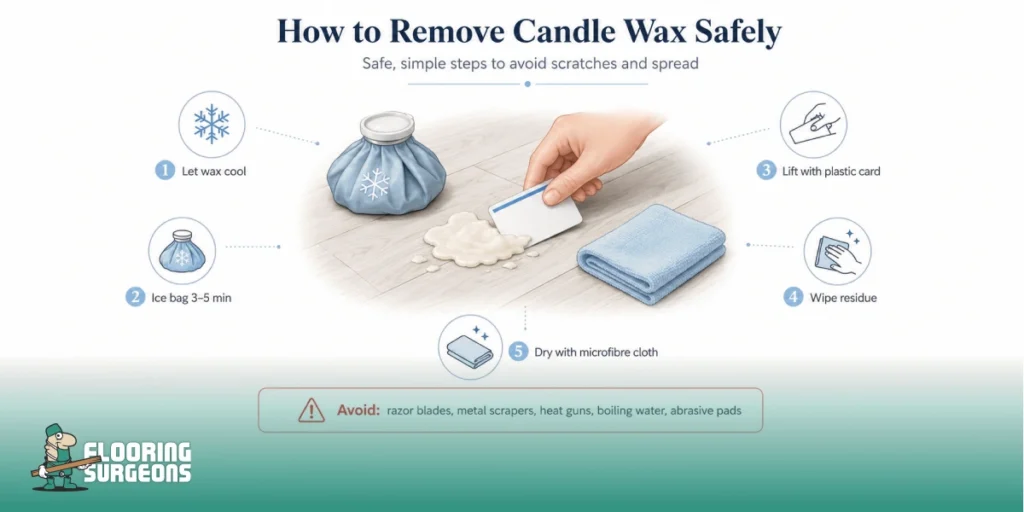
Quick Answer: How to Remove Candle Wax Safely
The safest way to remove candle wax is to let it harden first and work slowly without using heat or sharp tools. This prevents scratches and stops the wax from spreading further across the floor.
- Let the wax cool completely
- Place a sealed bag of ice over it for 3–5 minutes
- Lift the hardened wax gently using a plastic card or scraper
- Wipe away any remaining residue with a suitable floor cleaner
- Dry the area immediately with a clean microfibre cloth
Never use a razor blade, metal scraper, heat gun, boiling water or abrasive pad.
What You Will Need to Remove Candle Wax From Floors
- A sealed bag of ice
- An old plastic card or plastic scraper
- White paper towels
- Clean microfibre cloths
- A pH-neutral floor cleaner
- A cleaner approved for finished wood
Always test a cleaning product in a hidden area first.
Best Methods to Remove Candle Wax From Different Floor Types
Different flooring materials react differently to heat, moisture and cleaning products, so choosing the right method is essential. Below you’ll find the safest and most effective approaches for each floor type to avoid damage while removing wax quickly.
| Floor type | Recommended method | Main risk |
| Laminate | Chill, scrape gently and use minimal moisture | Water entering plank joints |
| Vinyl or LVT | Blot fresh wax, chill the rest and use pH-neutral cleaner | Heat or harsh solvents |
| Engineered wood | Scrape with the grain and use a finish-safe cleaner | Damaging oil or lacquer |
| Solid hardwood | Use low moisture and stop if colour transfers | Scratching or stripping the finish |
How to Remove Candle Wax From Laminate Flooring
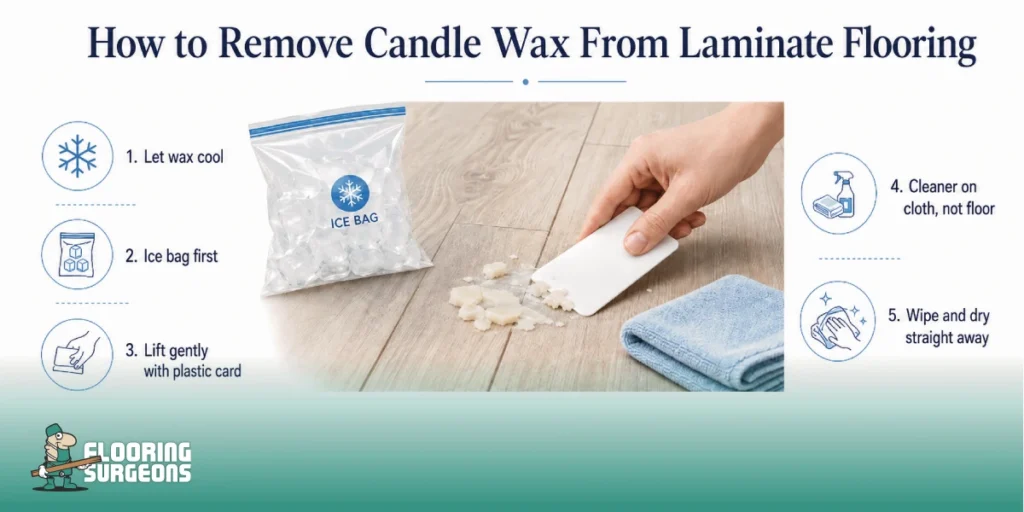
Leave the spill until it is completely cold. Rubbing warm wax spreads it across the wear layer and may push it into the joints. Place the ice bag over the spot, then hold a plastic card almost flat against the surface. Work from the outside towards the centre. Because Laminate Flooring has moisture-sensitive seams, put the cleaner on your cloth rather than spraying it directly onto the boards. Wipe the area with a barely damp cloth and dry it straight away.
How to Remove Candle Wax From Vinyl Flooring
If the wax is still liquid, blot it with white paper towels. Do not wipe sideways, as this spreads the wax and any dye it contains. For candle wax on vinyl plank flooring, chill the remaining wax and lift it with a plastic card. Then use a small amount of pH-neutral vinyl cleaner on a microfibre cloth.
The same cold method works for candle wax on LVT flooring. Although Luxury Vinyl Flooring is generally easy to maintain, direct heat can soften the surface, and strong solvents may leave a dull patch. Avoid irons, heat guns and undiluted alcohol unless the manufacturer approves them.
How to Remove Candle Wax From Wood Floors
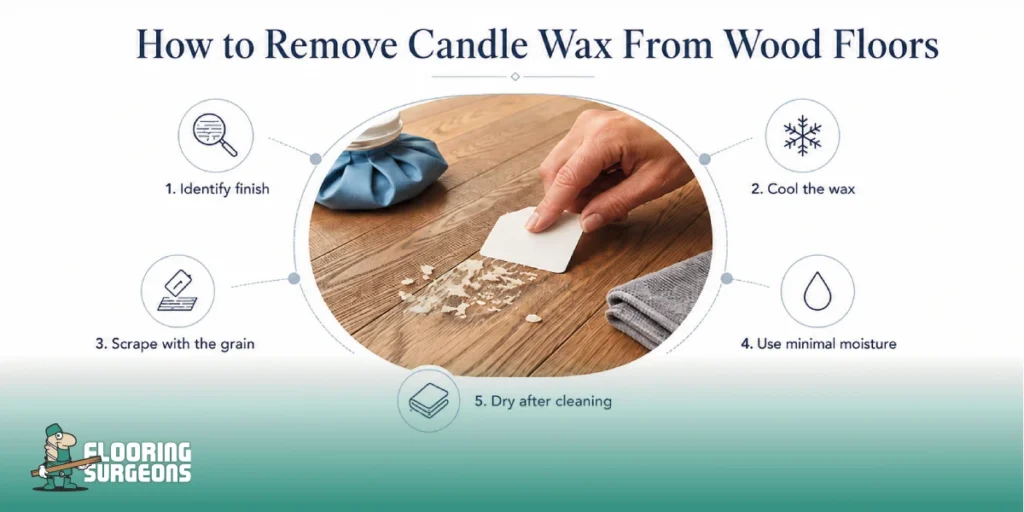
First identify the finish. Lacquered, oiled, waxed and unfinished timber can react differently to moisture and cleaning products. Cool the wax and scrape gently in the direction of the grain. Use as little moisture as possible and dry the surface after cleaning.
For how to clean candle wax off engineered wood flooring, check whether the boards are lacquered or oiled before selecting a cleaner. The safest option for Engineered Flooring is a product approved for its specific factory finish. Do not apply vinegar, acetone or nail polish remover as a general solution.
How to Remove Dried Candle Wax From Floor Surfaces
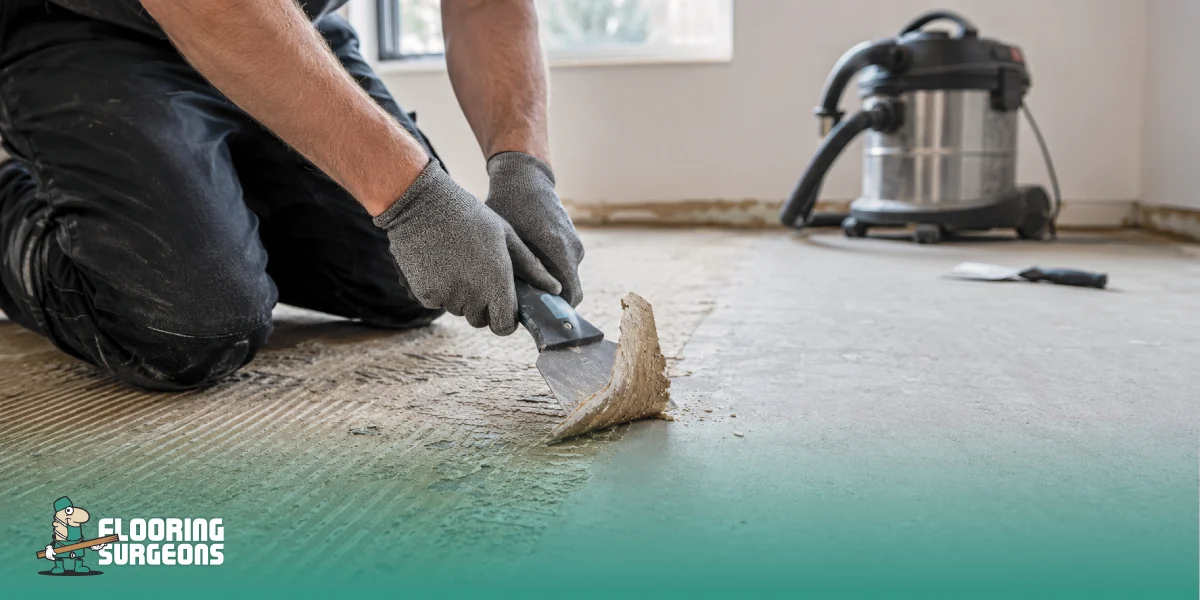
Cold makes dried wax brittle and easier to lift. Apply an ice bag for several minutes and remove the wax in small pieces. To remove hardened candle wax, repeat the chilling process instead of forcing the scraper. Several light passes are safer than one aggressive attempt.
A greasy film may remain after the solid wax is gone. To remove wax residue from flooring, apply a small amount of approved cleaner to a cloth and wipe in short strokes. Turn the cloth frequently so the residue is not spread back over the floor.
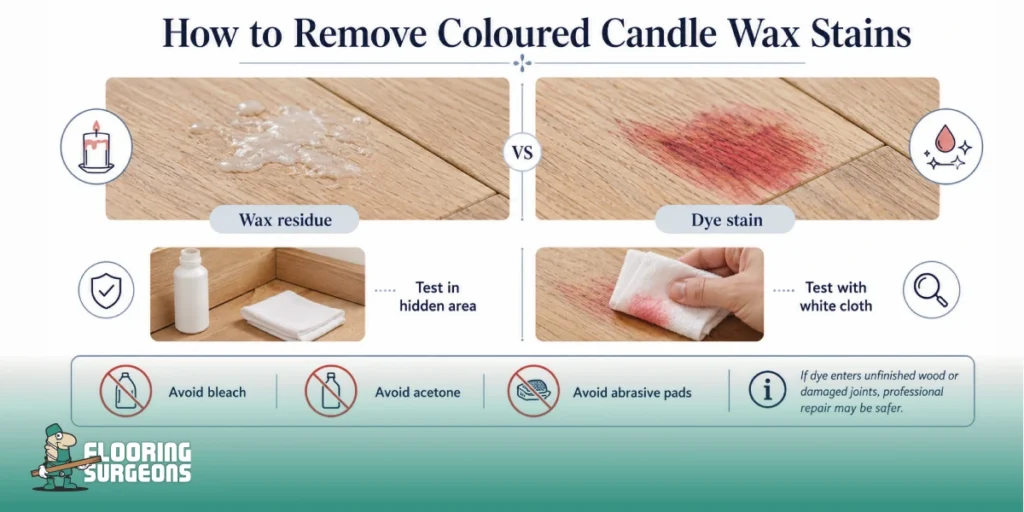
How to Remove Coloured Candle Wax Stains
Wax residue feels greasy or slightly raised. A dye stain remains visible after the floor feels clean. First remove every trace of solid wax. Test the approved floor cleaner in a hidden area, then use a white cloth so you can see whether colour is transferring. Work gradually rather than scrubbing.
Bleach, acetone and abrasive pads can discolour vinyl, strip wood finishes or damage laminate wear layers. If dye has entered unfinished timber or a damaged joint, professional repair may be safer.
How to Remove Candle Wax Without Scratching the Floor
Keep the plastic scraper almost parallel to the surface. A steep angle concentrates pressure on one point and can cut the finish. Use plastic rather than metal, avoid abrasive sponges and stop if the surface becomes dull or the finish transfers to the cloth. On textured boards, use a soft brush only when the manufacturer permits it.
Common Mistakes to Avoid When Removing Candle Wax
Once the spill has been removed, the routine in How to Clean Laminate Flooring can help prevent streaks, cloudy residue and moisture-related problems during everyday care.
- Scraping wax while it is still warm
- Using a knife, razor or metal tool
- Pouring water directly onto laminate or wood
- Applying a hot iron over paper
- Steam-cleaning the affected area
- Mixing household cleaning chemicals
- Scrubbing coloured wax with an abrasive pad
Final Thoughts
Most candle wax spills can be removed safely when you work slowly: harden the wax, lift it with plastic, use minimal moisture and avoid aggressive chemicals or heat. If the finish has changed or you cannot identify the correct cleaner, stop before causing further damage. Flooring Surgeons can help assess the floor type, identify damage and recommend a suitable care or replacement option.

Ana.Soltanpoor
I’m an SEO Specialist with a strong background in content management and organic search. I build data-driven content strategies by aligning user intent, search behavior, and SEO best practices to ensure every piece of content delivers clarity, relevance, and measurable organic performance.