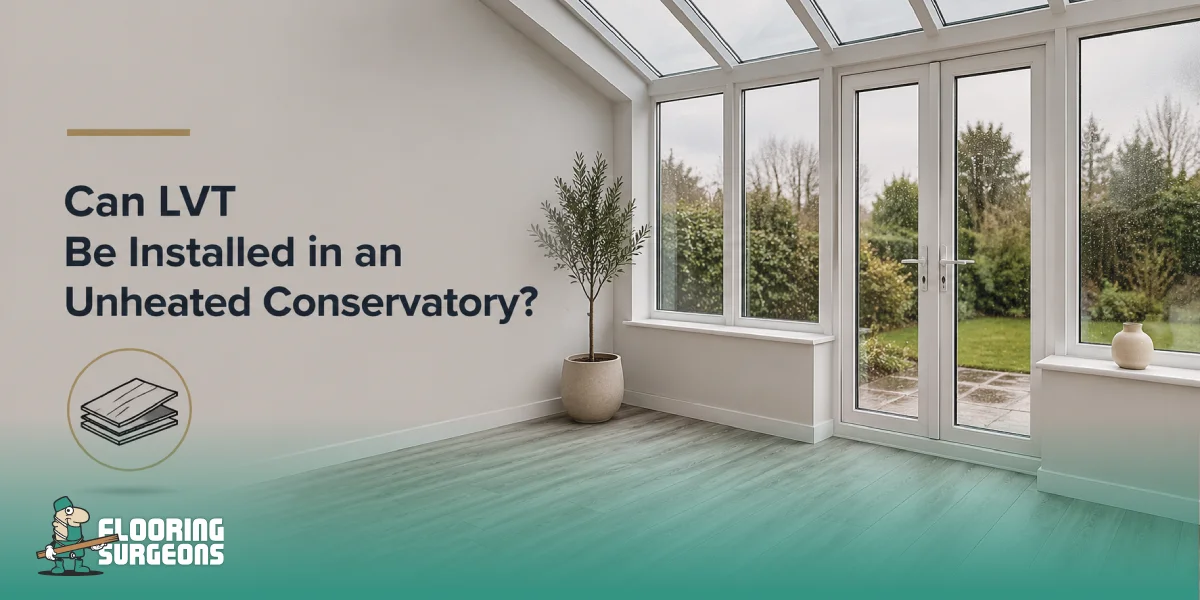
A conservatory can be warm in direct summer sun and close to outdoor temperature during winter. That makes flooring selection more complicated than it would be in a temperature-controlled living room. Homeowners therefore often ask: can you put LVT in a conservatory without causing gaps, lifting or damage?
The answer is sometimes, but not for every product. Choosing LVT flooring in a conservatory is only sensible when the manufacturer approves the exact product for the room’s expected temperature range, sunlight exposure and subfloor conditions. Waterproof construction alone is not enough.
Table of contents
The Short Answer on LVT in an Unheated Conservatory
Installation may be possible, but suitability depends on the product specification rather than the general flooring category. Some products are designed only for continuously heated indoor rooms. Others can tolerate wider temperature changes when installed with a specialist adhesive, an appropriate expansion gap or additional solar protection.
Before buying, check:
- The permitted service-temperature range
- Whether conservatories, sunrooms or seasonal rooms are excluded
- The approved installation method
- Moisture requirements for the subfloor
- Warranty conditions relating to sunlight and temperature
If the technical guide does not clearly approve the application, ask the supplier or manufacturer for written confirmation.
Why Temperature Changes Affect LVT in an Unheated Conservatory
LVT expands when it becomes warm and contracts as it cools. In a standard room, those movements are usually limited because the indoor temperature remains relatively stable. A glass conservatory can expose the surface to much larger changes, particularly where strong sunlight heats one section of the floor more than another.
Repeated movement can place pressure on click joints, adhesive and perimeter edges. Possible results include open seams, raised edges, tenting or individual tiles moving out of position. Our guide to How Flooring Reacts to Seasonal Expansion explains this wider behaviour across different flooring materials.
Sunlight also creates two separate concerns. UV exposure may gradually affect colour, while solar heat can raise the surface temperature above the general room temperature. A floor described as fade-resistant is not automatically approved for extreme heat.
Minimum Temperature and Temperature Limits for LVT Flooring
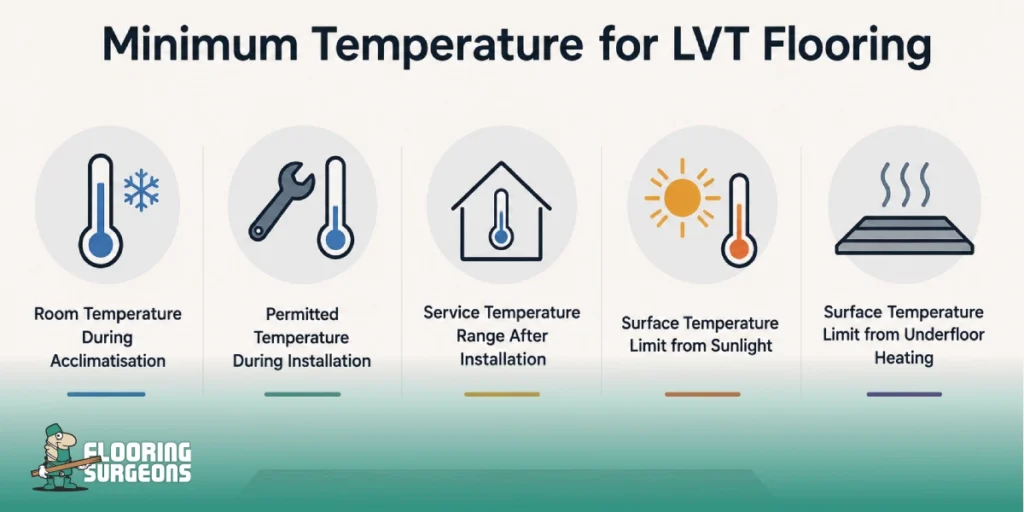
There is no single figure that applies to every brand and construction. Each range has its own operating and installation limits. The temperature required while fitting the floor may also differ from the temperature it can tolerate after installation.
Measure or estimate the coldest winter temperature and the hottest sun-exposed surface temperature in the conservatory. Compare both with the product data sheet. When assessing luxury vinyl flooring in an unheated room, consider the full annual cycle rather than the temperature on the installation day.
The most important LVT temperature limits are:
- The room temperature during acclimatisation
- The permitted temperature during installation
- The service range after the floor has been fitted.
- Any surface-temperature limit caused by sunlight or underfloor heating
How Sunlight and Solar Heat Affect Conservatory LVT Flooring
Condensation is common in rooms with large areas of glass, especially when warm, humid air meets cold surfaces. Although vinyl flooring for conservatories may be water-resistant or waterproof at the surface, trapped moisture beneath the floor can still damage adhesive, underlay or the subfloor.
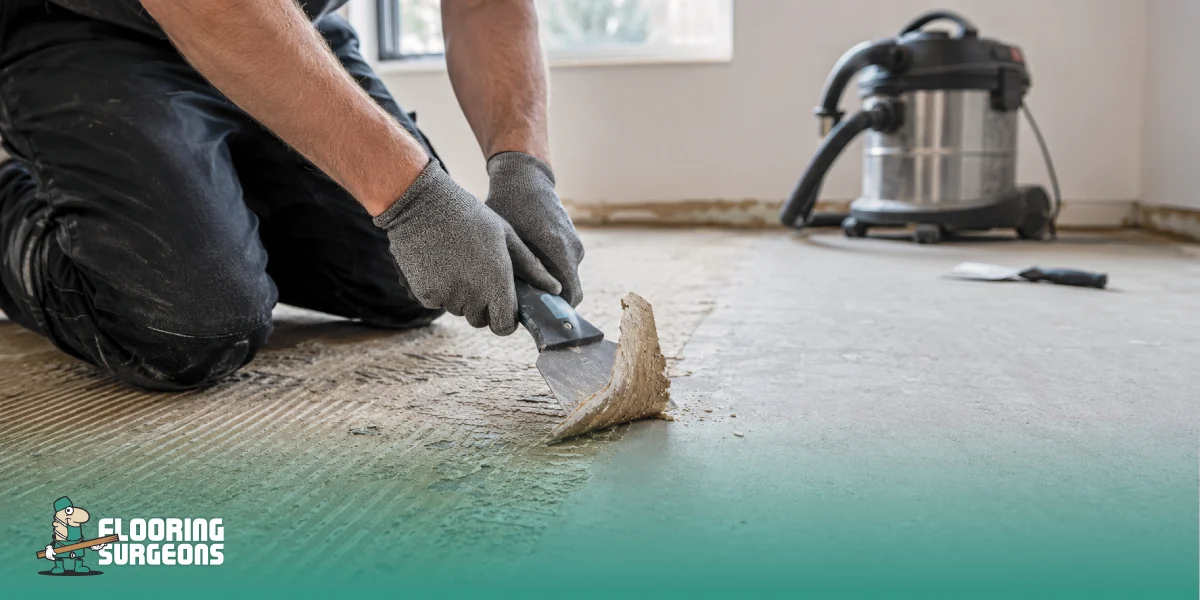
Concrete should be dry, sound, clean and level. A moisture test may be required, and some installations need a damp-proof membrane. Timber subfloors should be stable and free from movement. Do not use waterproof claims as a substitute for proper moisture preparation.
Best LVT for a Conservatory: Installation Types Compared
The most suitable option is not necessarily the thickest or most expensive. It is the product whose technical instructions match the room. The table below provides a practical comparison.
| LVT type | Potential suitability | Main point to check |
| Glue-down | Often easier to stabilise when specifically approved | Temperature-rated adhesive and subfloor preparation |
| Click or floating | Product-dependent | Expansion gaps, room dimensions and conservatory approval |
| Rigid core | May tolerate change better than flexible products | Full service-temperature range and perimeter clearance |
| Loose lay | Usually requires careful assessment | Direct sunlight, movement and manufacturer restrictions |
Glue-Down LVT for Conservatories
A bonded installation can be a practical choice because each plank or tile is fixed to the prepared base. However, ordinary adhesive may soften or fail when the floor becomes very hot. Use only the adhesive specified for the product and conditions. Professional installation is particularly valuable where the conservatory is south-facing or has extensive glazing.
Click LVT in a Conservatory
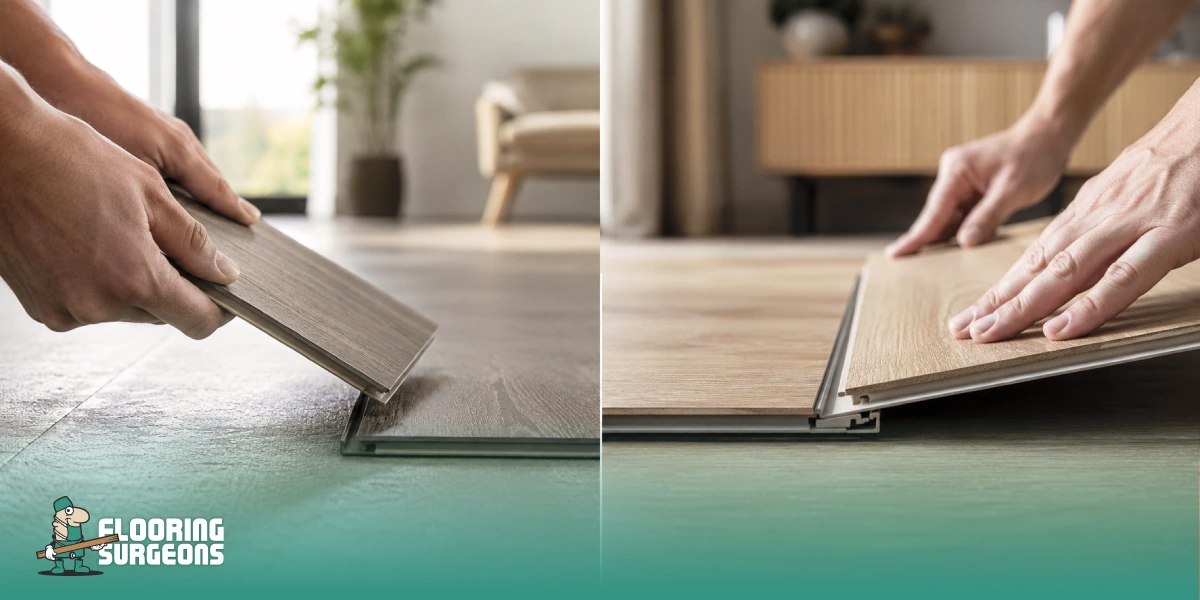
A floating installation requires careful attention to expansion. The floor must not be pinned beneath fixed furniture, kitchen units or tight trims. The correct perimeter gap must remain open around walls, frames and structural objects. Some click ranges exclude unheated conservatories altogether, so never assume that click installation is automatically acceptable.
Rigid Core LVT for Conservatories
Rigid construction may provide better dimensional stability than flexible vinyl, but “rigid” does not mean immune to temperature movement. Check the installation guide for maximum room size, transition-profile requirements and expansion clearances. When approved, rigid vinyl planks can provide the appearance of timber with easier day-to-day maintenance.
SPC Flooring in an Unheated Conservatory
The dense mineral-based core of SPC may improve stability, yet product approval is still essential. Different ranges use different locking systems, backing layers and temperature tolerances. The words “SPC” or “waterproof” on their own do not confirm suitability.
LVT Installation Checklist for an Unheated Conservatory
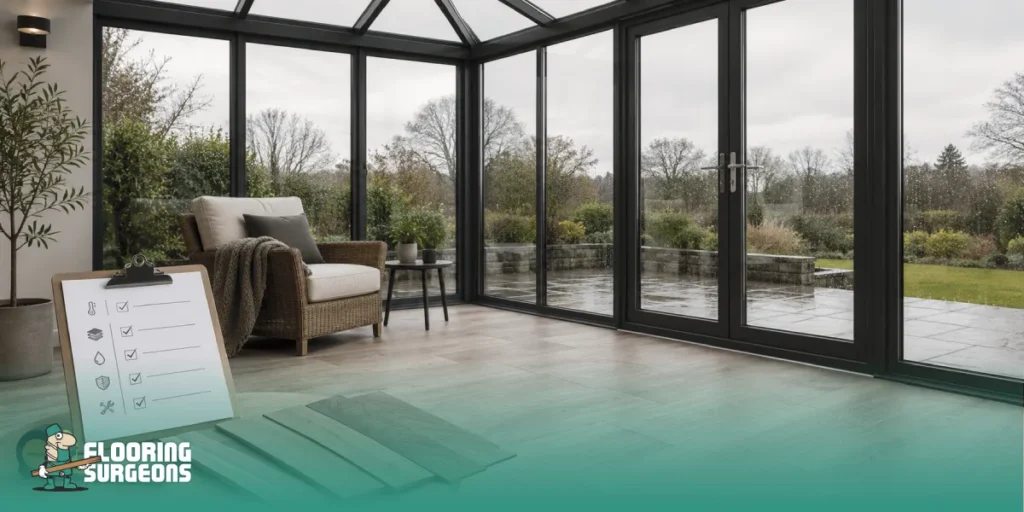
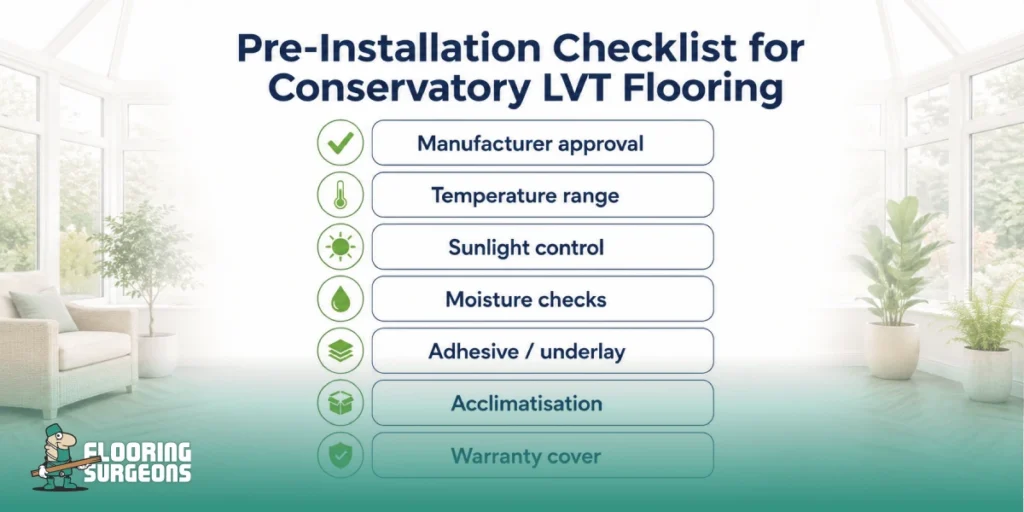
Before ordering conservatory LVT flooring, confirm all of the following:
- The manufacturer permits installation in conservatories or unheated rooms.
- Winter and summer temperatures remain within the approved range.
- Direct sunlight can be managed with blinds, shades or solar-control glazing if required.
- The subfloor has passed the relevant moisture checks.
- The correct adhesive, underlay or expansion gap has been specified.
- The flooring can acclimatise under the conditions stated in the installation guide.
- The proposed installation will remain covered by the product warranty.
These checks are more reliable than choosing by appearance, wear layer or waterproof rating alone.
When LVT Should Not Be Installed in an Unheated Conservatory
Avoid LVT when the conservatory falls outside the manufacturer’s temperature range, experiences uncontrolled moisture or cannot accommodate the required installation method. In those circumstances, the best flooring for an unheated conservatory may be a product specifically rated for seasonal rooms or a material such as porcelain tile that can handle wider environmental changes.
For a broader comparison of materials and room styles, see Conservatory Flooring Ideas. Alternatives should still be assessed against the actual subfloor, glazing, moisture and heating conditions.
Final Verdict: Is LVT Suitable for an Unheated Conservatory?
Suitable unheated conservatory flooring must cope with more than occasional spills. It needs to withstand seasonal temperature movement, concentrated solar heat and possible condensation without compromising the installation or product warranty.
LVT can be a suitable option, but only when the exact product is approved for the space and installed according to its technical guidance. The full temperature range, subfloor condition, adhesive requirements and expansion allowances should all be checked before installation.
At Flooring Surgeons, we recommend choosing flooring based on the actual conditions of the conservatory rather than relying only on claims such as waterproof or rigid core. When the required conditions cannot be met, selecting a product specifically designed for wider temperature fluctuations is the safer long-term choice.

Ana.Soltanpoor
I’m an SEO Specialist with a strong background in content management and organic search. I build data-driven content strategies by aligning user intent, search behavior, and SEO best practices to ensure every piece of content delivers clarity, relevance, and measurable organic performance.