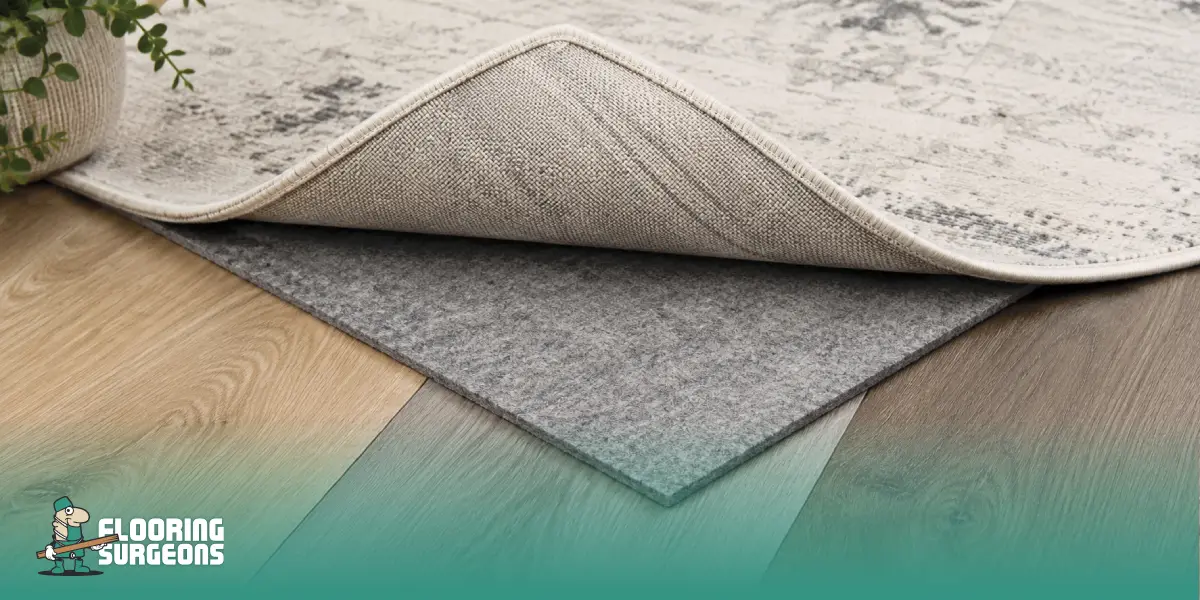
A rug pad can stop an area rug shifting, add comfort and reduce grit rubbing against the floor. The wrong backing, however, may leave residue, trap moisture or cause discolouration. This matters particularly on vinyl-based surfaces, where some rubber, latex and PVC compounds may react with the wear layer.
The safest starting point is usually dense felt or a product clearly labelled for the floor beneath it. Always check the pad specification and the flooring manufacturer’s care instructions rather than relying only on claims such as “suitable for hard floors”. Manufacturer advice can differ, especially on rubber and latex products.
Table of contents
Quick Answer: Which Rug Pads Are Safe for Vinyl and Laminate?
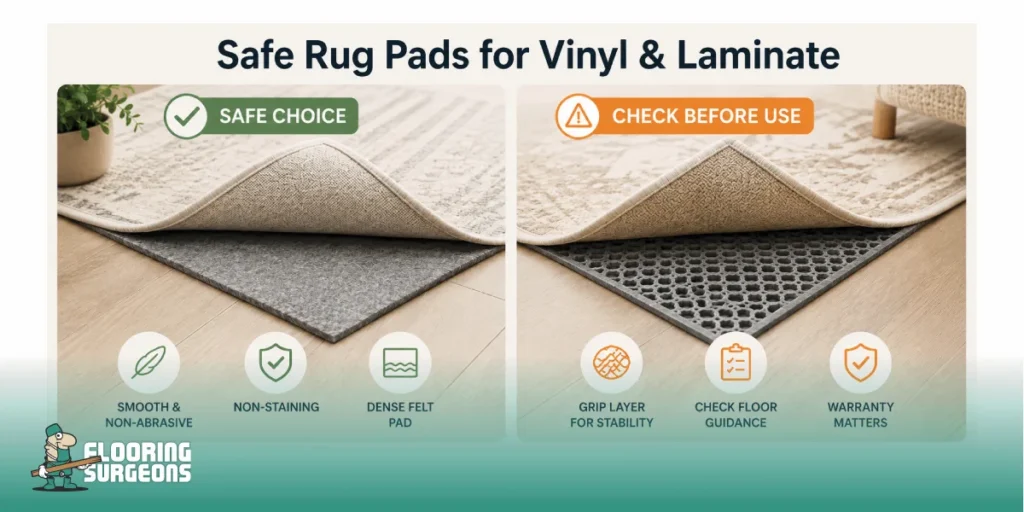
Most safe rug pads for vinyl flooring are smooth, non-abrasive and specifically described as non-staining. Dense felt suits large rugs, while a tested grip layer may work better beneath runners and lighter rugs. On laminate, choose a clean pad that will not shed, stick to the surface or hold abrasive particles.
No material is universally safe. A vinyl-safe rug pad or laminate-safe rug pad should still be checked against the care guidance for the exact floor, particularly where a warranty applies.
Rug Pad, Rug Backing or Flooring Underlay?
A rug backing is attached to the rug. A rug pad is a separate layer placed between the rug and the finished floor. The flooring underlay sits below the floorboards or tiles as part of the installation.
That distinction matters because a product designed beneath floating boards is not automatically suitable beneath an area rug. For a clearer comparison, see Different Types of Underlay – Which One Is Right For You?
What Is The Best Rug Pad for LVT Flooring?
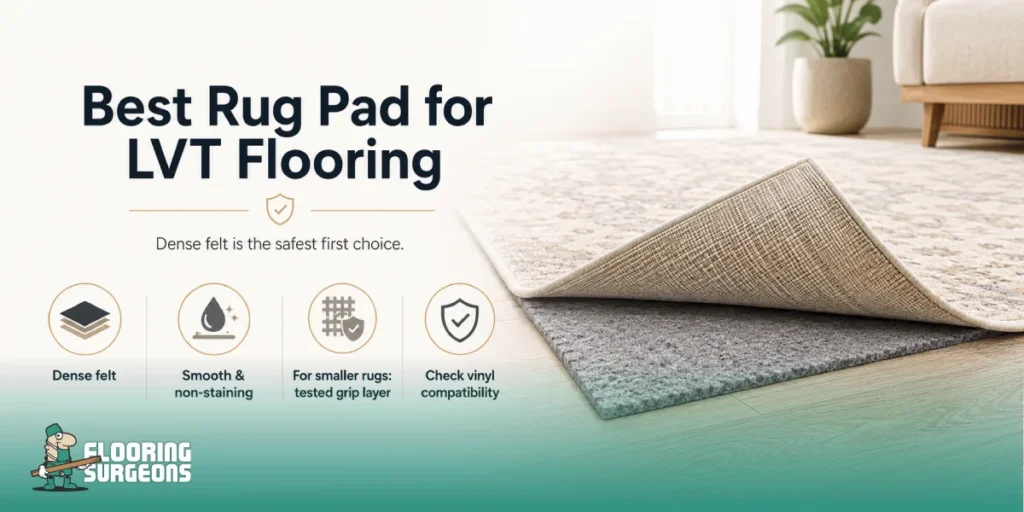
Dense felt is generally a sensible first option for Luxury Vinyl Flooring because it creates a soft barrier without a sticky surface. It can reduce fine scratching caused by grit and works well beneath a large rug already held in place by furniture.
A felt rug pad for vinyl flooring should be smooth, tightly made and free from an unverified coating. Loose fibres, rough recycled material and low-quality foam may break down, so the specification matters as much as the main material.
For a smaller rug, consider felt with a tested, non-staining grip layer. Do not assume every non-slip product is compatible with LVT; check that it is intended for vinyl and contains no adhesive likely to transfer onto the wear layer.
Choosing A Rug Pad For Luxury Vinyl Plank Flooring
LVP and LVT are both vinyl-based, but care requirements vary by brand and construction. A rug pad for LVP flooring should therefore carry clear compatibility wording and have a backing suitable for prolonged contact with vinyl.
A good non-slip rug pad for vinyl floors should grip without bonding to the surface. It should lie flat, sit slightly inside the rug edge and avoid creating a raised trip point.
What Is The Best Rug Pad for Laminate Floors?
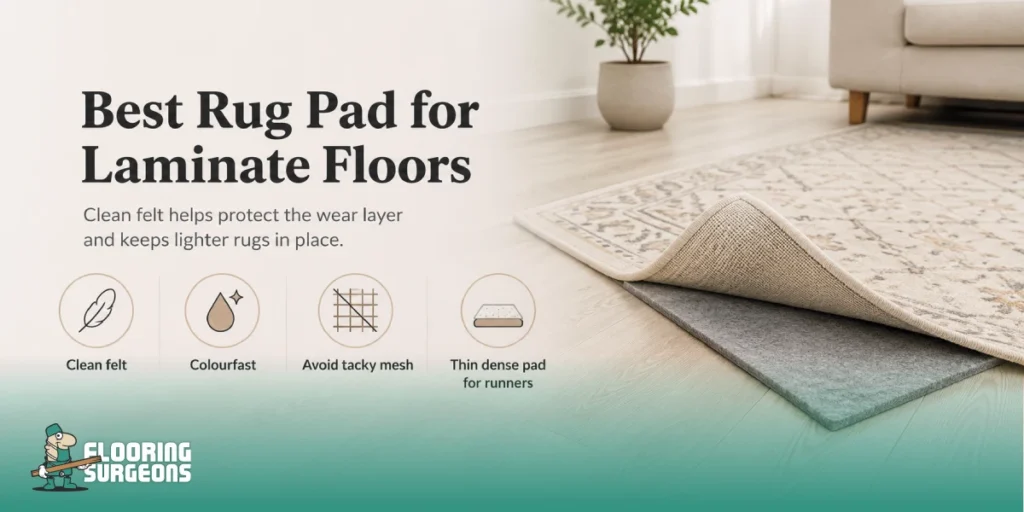
Laminate has a protective wear layer, but trapped grit may still create fine scratches. Clean felt provides cushioning, while a purpose-made area rug pad for laminate flooring can help keep lighter rugs in position.
When placing a rug over Laminate Flooring, avoid pads that feel tacky, have a rough mesh structure or leave powder when rubbed. The pad should be colourfast and intended for finished hard flooring.
In busy routes, a thinner, denser pad is often easier to manage than a heavily cushioned one. This is particularly relevant with runners over Laminate Flooring For Hallway, where raised edges may catch feet or interfere with doors.
Rug Pad Materials Compared
| Material | Potential benefit | Main concern | Recommended approach |
| Dense felt | Cushioning and scratch protection | Limited grip beneath light rugs | Good starting point for large rugs |
| Felt with tested grip | Cushioning plus stability | Backing must suit the floor | Check for LVT-, vinyl- or laminate-safe wording |
| EVA or similar foam | Thin profile and grip | Formulations vary | Use only when clearly non-staining |
| Rubber or latex | Strong anti-slip performance | May discolour some vinyl floors | Follow the flooring manufacturer’s guidance |
| PVC mesh | Inexpensive and easy to cut | May mark or react with finishes | Avoid unless compatibility is confirmed |
| Adhesive grippers | Holds corners in place | Residue or surface damage | Do not attach directly without approval |
The phrase rug pad for hard floors is too broad on its own. A pad suitable for ceramic tile or sealed timber may not be right for vinyl, and even vinyl manufacturers publish different restrictions for backing materials.
How To Choose The Right Thickness and Grip
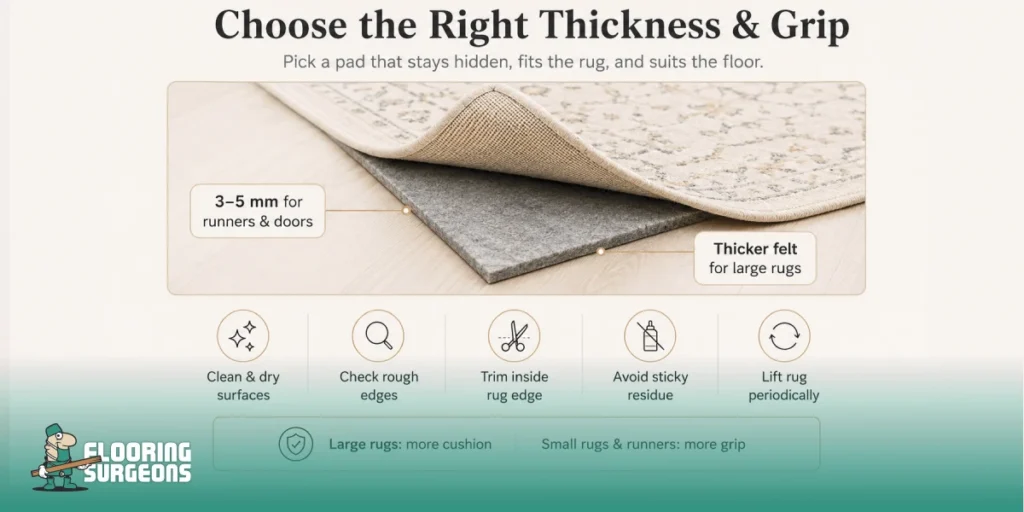
The pad should be slightly smaller than the rug so it remains hidden. Around 3–5 mm is often practical beneath runners and rugs near doors. Thicker felt may suit a large living-room rug where extra cushioning is wanted, and door clearance is not an issue.
Choose grip according to the rug. Large rugs held by furniture may need cushioning more than traction. Small rugs and runners need better slip resistance, but the gripping surface must remain compatible with the floor. Before fitting the pad:
- Vacuum or sweep the floor and rug underside.
- Make sure both surfaces are dry.
- Check for rough edges, loose foam or sticky residue.
- Trim the pad inside the rug perimeter.
- Lift the rug periodically to check for marks or moisture.
Is There A Rug Pad Safe for Underfloor Heating?
A rug and pad add insulation above the floor. On heated floors, check the combined thermal resistance of the flooring, rug and pad, then follow the system’s temperature limits. Thick foam or heavy felt may slow heat transfer. Flooring manufacturers also set limits for compatible systems and underlays.
The floor itself must be approved for the heating system. Which Type of Flooring is Best for Underfloor Heating? explains the common options and checks to make before installation. Do not rely on an underfloor-heating label alone. Confirm compatibility with the flooring material, operating temperature and rug above it.
Warning Signs of Rug Pad Damage
Lift the rug if you notice stickiness, yellowing, a mesh-shaped mark, foam residue, trapped moisture or a change in sheen. Remove the pad rather than scrubbing immediately. Strong solvents and abrasive cleaners may worsen the problem, so consult the floor’s care guide before treatment.
Regular checks matter most beneath rugs that rarely move, in sunny rooms and near entrances where moisture and grit collect.
Final Verdict
No rug pad is automatically safe for every LVT, vinyl and laminate floor. Dense felt is often the safest starting point, while smaller rugs may need a non-staining grip layer designed for the specific surface. Avoid unknown rubber, latex, PVC and adhesive backings unless the flooring manufacturer confirms compatibility.
At Flooring Surgeons, we recommend checking the care instructions for both the floor and pad before fitting. The right choice should protect the surface, hold the rug securely and remain easy to inspect over time.

Ana.Soltanpoor
I’m an SEO Specialist with a strong background in content management and organic search. I build data-driven content strategies by aligning user intent, search behavior, and SEO best practices to ensure every piece of content delivers clarity, relevance, and measurable organic performance.