How to Choose Underlay for Underfloor Heating
The best underlay for underfloor heating should combine low thermal resistance with reliable support beneath the flooring. Before buying, check that the product is compatible with both your chosen floor and the heating system.
Key points to compare include:
- TOG rating
- Underlay thickness
- Flooring compatibility
- Roll coverage
- Moisture protection
- Acoustic performance
- Subfloor suitability
A specialist underfloor-heating-compatible underlay is designed to allow heat to pass through more effectively than many standard underlays.
Why Low TOG Underlay Is Important
TOG measures thermal resistance. A low-tog underlay allows more heat to pass from the heating system into the room.
Choosing a low-tog underlay for underfloor heating can improve heat transfer and help the floor warm up more efficiently. However, the TOG value of the flooring and underlay should always be checked together against the heating manufacturer’s recommendations.
A thicker underlay is not always better. Excessive thickness can increase thermal resistance and reduce the performance of the heating system.
Underfloor Heating Underlay for Laminate
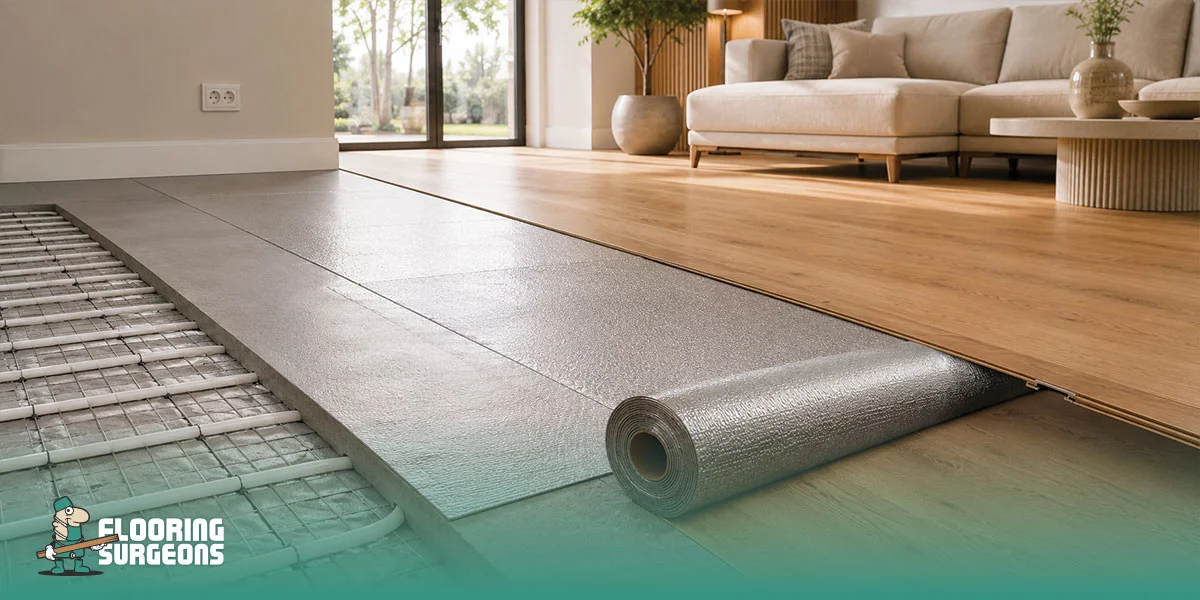
Laminate flooring is usually installed as a floating floor, so it requires suitable support beneath the boards. A specialist laminate underlay for underfloor heating helps protect the locking system while allowing heat to pass through the floor.
When choosing an underfloor heating underlay for laminate, check the TOG rating, thickness and moisture protection. If the floor is being installed over concrete, a product with an integrated vapour barrier or damp-proof membrane may be required.
The laminate flooring itself must also be approved for use with underfloor heating.
Underfloor Heating Underlay for Engineered Wood
Engineered wood is commonly used with heated floors because its layered construction provides better stability than many solid wood products.
The right underfloor heating underlay for engineered wood should provide low thermal resistance and stable support beneath the boards. A suitable engineered wood underlay for underfloor heating may also help reduce impact noise and improve comfort underfoot.
When selecting a wood flooring underlay for underfloor heating, confirm that the engineered wood floor is designed for floating installation. Some engineered wood products may require full bonding with adhesive instead of underlay.
Benefits of Specialist Underfloor Heating Underlay
Using specialist underlay can provide several practical benefits:
- Efficient heat transfer
- Low thermal resistance
- Support for floating floors
- Reduced impact noise
- Improved comfort underfoot
- Moisture protection on selected products
- Protection between the floor and subfloor
You can also explore our wider range of flooring accessories to find trims, adhesives and other products needed for your installation.
What Is the Best Underlay for Underfloor Heating?
The best underlay for underfloor heating depends on the flooring type, subfloor and heating system.
For laminate and floating engineered wood, look for a low TOG rating and confirmed compatibility with underfloor heating. For concrete subfloors, check whether the product includes a vapour barrier or DPM. If sound reduction is important, compare acoustic performance alongside thermal resistance.
Always review the individual product specifications before ordering.
Order Underfloor Heating Underlay Online
Compare our underfloor heating underlay options by TOG rating, thickness, roll coverage, flooring compatibility and moisture protection. Before placing your order, you can request a free sample to check the quality, thickness and suitability of the underlay for your laminate or engineered wood flooring project.
At Flooring Surgeons, you can explore suitable options, order your free sample and choose the right underlay with greater confidence.