


- Width 100mm
- Thickness 12mm
- Length 600mm
4.9
Desert Oak Herringbone 12mm Laminate
- Pet friendly
- Scratch resistant
- Underfloor heating
- Splash resistant
Price
£19.99per m²

*Mainland England, floors and accessories.

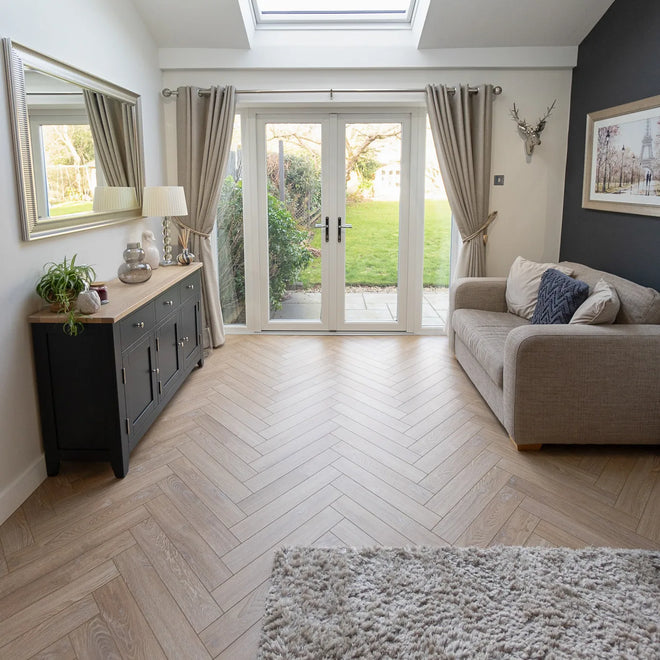
Floating flooring is installed over the subfloor without being glued, nailed or stapled directly into place. This collection includes floors suitable for floating floor installation, giving homeowners a practical choice for bedrooms, living rooms, hallways and other everyday spaces.
At Flooring Surgeons, you can explore floating floors across laminate, LVT, SPC and selected engineered wood ranges, with options available in wood-effect planks, herringbone designs, modern grey tones, natural oak finishes and durable surfaces for busy homes.
193 products found
Sort By
Sort products by price, relevancy and more.
Showing 24 of 193
Show 24 moreFloating flooring means the floor is installed over the subfloor without being glued, nailed, or stapled directly to the subfloor. The boards or tiles connect together and sit above the subfloor with a suitable underlay or backing.
No. A floating floor is one in which the flooring sits over the subfloor. Click flooring refers to how the boards connect. Some click floors are installed as floating floors, but the terms are not interchangeable.
Many floating flooring products need underlay, especially laminate and engineered wood. Some LVT and SPC products may include attached backing, so always check the product specification before installation.
Some floating floors are suitable for underfloor heating, but not all. Check the product specification, maximum temperature guidance and underlay compatibility before installation.
Only certain floating flooring products are suitable for bathrooms. Waterproof floating LVT flooring or SPC floating flooring may be suitable where specified, but standard laminate and engineered wood should only be used if approved for bathroom conditions.
An expansion gap gives floating floors space to expand and contract with changes in temperature and humidity. Without the correct gap, the floor may lift, buckle or press against walls and fixed objects.
Floating flooring is an installation method in which the floor is laid over the subfloor rather than fixed directly to it. The boards or tiles are connected to each other, creating one stable surface that rests above the subfloor with the correct underlay or backing beneath it.
This is different from fully bonded or nailed flooring, where each plank is attached directly to the surface below. With a floating floor, the connected boards help hold the floor in place, while room edges, trims and correct installation allow for natural movement.
Because the floor is not directly fastened to the subfloor, floating floor installation is often used for laminate flooring, engineered wood flooring, SPC flooring, and certain types of luxury vinyl flooring.
Floating floors are popular because they offer a practical balance of style, flexibility and ease of installation. They can often be fitted more quickly than fully bonded flooring and may be suitable for a range of domestic rooms when the product specification allows.
Key benefits of floating flooring include:
A floating floor can be a strong option if you want a stylish floor with a less permanent fitting method, especially in standard living areas where the subfloor is already suitable.
Floating floor installation starts with preparing the subfloor. The surface underneath must be clean, dry, level and stable. If the subfloor is uneven, damp or unstable, the finished floor may move, bounce, creak or develop gaps over time.
Once the subfloor is ready, a suitable underlay or integrated backing layer may be used, depending on the flooring type. The boards or tiles are then connected together according to the manufacturer’s fitting instructions.
A key part of floating floor installation is the expansion gap around the edge of the room. This gap allows the floor to expand and contract naturally with changes in temperature and humidity. Without enough space around the perimeter, the floor may lift, buckle or press against walls and fixed objects.
Floating flooring is defined by the fact that it is not directly fixed to the subfloor. Some products use a click system, while others use tongue-and-groove joints, but the important point is that the finished floor sits above the subfloor rather than being permanently bonded to it.
Glue-down flooring is different because the product is fixed directly to the subfloor using adhesive. This can create a very stable finish, but it usually requires more preparation and a more permanent installation.
Click system flooring is also different. Click describes how the boards connect to one another, while floating flooring describes how the floor sits over the subfloor. Some click floors are installed as floating floors, but the two terms do not mean exactly the same thing.

Floating laminate flooring is one of the most common choices for this installation method. Laminate boards are typically designed to connect together and sit over a suitable underlay, making them popular for bedrooms, living rooms, dining rooms, hallways and home offices.
When choosing floating laminate flooring, check the AC rating, thickness, water-resistant properties and underlay requirements. A higher wear rating is useful in busy areas, while water-resistant options may be better for kitchens or other areas where spills are more likely.
Floating engineered wood flooring gives you the appearance of real wood with a layered construction that is more stable than solid wood. Selected engineered wood floors can be installed as floating floors, depending on the joint system and manufacturer guidance.
This option can work well in living rooms, bedrooms and open-plan spaces where a natural wood finish is important. Before buying floating engineered wood flooring, check the board thickness, wear layer, underfloor heating compatibility and whether the product is approved for a floating installation.
Floating LVT flooring offers the look of wood, stone or tile with the comfort and practicality of luxury vinyl. Some LVT products are designed with a rigid or click construction that allows them to be installed as a floating floor.
This can be a good option for busy homes, especially where easy maintenance and everyday durability matter. For kitchens, bathrooms or utility rooms, always check whether the specific floating LVT flooring product is water-resistant or waterproof and suitable for that room.
SPC floating flooring uses a rigid core construction, which can help create a stable and durable floor surface. Many SPC products are designed for floating floor installation and are often selected for high-traffic areas, open-plan rooms and moisture-prone spaces where the product is rated for use.
Because SPC is generally firm and dimensionally stable, it can be a strong option for homeowners looking for a practical floating floor with good everyday performance.
Floating flooring can be used in many rooms, but suitability depends on the product type, room conditions and subfloor. A floor that works well in a bedroom may not be the best choice for a bathroom or utility room.
Use this guide as a starting point:
Room |
Suitable Floating Flooring Options | What to Check |
Bedroom |
Floating laminate flooring, floating engineered wood flooring, floating LVT flooring | Comfort, appearance, underlay, sound reduction |
Living room |
Floating laminate flooring, floating LVT flooring, floating engineered wood flooring | Durability, style, underfloor heating compatibility |
Hallway |
SPC floating flooring, floating laminate flooring, floating LVT flooring | Wear resistance, stability, easy cleaning |
Kitchen |
Floating LVT flooring, SPC floating flooring, selected water-resistant laminate | Water resistance, cleaning, moisture rating |
Bathroom |
Waterproof floating LVT flooring or SPC floating flooring only where specified | Bathroom suitability, sealing guidance, moisture protection |
Home office |
Floating laminate flooring, floating LVT flooring, floating engineered wood flooring | Chair movement, sound control, surface durability |
Always check the product specification before installation, especially in rooms with moisture, underfloor heating, heavy furniture or high foot traffic.

Before choosing floating flooring, it is important to look beyond colour and price. The right floor should match the room, the subfloor and the way the space will be used.
| What to Check | Why It Matters |
Flooring type |
Laminate, LVT, SPC and engineered wood all behave differently |
Floating suitability |
Not all products are approved for floating floor installation |
Subfloor condition |
The subfloor must be clean, dry, level and stable |
Underlay requirements |
The correct underlay can improve comfort, support and sound reduction |
Expansion gap |
Floating floors need space to move naturally around the room edges |
Room suitability |
Some products are dry-room only; others may be suitable for kitchens or bathrooms |
Thickness |
Affects floor height, door clearance and underfoot feel |
Wear rating |
Important for hallways, living rooms and busy homes |
Water resistance |
Essential for moisture-prone spaces |
Underfloor heating compatibility |
Not all floating floors are suitable for heated floors |
Checking these details helps you choose a floating floor that performs well after installation, not just one that looks good in the product image.
Good preparation is essential for a stable floating floor. The subfloor should be swept, checked for moisture and levelled where required. Any loose boards, high spots or dips should be corrected before the flooring is fitted.
You should also check whether the flooring needs to acclimate before installation. Wood-based products such as laminate and engineered wood may need time to adjust to the room conditions before fitting begins.
Before starting floating floor installation, check:
A properly prepared subfloor helps reduce movement, noise and long-term fitting problems.
Floating flooring may be right for you if you want a floor that is stylish, practical and not permanently fixed to the subfloor. It is especially useful for many domestic rooms where the subfloor is suitable, and the product is designed for this type of installation.
A floating floor can be a good choice if:
For uneven subfloors, complex layouts, stairs or specialist installations, professional advice from Flooring Surgeons may be recommended before choosing a floating floor.
Before you order


