


- Width 100mm
- Thickness 12mm
- Length 600mm
4.9
Desert Oak Herringbone 12mm Laminate
- Pet friendly
- Scratch resistant
- Underfloor heating
- Splash resistant
Price
£19.99per m²

*Mainland England, floors and accessories.

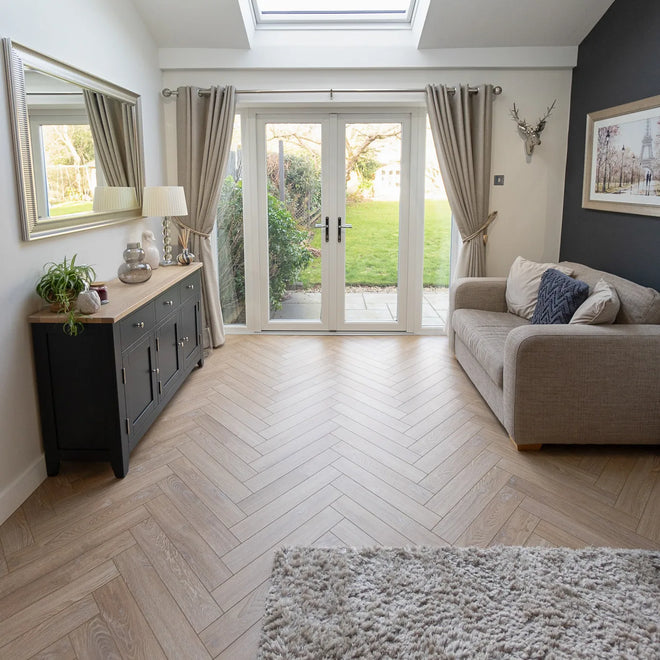
Conservatory flooring needs to perform well in a unique environment where natural light, temperature changes and seasonal variations all play an important role. Unlike standard rooms, conservatories often receive more sunlight and experience greater temperature fluctuations, making it essential to choose flooring that offers long-term stability and maintains its appearance.
Conservatory flooring is available in a range of materials, including laminate, luxury vinyl tile (LVT), engineered wood and solid wood. Each offers different characteristics, so factors such as direct sunlight, underfloor heating, moisture levels and daily use should all be considered before choosing the most suitable option.
318 products found
Sort By
Sort products by price, relevancy and more.
Showing 24 of 318
Show 24 moreThere is no single best flooring for every conservatory. The right choice depends on the room’s usage, environmental conditions and the flooring manufacturer’s recommendations. Luxury vinyl and engineered wood are popular options, but the specific product should be suitable for the temperatures, sunlight exposure and installation conditions in your conservatory.
Laminate flooring can be suitable for some conservatories, particularly where temperature and humidity remain within the product’s recommended limits. Suitability varies between products and ranges, so always check the individual specifications.
Solid wood flooring may be used in conservatories with controlled temperature and humidity. Because natural timber expands and contracts with changes in temperature and humidity, proper acclimatisation, installation and environmental control are particularly important.
Luxury vinyl flooring is often considered one of the most durable options for conservatories because it is designed to withstand everyday wear and is easy to maintain. However, durability varies between products and depends on factors such as the wear layer, construction, installation quality and the room’s environmental conditions.
Prolonged exposure to direct sunlight can affect some flooring materials, causing expansion, contraction or changes in appearance over time. Choosing a product designed for conservatory conditions and following the manufacturer’s installation guidance can help minimise these effects.
Consider direct sunlight, seasonal temperature changes, humidity, maintenance requirements, foot traffic and how the flooring will connect with the rest of your home. Compare samples in the conservatory itself and review each product’s suitability, installation and maintenance guidance before making a final decision.
Homeowners searching for the best flooring for a conservatory should consider how much direct sunlight the room receives, whether it is heated throughout the year, and how frequently the space is used. This is particularly important in UK homes, where conservatories can experience significant seasonal temperature changes.
A suitable conservatory floor should provide a practical balance of:
No single flooring material is the right choice for every conservatory. Laminate, engineered wood, LVT and solid wood each have different characteristics, so always check the product specifications and installation guidance to ensure the flooring is suitable for your room and its conditions.
Before choosing conservatory flooring, consider how the room is used, how much direct sunlight it receives and how temperatures change throughout the year. These factors can influence which flooring materials are most suitable for the space.
Key factors to consider include:
Considering these factors can help you choose flooring that performs well over time and remains suitable for the conditions in your conservatory. Comparing samples in the room before making a final decision is also worthwhile, as strong natural light can affect how colours, grain patterns and surface finishes appear throughout the day.
Several materials can be considered for conservatory flooring, depending on the room’s temperature, sunlight exposure, usage and desired appearance.
Laminate flooring is a popular option for conservatories, offering an affordable way to introduce a wood-effect finish into the room. It is available in a wide variety of colours, plank styles and surface textures, making it suitable for both traditional and contemporary interiors.
When comparing laminate products, check their resistance to wear, moisture and temperature variation. Suitability can differ between ranges, so the individual product instructions should always be reviewed before installation.
Homeowners who prefer the appearance and texture of real timber may wish to consider engineered wood flooring for a conservatory. Engineered wood combines a genuine hardwood veneer with a layered core, providing greater dimensional stability than solid wood flooring.
However, not every engineered floor is suitable for every conservatory. The room’s temperature range, humidity levels, exposure to direct sunlight exposure and heating arrangements must be considered alongside the manufacturer’s recommendations.
Luxury vinyl flooring for conservatories is a practical, low-maintenance option that is available in a wide range of wood-effect and other decorative finishes across both click and glue-down formats. Many luxury vinyl products offer good resistance to everyday wear, spills and frequent cleaning.
Performance when exposed to heat and direct sunlight varies by product. Before choosing LVT or SPC flooring for a conservatory, confirm the manufacturer’s recommended temperature range, installation requirements, and compatibility with direct sunlight and underfloor heating.
Solid wood flooring can be considered for conservatories where the indoor temperature and humidity remain relatively stable. Solid timber provides authentic grain, natural variation and a traditional finish, but it can respond more noticeably to changes in temperature and humidity.
For this reason, solid wood is generally better suited to controlled conservatory environments. Professional assessment, proper acclimatisation and correct installation are particularly important when installing natural timber in rooms exposed to seasonal changes.

Flooring plays an important role in the overall appearance of a conservatory, influencing how bright, spacious and cohesive the room feels. The right combination of colour, plank size and finish can help complement both the conservatory and the adjoining living spaces.
Light oak, pale grey and other neutral tones can help maximise the effect of natural light, while medium and darker wood tones add warmth, contrast and definition. The most suitable colour depends on the size of the room, the amount of sunlight it receives and the style of the surrounding interior.
The direction in which the flooring is laid can also influence the overall look of the space. Running planks along the longest dimension of the room can help emphasise its proportions, while alternative laying directions may better suit different room layouts and design preferences.
Because conservatories receive large amounts of natural light, flooring colours, grain patterns and surface finishes can appear different throughout the day. Comparing samples in the room before making a final decision provides a more accurate impression of how the flooring will look once installed.
The following comparison provides a general overview. Actual performance depends on the individual product specification, installation method and environmental conditions.
| Flooring type | General stability | Maintenance | Best considered for |
Luxury vinyl |
High in suitable products | Easy | Practical, frequently used conservatories |
Engineered wood |
Good to very good | Moderate | Interiors requiring a natural wood surface |
Laminate |
Good in suitable ranges | Easy | Cost-conscious and wood-effect installations |
Solid wood |
More sensitive to environmental changes | Moderate | Temperature- and humidity-controlled rooms |
Before choosing flooring for a conservatory, measure the room carefully to calculate the amount of flooring required. You should also assess how much direct sunlight the space receives and whether it remains heated throughout winter or experiences significant seasonal temperature changes, as these factors can influence which flooring products are suitable.
Check the individual product page for:
These product-specific recommendations provide a more reliable basis for choosing conservatory flooring than selecting a material alone. If you are unsure whether a product is suitable for your conservatory, seek professional advice before purchasing or installing the flooring.


