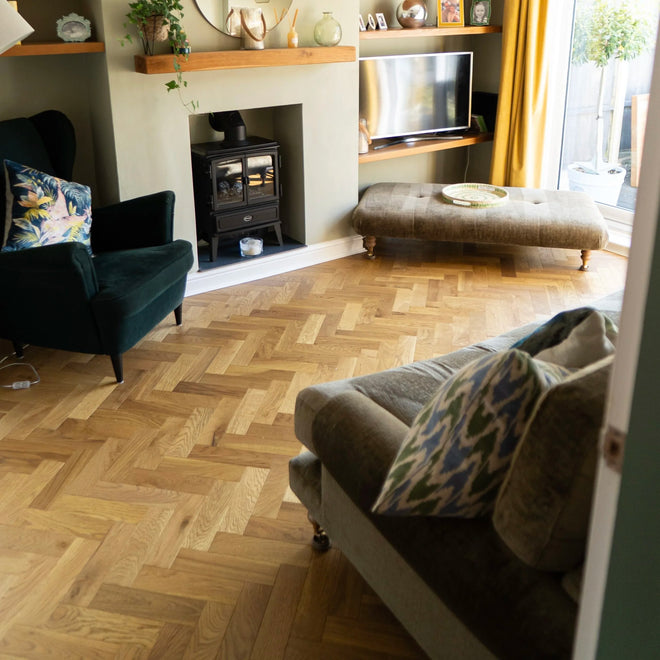
What Is Glue-Down Flooring?
Glue-down flooring is an installation method in which flooring planks or tiles are bonded directly to the subfloor using a suitable adhesive. Unlike floors that sit loosely above the subfloor, glue-down flooring creates a firm connection between the flooring and the surface beneath it.
This method is often chosen when stability, durability and a solid underfoot feel are important. Because each plank or tile is fixed in place, the finished floor can feel more secure and is less likely to move when fitted correctly.
You may also see this type of flooring described as stick-down flooring, adhesive flooring, gluedown flooring or bonded flooring. These terms all refer to the same basic concept: the floor is installed using adhesive rather than relying only on a loose or floating fitting method.
Why Choose Glue-Down Flooring?
Glue-down flooring is a strong choice when you want a floor that feels stable, secure and built for everyday use. Because the floor is bonded directly to the subfloor, it can perform well in spaces where movement, heavy foot traffic or long-term durability are key concerns.
Key benefits of glue-down flooring include:
- A secure bonded installation
- Excellent stability underfoot
- Less movement compared with looser-fitting methods
- A strong option for high-traffic rooms
- Suitable choices for kitchens, hallways and busy living areas
- Good support for detailed layouts such as herringbone and parquet
- Often suitable for commercial-style or heavy-use environments
- A more permanent finish for long-term flooring projects
This makes glue-down flooring especially useful when the priority is not just easy installation, but long-term performance and a solid, professional result.
Glue Down Flooring vs Other Installation Methods
Glue-down flooring is different from floating and click system flooring because it is fixed directly to the subfloor using adhesive. Floating flooring focuses on how the floor sits on the subfloor, while click system flooring focuses on how the boards connect.
With glue-down flooring, the main advantage is the bonded finish. Once installed correctly, the floor becomes more firmly attached to the surface beneath it. This can make it a better choice for spaces where stability, durability and a low-profile finish are important.
Click and floating floors can be suitable for quicker or more flexible installations, but glue-down flooring is often preferred when a more permanent, secure and professional installation is needed.

Types of Glue-Down Flooring
This category includes several types of glue-down flooring, each with different benefits depending on the material, room and installation requirements.
Glue Down LVT Flooring
Glue-down LVT flooring is one of the most popular options in this category. LVT stands for luxury vinyl tile, and it is commonly chosen for its durability, easy maintenance and wide range of wood, stone and tile-effect designs.
Because glue-down LVT flooring is bonded directly to the subfloor, it can offer a stable finish in busy areas such as hallways, kitchens, living rooms and commercial spaces. It is also a strong option for design-led layouts, as individual planks or tiles can be accurately positioned during installation.
Before choosing glue-down LVT flooring, check the wear layer, thickness, slip resistance, water resistance and whether the product is suitable for the room where it will be fitted.
Glue Down Vinyl Flooring
Glue-down vinyl flooring is a practical choice for homeowners who want a durable surface with a secure adhesive installation. It can be used in a wide range of domestic spaces and may be suitable for moisture-prone areas when the product specification allows.
Compared with some thicker floating products, glue-down vinyl flooring can create a lower-profile finish, which may help in rooms where door clearance or floor height is important. It is also often chosen for areas where easy maintenance and long-term stability matter.
For kitchens, bathrooms or utility rooms, always check that the specific glue-down vinyl flooring product and adhesive are suitable for moisture conditions.
Dryback LVT Flooring
Dryback LVT flooring is another common term for glue-down LVT flooring. It refers to LVT planks or tiles installed with adhesive rather than a click or loose-lay system.
Dryback LVT flooring is often used when a precise, stable and long-lasting finish is required. It is particularly useful for design patterns, borders and detailed layouts where accurate placement matters.
Because dryback LVT flooring depends heavily on the quality of the subfloor and adhesive, preparation is essential. The surface must be smooth, clean, dry and level before fitting begins.
Stick Down Flooring
Stick-down flooring is another name for describe floors that are fixed directly to the subfloor using adhesive. The term is often used for vinyl and LVT products, but the same principle can apply to selected wood flooring products as well.
The main benefit of stick-down flooring is that it creates a secure bond between the floor and the subfloor. This can help reduce movement and provide a more solid feel underfoot.
If you are comparing stick-down flooring with other installation types, the most important thing to check is whether your subfloor is suitable. Any unevenness, dust, moisture or surface damage can affect the final result.
Glue Down Engineered Wood Flooring
Glue-down engineered wood flooring combines the natural appearance of real wood with the stability of a layered construction. Where suitable, engineered wood can be bonded directly to the subfloor using an appropriate adhesive.
This method can provide a firm, premium feel underfoot well suited to living rooms, bedrooms and open-plan areas where a real wood finish is preferred.
Before choosing glue-down engineered wood flooring, check the product’s installation guidance, board thickness, wear layer, subfloor requirements and underfloor heating compatibility. Not all engineered wood flooring is suitable for glue-down installation, so the product specification should always be reviewed carefully.
Herringbone Glue Down Flooring
Herringbone glue-down flooring is popular among homeowners who want a more decorative, premium look. Because the pieces are bonded directly to the subfloor, glue-down installation can support accurate placement and a more stable, patterned finish.
This can be especially useful for herringbone, parquet and other design-led layouts where alignment is important. With herringbone glue-down flooring, careful planning and professional fitting are often recommended to achieve the best result.
Parquet Glue Down Flooring
Parquet glue-down flooring is another popular choice for detailed interiors. The adhesive installation method helps keep smaller blocks or patterned sections securely in place, which is important for maintaining the design’s shape and structure.
If you are choosing parquet glue-down flooring, check the layout plan, subfloor condition, adhesive type and expansion requirements before installation begins.

Where Can Glue-Down Flooring Be Used?
Glue-down flooring can be used in many areas of the home, but suitability depends on the product type, the adhesive, and the room conditions. It is often chosen for rooms where stability and durability are more important than easy removal.
Use this guide as a starting point:
| Room |
Suitable Glue Down Flooring Options |
What to Check |
Hallway |
Glue down LVT flooring, glue down vinyl flooring, dryback LVT flooring |
Wear layer, stability, easy cleaning |
Kitchen |
Glue down vinyl flooring, glue down LVT flooring |
Water resistance, adhesive suitability, cleaning |
Living room |
Glue down engineered wood flooring, glue down LVT flooring |
Style, comfort, underfloor heating compatibility |
Bathroom |
Suitable glue down vinyl flooring or glue down LVT flooring only where specified |
Moisture rating, adhesive type, sealing guidance |
Commercial-style spaces |
Dryback LVT flooring, stick down flooring, bonded flooring |
Durability, wear layer, professional fitting |
Herringbone layouts |
Herringbone glue down flooring, parquet glue down flooring |
Pattern planning, subfloor level, accurate fitting |
Always check the product details before buying, especially for moisture-prone spaces, underfloor heating or high-traffic areas.
What to Check Before Buying Glue-Down Flooring
Before choosing glue-down flooring, it is important to look beyond colour, pattern and price. The success of this installation method depends heavily on product suitability, adhesive choice and subfloor preparation.
What to Check |
Why It Matters |
Subfloor condition |
Glue down flooring needs a smooth, clean, dry and level surface |
Adhesive type |
The correct adhesive is essential for a secure bonded installation |
Flooring type |
LVT, vinyl and engineered wood all have different fitting requirements |
Room suitability |
Some products are suitable for dry rooms only, while others can handle moisture |
Wear layer |
Important for hallways, kitchens and high-traffic areas |
Moisture level |
Excess moisture can affect adhesion and long-term performance |
Floor height |
Glue down vinyl flooring and LVT can help where a lower-profile floor is needed |
Underfloor heating compatibility |
The product and adhesive must both be suitable |
Pattern layout |
Herringbone glue down flooring and parquet need accurate planning |
Professional fitting |
Glue down flooring is less forgiving than some easier installation methods |
Checking these details before buying helps you choose adhesive flooring that looks good, fits correctly and performs well over time.
Preparing the Subfloor for Glue-Down Flooring
Subfloor preparation is one of the most important parts of glue-down flooring installation. Because the product is bonded directly to the subfloor, imperfections in the subfloor can affect the final finish.
The subfloor should be:
- Smooth
- Clean
- Dry
- Level
- Stable
- Free from dust, grease or loose material
If the surface is uneven, the finished glue-down flooring may show imperfections, lift at the edges or fail to bond correctly. Moisture should also be checked before installation, especially when fitting over concrete or in areas where damp may be a concern.
For glue-down LVT flooring, dryback LVT flooring and glue-down vinyl flooring, a well-prepared subfloor is essential for achieving a flat, stable and long-lasting result.
Does Glue-Down Flooring Need Underlay?
In most cases, glue-down flooring does not need underlay. This is because the flooring is designed to be bonded directly to the subfloor using adhesive. Adding an underlay would usually prevent the adhesive from forming a strong bond.
Instead of underlay, the focus should be on properly preparing the subfloor. The smoother and more stable the surface is, the better the finished bonded flooring will perform.
Some products or specialist systems may have specific requirements, so always follow the manufacturer’s installation guidance before fitting.
Is Glue Down Flooring Right for You?
Glue-down flooring may be the right choice for you if you want a stable, secure and long-lasting floor that is fixed directly to the subfloor. It is especially useful for areas where durability, low movement and a professional finish are important.
It can be a strong option if:
- You want a more permanent installation.
- You need flooring for a high-traffic area.
- You prefer a stable, solid feel underfoot.
- You are choosing LVT, vinyl or selected engineered wood.
- You want a detailed layout, such as herringbone or parquet.
- Your subfloor is smooth, dry, clean and level.
- You are comfortable using professional fitting where needed
For simple DIY projects, other installation methods may be easier. But for stability, durability and a secure bonded finish, glue-down flooring is one of the strongest options available from Flooring Surgeons.