


- Width 100mm
- Thickness 12mm
- Length 600mm
4.9
Desert Oak Herringbone 12mm Laminate
- Pet friendly
- Scratch resistant
- Underfloor heating
- Splash resistant
Price
£19.99per m²

*Mainland England, floors and accessories.

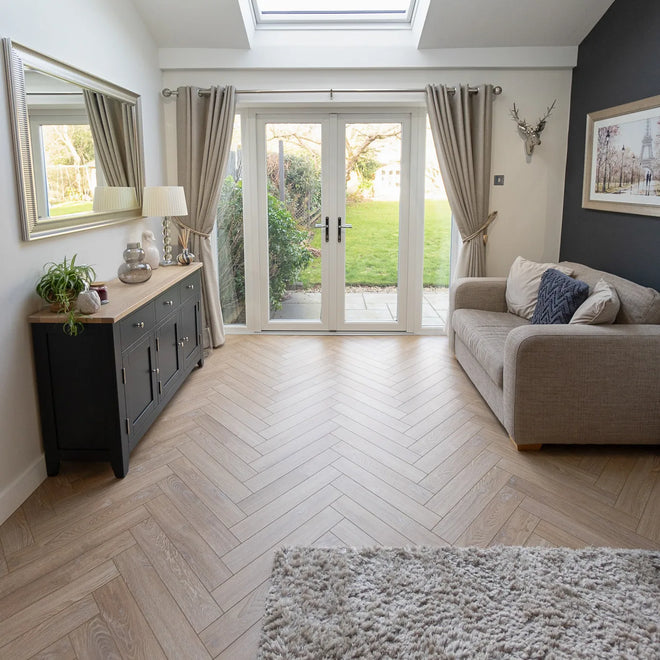
Living room flooring should combine comfort, durability and style to create a welcoming space for relaxing, spending time with family and entertaining guests. As one of the most frequently used rooms in the home, the living room benefits from flooring that complements the interior while withstanding everyday foot traffic, furniture movement, pets and general wear.
Living room flooring is available in a range of materials, including laminate, luxury vinyl tile (LVT), engineered wood and solid wood. Each offers different characteristics, so factors such as comfort underfoot, maintenance requirements, room layout and the overall interior style should all be considered when choosing the most suitable flooring.
318 products found
Sort By
Sort products by price, relevancy and more.
Showing 24 of 318
Show 24 moreThere is no single best flooring option for every living room. The right choice depends on factors such as foot traffic, household requirements, budget, maintenance preferences and the desired appearance. Engineered wood, luxury vinyl and laminate are commonly considered, while solid wood, herringbone and chevron offer alternative materials and layouts.
Yes. Suitable laminate flooring can work well in living rooms, offering a range of wood-effect designs and straightforward day-to-day maintenance. When comparing products, check the wear rating, moisture resistance, fitting system and manufacturer’s room-suitability guidance.
Luxury vinyl can be suitable for family living rooms because many products are designed for everyday wear and can be straightforward to clean. Performance varies between products, so check the wear layer, construction, installation requirements and recommended room use before choosing a floor.
Yes. Solid wood flooring can be installed in living rooms where the environmental conditions are suitable. Natural timber responds to changes in temperature and humidity, so correct acclimatisation, subfloor preparation and installation are important.
Neither pattern is universally better. Herringbone uses rectangular blocks arranged in a staggered zigzag pattern, while chevron uses angled plank ends to create continuous V-shaped lines. The choice depends on the desired appearance, room proportions, installation requirements and the individual product.
Consider the level of foot traffic, the presence of children or pets, maintenance requirements, subfloor condition, furniture placement and whether the flooring will continue into adjoining rooms. Compare samples in the space and check the selected product’s specifications and suitability before ordering.
The best flooring for a living room depends on how the space is used, your interior style and your maintenance preferences. When comparing living room flooring options, consider how frequently the room is used, whether children or pets are present, and how the flooring will connect with adjoining spaces.
A suitable living room floor should provide a practical balance of:
There is no single flooring material that is right for every living room. Laminate, luxury vinyl tile (LVT), engineered wood and solid wood each offer different characteristics, so reviewing the specifications and installation guidance for each product will help you choose the most suitable flooring for your home.
Before choosing living room flooring, consider both how the room is used and the style you want to achieve. Living rooms serve many purposes, from relaxing and entertaining guests to family activities and everyday living, so the flooring should balance comfort, durability and practicality.
Key factors to include:
The colour, plank size and surface finish can also influence the overall appearance of the space. Lighter shades can help a room appear brighter and more spacious, while medium and darker tones add warmth, contrast and definition. Comparing samples in the room before making a final decision allows you to see how different colours and finishes look alongside your furniture and under both natural and artificial light.
Several flooring materials are suitable for living rooms, with the most appropriate choice depending on your preferred appearance, budget and the way the room is used.
Explore Laminate Flooring For Living Room if you’re looking for an affordable way to achieve the appearance of real wood. Laminate is available in a wide range of colours, plank sizes and surface textures, making it suitable for both contemporary and traditional interiors.
Its durable wear layer and straightforward maintenance make it well suited to busy households. As performance varies between products, compare the abrasion rating, water resistance, fitting system and room suitability before making a final decision.
Engineered Wood Flooring for Living Rooms combines a real hardwood surface with a multi-layer core, providing the natural character of timber with improved dimensional stability compared with solid wood. It is a popular choice for homeowners who want an authentic wood floor with added stability.
Wear layer thickness, surface finish, installation method and underfloor heating compatibility can vary between products, so these specifications should be reviewed alongside the manufacturer’s installation and maintenance guidance.
Luxury Vinyl Flooring for Living Rooms is a practical, low-maintenance option available in a wide range of realistic wood-effect designs. Many products are designed to withstand everyday wear while providing a comfortable surface underfoot.
Depending on the product, luxury vinyl flooring may be available in click-fit or glue-down formats. Before choosing a floor, review the wear layer, subfloor requirements and installation guidance, particularly if the living room forms part of an open-plan space.
For homeowners seeking authentic grain, natural variation and the character of real timber, Solid Wood Flooring for Living Rooms offers a timeless flooring option. Many solid wood floors can be sanded and refinished over their lifetime, helping to extend their lifespan when properly maintained.
Flooring can influence the overall appearance and perceived proportions of a living room. Oak tones, wider planks and neutral finishes can work with a range of wall colours, furniture styles and textiles, while the choice of flooring pattern can have a stronger influence on the character of the space.
Useful living room flooring ideas include:
Consider how much of the floor will remain visible once sofas, cabinets, rugs and other furniture are in place. A detailed pattern may have greater visual impact where more floor area is exposed, while simpler straight planks can provide a more neutral backdrop for furniture and other interior features.

Patterned flooring can add visual structure and a more defined layout to a living room floor. It can work particularly well in reception rooms and open-plan spaces where a larger area of flooring is visible and the floor forms an important part of the overall interior design.
Herringbone Flooring for Living Room uses rectangular flooring blocks arranged in a staggered zigzag pattern. The repeating layout creates visible direction and texture across the floor and can suit traditional, transitional and contemporary interiors.
Herringbone flooring requires careful planning during installation to maintain the pattern and alignment. When calculating how much flooring to order, allow for cutting and installation wastage, and check the individual product’s fitting requirements to determine whether professional installation is recommended.
For a more continuous directional pattern, Chevron Flooring for Living Room uses planks with angled ends that meet to form continuous V-shaped lines. The repeated geometry creates a strong visual direction across the floor and can influence how the room’s proportions are perceived.
Herringbone and chevron flooring can look similar, but the plank shapes and resulting patterns are different. Herringbone uses rectangular blocks with staggered ends, while chevron planks are cut at an angle to create continuous points. Compare samples and consider the pattern’s direction in relation to entrances, windows, furniture and the overall room layout before choosing between the two.
The table below provides a general comparison of common living room flooring options. Actual comfort, durability, maintenance requirements and suitability depend on the individual product, its construction, installation method and the conditions of the room.
| Flooring type | Appearance | Maintenance | Considerations |
Engineered wood |
Natural real-wood surface with visible grain and variation | Moderate | Suitable where you want a genuine timber surface and a range of wood finishes |
Luxury vinyl |
Wood-effect and other decorative finishes | Easy | Useful for households prioritising easy maintenance and everyday practicality |
Laminate |
Wide range of wood-effect designs and surface textures | Easy | Suitable for a range of budgets, styles and everyday household use |
Solid wood |
Authentic timber with natural grain and variation | Moderate | Can suit traditional and contemporary interiors; requires consideration of environmental conditions and maintenance |
Herringbone |
Repeating zigzag pattern | Product-dependent | Adds a defined pattern and can suit traditional or contemporary interiors |
Chevron |
Continuous V-shaped pattern | Product-dependent | Creates a strong directional pattern and can work well in design-focused interiors |
Begin by measuring the room and assessing how the space is used. Consider the main walking routes, the position and weight of large furniture, and whether the flooring will continue into adjoining areas such as a hallway, dining room or kitchen.
Before purchasing, review:
It is also useful to order samples and view them in the living room at different times of day. Colours, textures and surface finishes can appear different under natural and artificial lighting and alongside existing furniture and furnishings.
Before you order


