


- Width 100mm
- Thickness 12mm
- Length 600mm
4.9
Desert Oak Herringbone 12mm Laminate
- Pet friendly
- Scratch resistant
- Underfloor heating
- Splash resistant
Price
£19.99per m²

*Mainland England, floors and accessories.

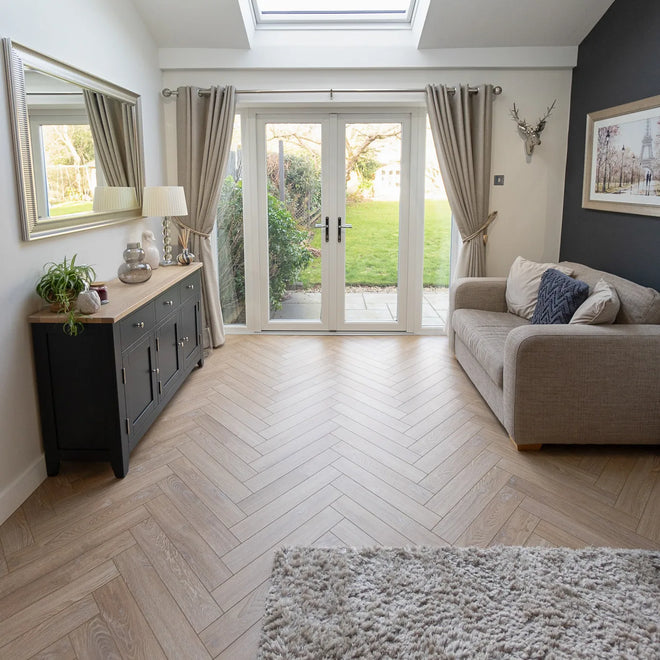
Shop herringbone flooring for kitchen spaces where pattern, layout and everyday practicality need to work together. A kitchen floor is always visible around cabinets, islands, dining corners and walkways, so choosing the right herringbone design can help make the space feel more complete than a plain straight-board layout.
This range includes herringbone floors in different tones, finishes, board sizes and product types. Whether you want a warm wood effect, a softer neutral floor or a more defined pattern, the products in this category help you choose a floor that suits both the style and daily use of your kitchen.
127 products found
Sort By
Sort products by price, relevancy and more.
Showing 24 of 127
Show 24 moreYes, herringbone flooring can be suitable for kitchens when the selected product, finish and fitting method suit the space. The floor should be chosen with spills, cleaning, cabinets, walkways and daily movement in mind so you can buy the right option.
Yes, herringbone can work in small kitchens when the colour and board size suit the room. Softer tones and a balanced pattern scale can help the floor feel detailed without making the space look too busy, guiding you toward the right choice.
Compare tone, board size, finish, thickness, fitting method, grain detail, care guidance and sample availability. These details affect how the floor looks beside cabinets, appliances and kitchen lighting, and help you choose the right product for your kitchen.
It depends on the style you want. A straight plank floor gives a simpler linear look, while a herringbone floor in kitchen spaces adds more pattern, movement and design detail, helping you decide which option suits your room.
Food and drink spills should be cleaned promptly, and standing water should not be left on the surface. Always follow the care guidance supplied with the selected product.
Yes, samples are useful because kitchen lighting, cabinets and worktops can change how the floor looks. Compare samples from different parts of the kitchen before ordering to choose the right finish for your space.
Light tones can make a kitchen feel brighter, warm wood tones can add character, and mid-tone floors can create balance. The right choice depends on your cabinets, worktops, wall colours and lighting, so compare the options before you buy.
Herringbone flooring for kitchen areas works well because the pattern adds movement to a room that often has straight lines from cabinets, worktops and appliances. The angled layout can soften those lines and make the floor feel more designed.
In many kitchens, the floor is seen in sections: along the cabinet run, around the island, near the sink, beside the dining area or through an open-plan walkway. Herringbone adds more detail to these visible areas than a standard plank floor.
For more patterned flooring options, you can also browse our full Herringbone Wood Flooring range.
A herringbone floor in kitchen interiors can create a strong visual feature without needing a bold colour. The pattern itself adds character, while the tone and finish determine whether the kitchen feels light, warm, classic, or more contemporary, making it easier to choose the right look.
Using herringbone in kitchen spaces is especially effective where the flooring needs to connect different zones. It can guide the eye from the entrance to the cabinets, from the island to the dining area, or through an open-plan kitchen layout.
The final effect depends on the product you choose. A lighter herringbone floor can make the kitchen feel more open, while richer wood tones can create contrast against pale cabinets. Mid-tone floors often work well when the kitchen needs a balance between warmth and everyday practicality, so you can narrow your choice with confidence.

When choosing herringbone flooring in kitchen areas, consider how the pattern will sit alongside the room’s main features. Cabinets, islands, appliances and doorways all affect how much of the pattern is visible.
A long cabinet run may show the pattern differently from an open island area. In a galley kitchen, the pattern can help draw the eye through the room. In a larger kitchen, it can add detail across a wider floor space without making the room feel empty.
A kitchen herringbone floor should also work with the colour of the cabinets and worktops. Pale cabinets may suit a warmer or more textured floor, while darker cabinets may benefit from a softer tone that keeps the room from feeling too heavy.
Herringbone kitchen flooring should be selected with both appearance and daily use in mind. Kitchens often involve food preparation, moving between appliances, dropping crumbs, spilling drinks, and regular cleaning, so it helps to choose a floor that suits everyday life.
The surface finish can change how the floor looks in a kitchen. Some finishes create a smoother, more refined appearance, while others reveal more grain and texture. The right choice depends on the kitchen style, the amount of natural light and the finish you prefer underfoot.
Board size also matters. Smaller herringbone blocks can create a tighter, more detailed look, while larger boards can make the pattern feel more open. In smaller kitchens, a calmer tone or less dramatic grain may help the pattern feel balanced and easier to choose.
The products in this herringbone kitchen flooring range include different shades and finishes, giving you options for both modern and traditional kitchen designs. Compare the choices to find the floor that best fits your kitchen style and layout.
If the kitchen opens into a dining or living area, the flooring should feel consistent across the wider space. A subtle herringbone design can connect rooms smoothly, while a more defined pattern can make the kitchen floor stand out as a feature, helping you choose the finish that suits the whole area.
A herringbone kitchen flooring design also works well around islands and breakfast bars because the angled pattern remains visible from multiple directions. This gives the floor a more considered look, especially in kitchens where the flooring is part of the main design.
Kitchen floors need to handle more than appearance. Food, drink, cooking splashes and damp footprints can all reach the floor during normal use. Spills should be cleaned promptly, and standing water should not be left on the surface.
Regular cleaning helps remove crumbs, dust and grit before they collect around the patterned layout. The care guidance supplied with the selected product should be followed, especially when choosing cleaning tools or products.
Kitchen mats may be useful in areas such as sinks, cooking zones or external doors. These can help reduce moisture and dirt in the places where the floor sees the most activity.

Before choosing kitchen herringbone flooring, compare the details that affect how the floor will look and perform in the kitchen environment. This helps you focus on the options most likely to suit your space.
What to Compare |
Why It Matters for Kitchens |
Tone |
Helps the floor work with cabinets, worktops and wall colours. |
Board size |
Changes the scale of the herringbone pattern. |
Surface finish |
Affects appearance, texture and cleaning guidance. |
Thickness |
Helps compare product depth across the range. |
Fitting method |
Shows how the selected product is designed to be installed. |
Grain detail |
Adds either a subtle or more characterful kitchen floor look. |
Pattern scale |
Helps the floor suit small kitchens, galley layouts or open-plan spaces. |
Sample availability |
Lets you compare the floor beside cabinets and kitchen lighting. |
Care guidance |
Helps with cleaning after cooking, meals and daily movement. |
These details help you choose a kitchen herringbone floor based on the room itself, not just the product image.
Choosing a kitchen floor based on images alone can be difficult because cabinet colours, worktops, splashbacks, and lighting can affect how the flooring appears. Samples give a clearer idea of tone, grain, finish and pattern scale, helping you choose with confidence.
Place samples beside cabinet doors, under the island, near the sink area and next to existing flooring or thresholds. This helps you see how the herringbone pattern works in the actual kitchen space.
At Flooring Surgeons, you can order free samples before placing a full order. This gives you a better view of how the floor will sit with your kitchen design and daily use, making the next step easier.


