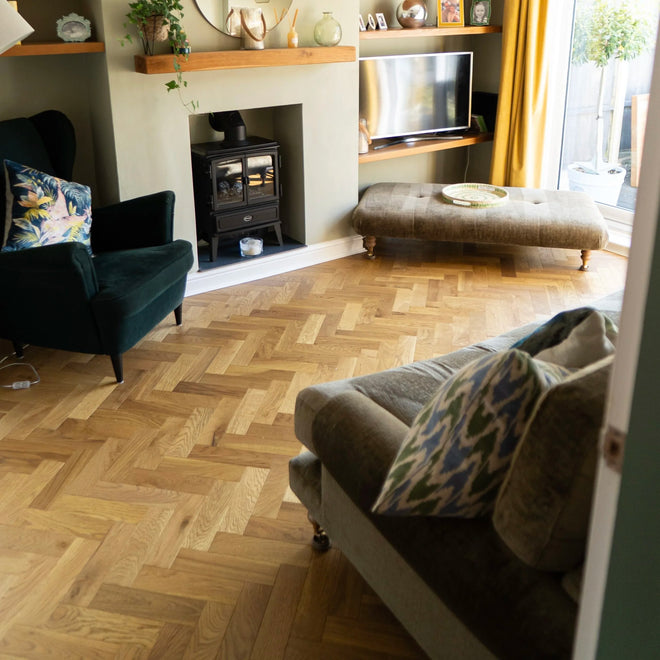
Why Medium Herringbone Flooring Works Well
Medium herringbone flooring stands out because it gives the floor enough colour depth to show the pattern clearly, while still feeling easy to style with different interiors. It can sit beside light walls, darker furniture, neutral fabrics and warmer wood details without feeling too pale or too heavy.
This makes medium tones useful for customers who want a floor with character, but not a finish that dominates the whole room. The herringbone layout adds movement, while the mid-tone shade keeps the overall look more settled.
Compared with very light herringbone, medium shades usually show more grain and pattern definition. Compared with dark herringbone, they often feel softer and more flexible across a range of interior styles.
Medium Oak Herringbone Flooring and Natural Wood Tones
Medium oak herringbone flooring is one of the most common looks in this shade range. Oak-style tones naturally work well in medium flooring because they can sit between pale, golden, smoked and warmer brown shades.
A medium oak herringbone floor can give the room a natural wood-effect finish with enough contrast to show the angled pattern. Some products may look warmer and more golden, while others may have a softer, muted or lightly smoked appearance.
This is why samples are important. A medium oak tone can look different depending on natural light, wall colour, furniture, and the product’s finish.

Medium Wood Herringbone Flooring with Pattern Definition
Medium wood herringbone flooring works well when you want both grain detail and a clear herringbone layout. The mid-tone colour helps the pattern show more clearly than very pale flooring, while the wood-effect detail gives the floor a warmer and more natural appearance.
A medium wood herringbone floor can feel calm or characterful depending on the product. A smoother finish with subtle grain creates a quieter look. A richer tone with clearer board detail makes the herringbone pattern more visible.
This choice comes down to how much attention you want the floor to draw. Some interiors need a floor that blends in softly. Others benefit from a more defined herringbone pattern that becomes part of the room’s main design.
Medium Coloured Herringbone Flooring: What Changes the Look?
Medium-coloured herringbone flooring is not just about the shade name. The final look comes from the combination of colour, grain, finish, board size and pattern scale.
A warm, medium tone can create a natural, inviting appearance. A muted medium tone may feel more modern and understated. A smoked or richer oak-style tone can add depth to the floor without fully moving into a dark finish.
Board size also changes the effect. Smaller boards create a tighter and more detailed herringbone pattern. Larger boards can make the floor feel broader, cleaner and less busy.
Comparing Medium Herringbone Floors in This Range
The products in this category include different tones, finishes, thicknesses, board sizes and floor types. The focus of this page should remain on medium herringbone floors as a shade and pattern range, rather than on one single material.
When comparing products, pay attention to how the tone and grain work together. A product may be listed as medium, but it can still look warmer, cooler, lighter or deeper once the finish and board detail are considered.
For a wider view of similar patterned flooring, you can also browse the full Herringbone Flooring range.

Herringbone Flooring Medium Shades: Subtle or Defined?
When choosing medium-shade herringbone flooring, decide how visible you want the pattern to be. A calmer grain and softer tone will make the floor feel more understated. A stronger grain or richer medium shade will make the herringbone layout stand out more.
This is where herringbone medium flooring can be especially useful. It gives you more pattern visibility than very light floors, but it usually feels less dramatic than dark herringbone.
If the room already has bold furniture, strong wall colours or busy décor, a softer medium tone may work better. If the room is simple or neutral, a more defined medium herringbone pattern can add warmth and detail.
What to Compare Before Ordering
Use the product details in this category to compare the factors that affect the floor’s final appearance, making it easier to narrow down the final choice.
Detail |
Why It Matters |
Medium tone |
Helps compare natural, golden, smoked, warm and muted shades. |
Grain detail |
Affects how calm or characterful the floor looks. |
Board size |
Changes the scale of the herringbone pattern. |
Surface finish |
Influences texture, light reflection and overall appearance. |
Thickness |
Helps compare product depth across the range. |
Fitting method |
Shows how the selected product is designed to be installed. |
Pattern definition |
Helps decide whether the floor should look subtle or more detailed. |
Sample availability |
Lets you compare the tone in your own lighting. |
Care guidance |
Explains how the selected floor should be cleaned and maintained. |
Care Guidance for Medium Herringbone Floors
Medium tones can be more forgiving visually than very pale or very dark floors, but care still depends on the selected product and finish. Regular cleaning helps remove dust, grit and small particles before they collect around the patterned layout.
Follow the care guidance supplied with the selected floor. Use suitable cleaning tools for the finish, and avoid harsh detergents or abrasive pads unless the product guidance confirms they are appropriate.
Spills should be cleaned promptly, and standing water should not be left on the surface. Suitable mats near entrances can also help reduce grit and dirt being carried onto the floor.
Order Free Medium Herringbone Flooring Samples
Choosing medium herringbone flooring based on images alone can be difficult because mid-tones can look warmer, cooler, lighter or deeper depending on the room. At Flooring Surgeons, you can order free samples before placing a full order, helping you compare the floor more clearly at the end.
Place samples beside walls, furniture, doors, skirting boards and existing flooring. This helps you compare the tone, grain, finish and pattern definition in your own lighting before deciding.
Samples are especially useful with medium herringbone floors because the difference between natural, golden, smoked and muted tones can be subtle online but much clearer in the room, making the closing choice simpler.